
This is an image depicting a historical artifact from Ancient Apulia. It appears to be a fragment of painted pottery with visible human figures on it, suggesting the representation of people in various positions or activities. The style and quality of the artwork indicate that it may have been part of a larger piece or a series. The artifact's material is not clearly identifiable from the image alone; however, based on its appearance, it could be ceramic or another type of pottery often used in ancient contexts for decoration or storage.

Chapter 1: Alastair Small, Pots, Peoples and Places in Fourth Century Apulia
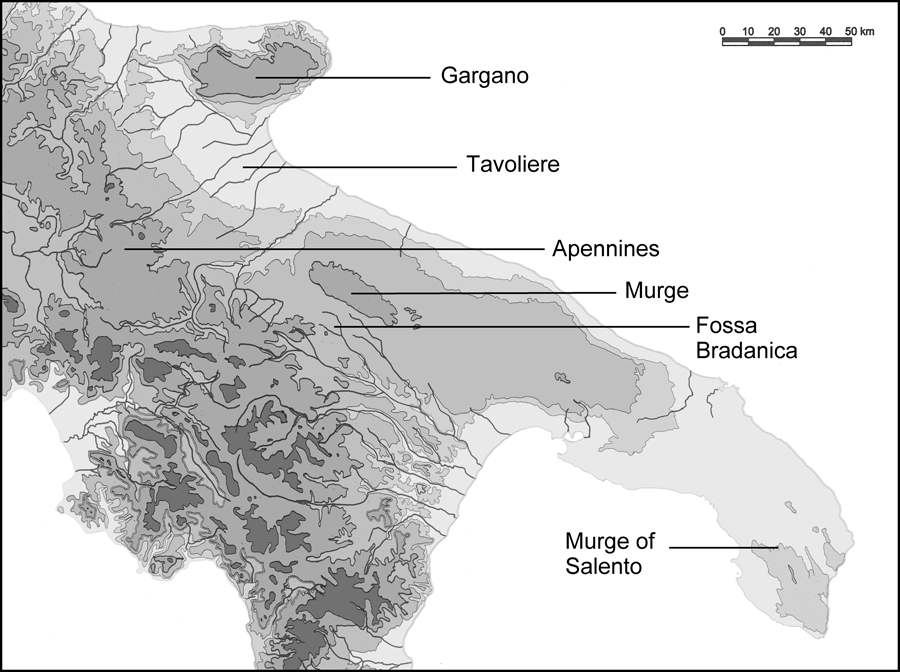
The image shows a map with various labeled geographical features such as mountains, rivers, and bodies of water. There are also labels for regions like Murge of Salento, Apulian coastline, and others. The map is in black and white, indicating it could be an old or historical map without any colors visible.

WF 2: Map showing the physical geography of Apulia (author).

The image shows a black and white photograph of a hilly landscape with agricultural fields. In the foreground, there is an individual standing on uneven terrain, likely composed of rocks and soil. The person appears small due to perspective and the vastness of the background. The focus seems shallow, as evidenced by the softened appearance of the distant landscape.

WF 3: View from the scarp of the Murge across the Fossa Bradanica to the distant Apennines (author).
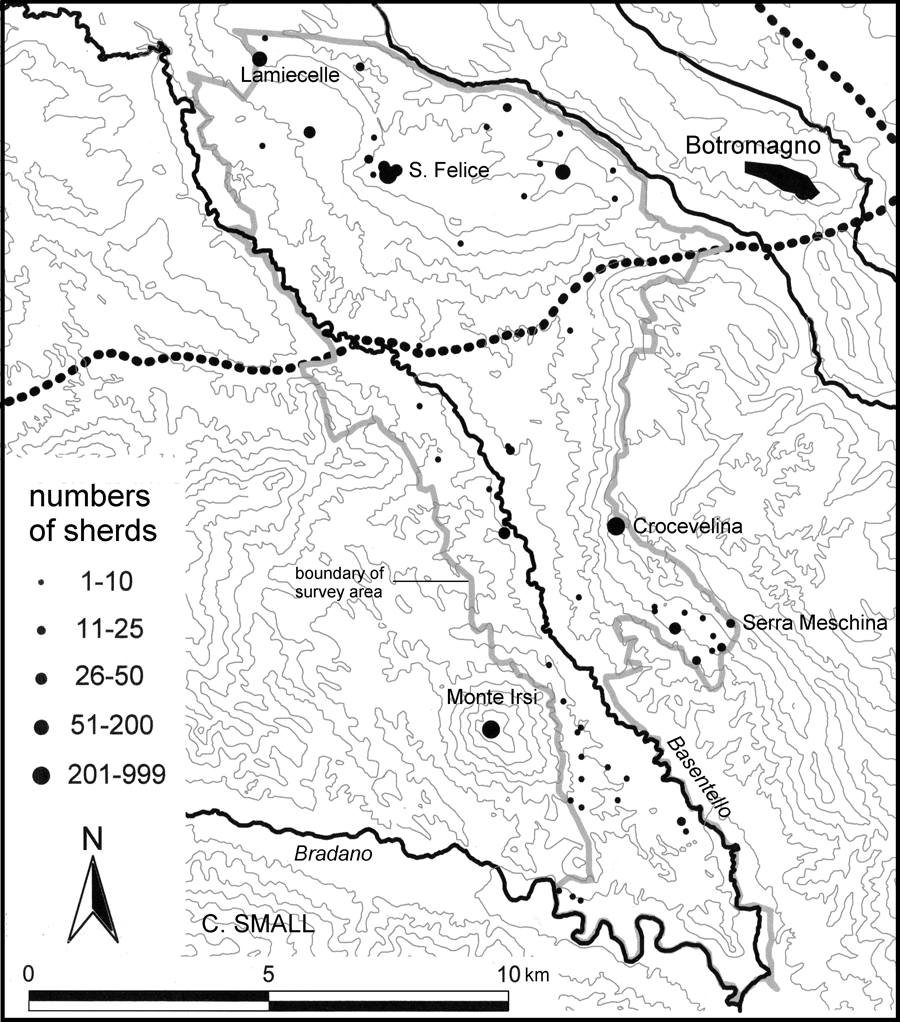
The image is a map showing an archaeological site with marked areas indicating different levels of sherd density (number of artifacts found per square meter). The map includes annotations and place names, likely relating to the historical context or location.

WF 4: The Basentello valley survey, showing the sites of the fourth century B.C.E. Those named go back to the Early Iron Age. Courtesy of Carola M. Small.
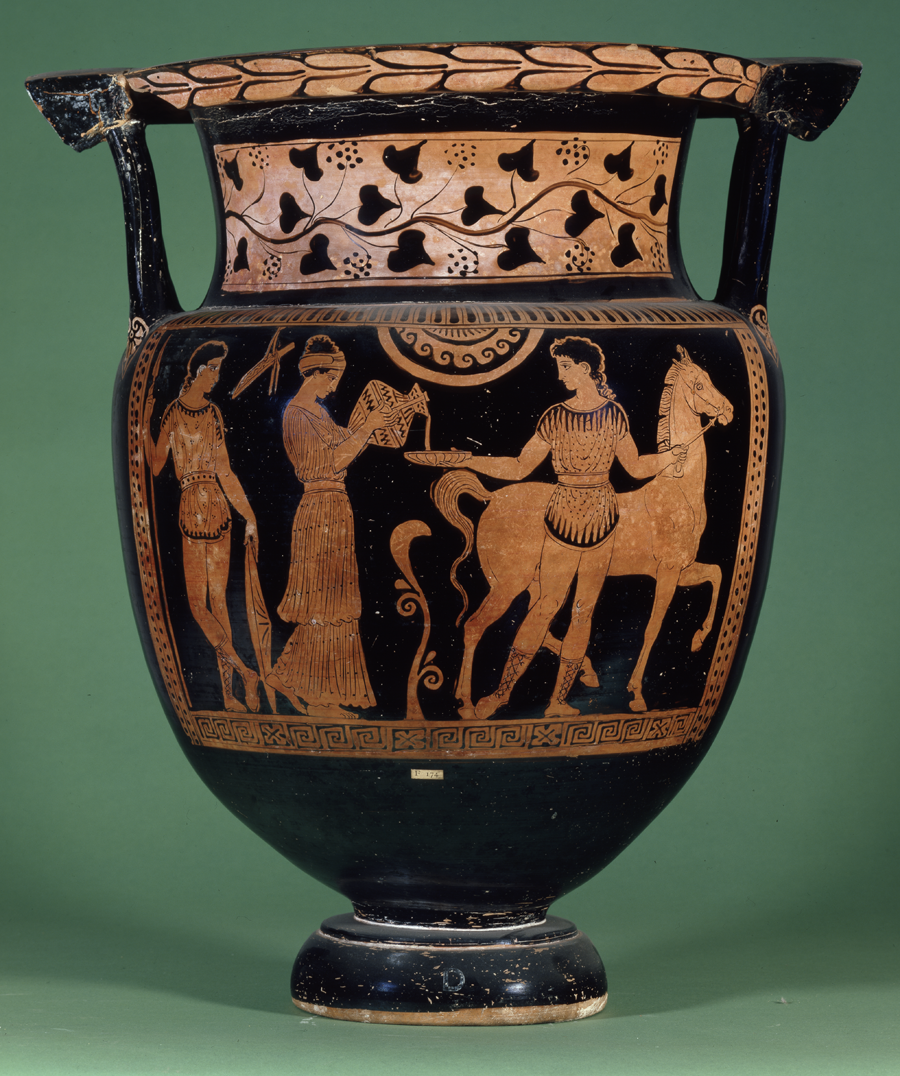
The image shows a large black-figure ceramic vase with intricate scenes depicting humans and animals in various poses, likely representing mythological figures and stories. The craftsmanship includes fine detailing on the clothing and features of the depicted characters.

WF 5: Apulian red-figure column krater by the Sisyphus Painter showing young Apulian warriors wearing local dress. British Museum F 174. (© The Trustees of the British Museum).
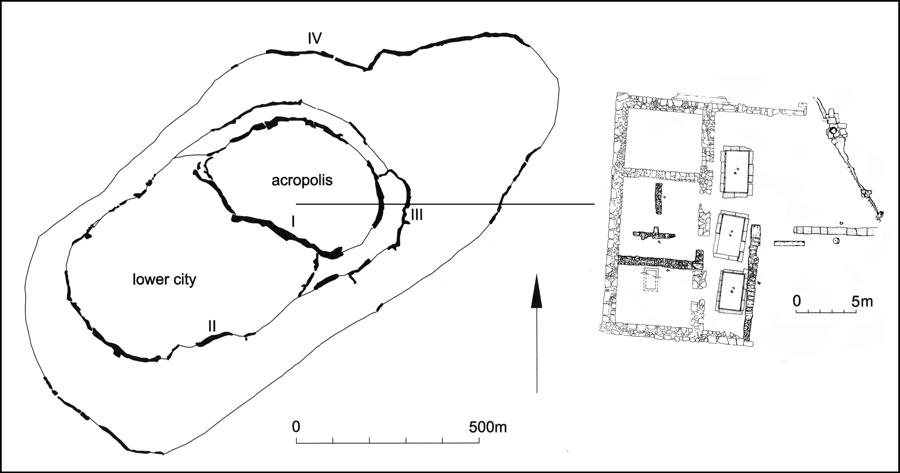
This is a sectioned drawing of an archaeological site featuring two distinct areas: a lower city with labeled structures, and a fortified wall. The image includes measurements in meters for the scale.

WF 6: Monte Sannace: a) wall circuits, b) semi-chamber tombs. Reproduced courtesy of A. Ciancio, Soprintendenza per i beni archeologici della Puglia.

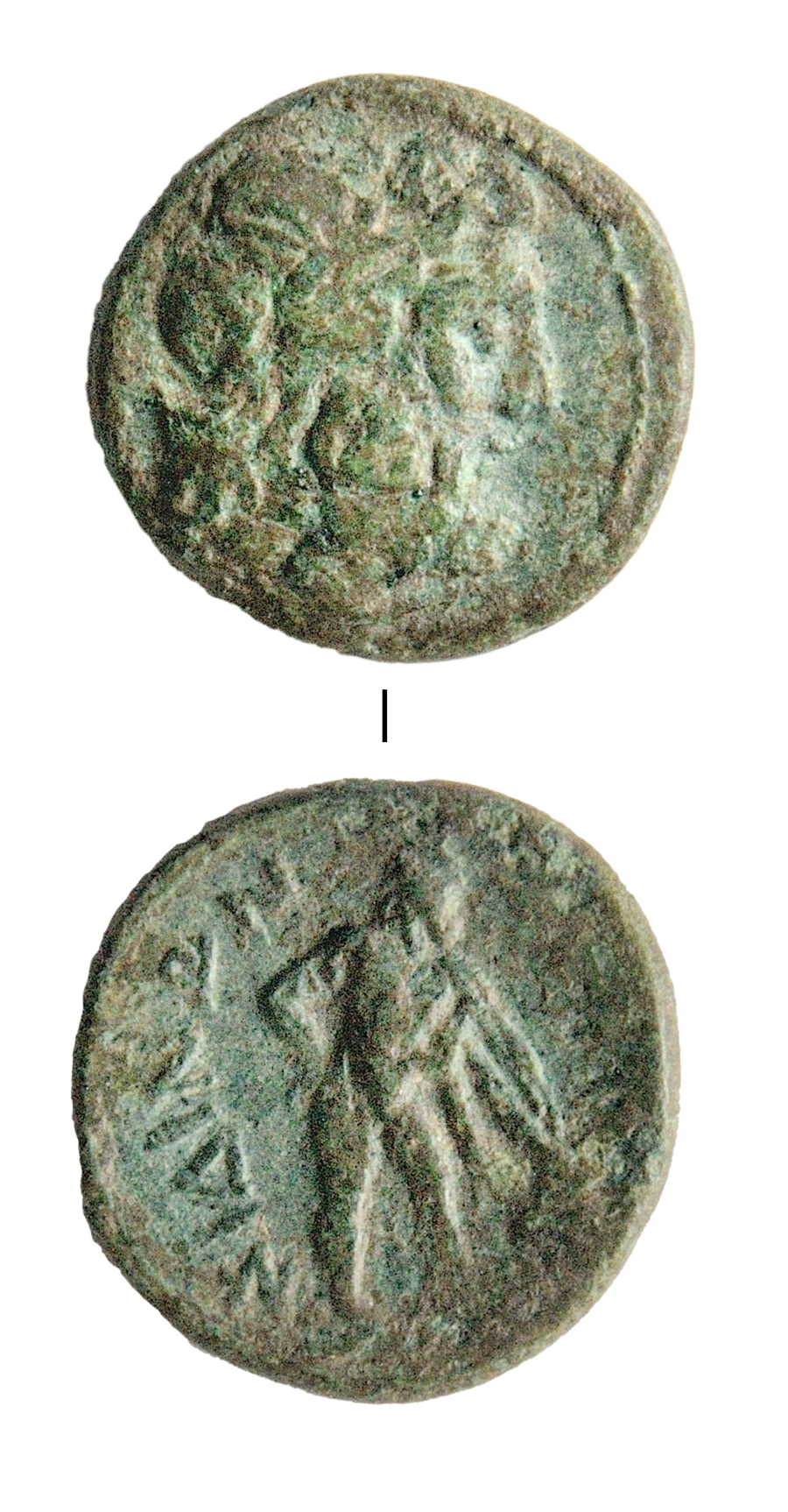
The image shows a coin with two distinct sides. One side features an embossed profile face, suggesting a representation of a historical figure or deity, possibly Roman given the style. The other side displays what appears to be a stylized grain sheaf, which is often associated with the symbolism of abundance in ancient coins. The coin has signs of wear and patina, indicating it is an artifact from antiquity.The image shows two ancient coins. The coin on the top is slightly larger than the one below. Both are made of metal, with visible signs of aging such as corrosion and mottling. Each coin features intricate designs or inscriptions, indicative of historical currency from a bygone era.

WF 7: Coins. (a) of Ruvo. AR. Head of Athena, helmeted, facing right. Reverse: Ear of barley, at left legend PY, at right, cornucopia. Rutter et al. 2001, no. 807. (b) of the Sidini. AE. Obverse: Head of Zeus, facing right, laureate. Reverse: “Farnese” Hercules, leaning of a club, legend ΣΙΔΙΝΩΝ. Mangieri, 1996, no. 25, photo R. Digiesi, published courtesy of the Fondazione E. Pomarici Santomasi, Gravina in Puglia.
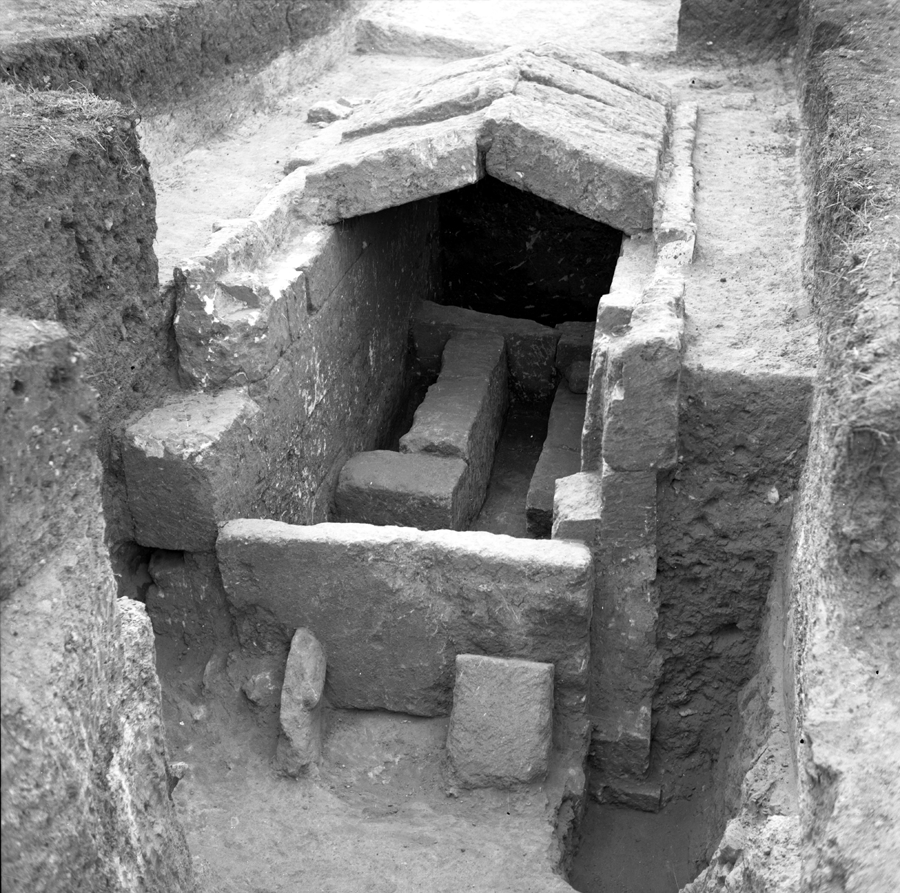
 

The image shows a set of stone ruins with visible architectural elements such as walls and what appears to be doorways or windows. The material is likely stone, and the structure has partially crumbled, revealing layers within the ruins. The visual features include uneven surfaces, angular lines, and shadows that give texture and depth to the scene.

WF 8: Botromagno chamber tomb excavated in 1966. Apulian red-figure pottery found in the fill of the dromos show that it was finally sealed c 340 B.C.E. Photo courtesy of the British School at Rome Photographic Archive (negative wp-9018).
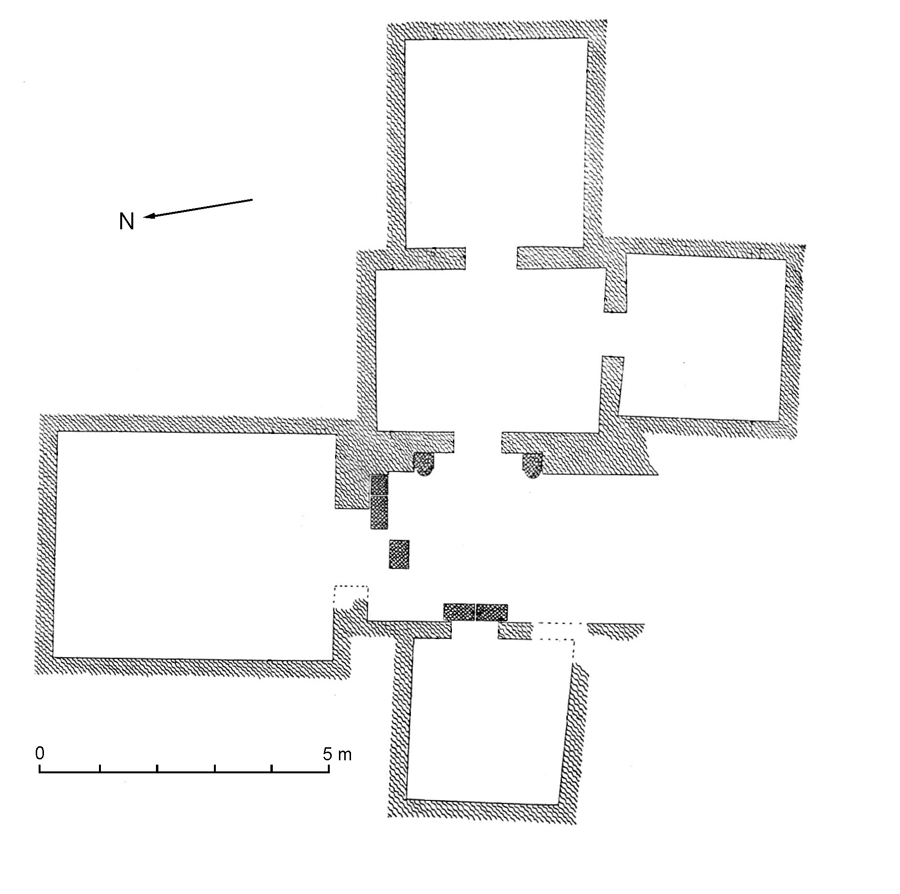
 

This is a black and white image showing fragmented pieces of an archaeological ceramic artifact. The fragments are irregularly shaped, with some appearing to have smooth surfaces while others show rough edges where the pieces broke off from the original vessel. There are measurements indicated along one side of the image, suggesting that this might be part of an analysis related to the size or scale of the artifact.

WF 9: Canosa, Varrese hypogeum. Adapted from Nachod 1914, fig. 19.
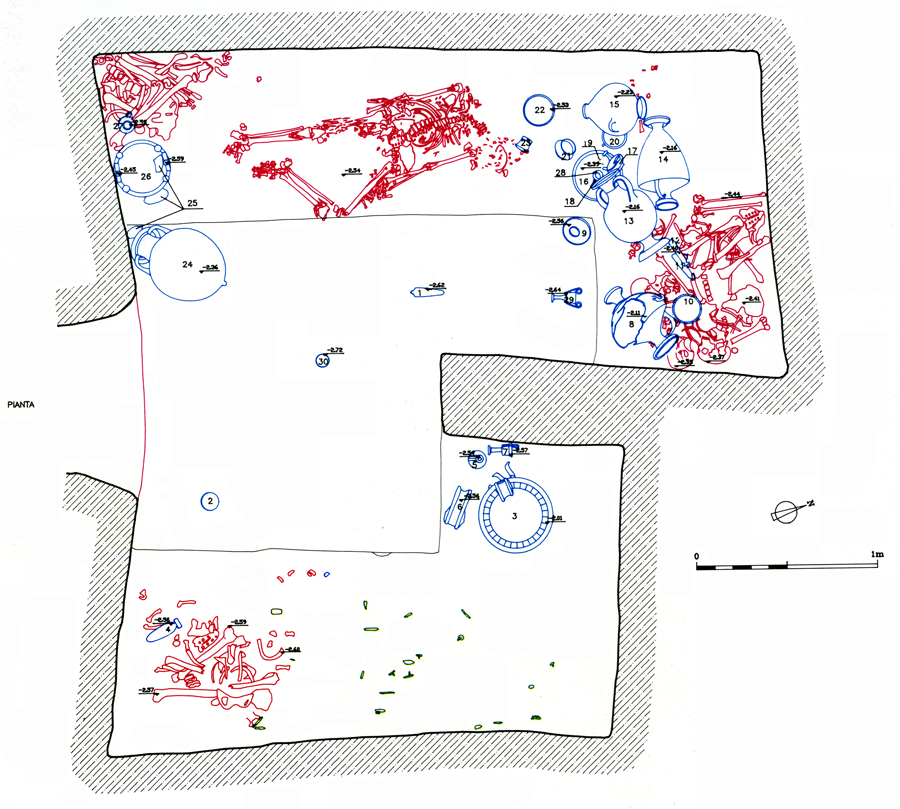
The image shows a fragment of an ancient ceramic pot with a red-painted design featuring multiple clusters of dots and lines, creating a pattern across the surface of the pottery shard. The material appears to be clay, indicative of fired pottery.

WF 10: Gravina, Strada S. Stefano Tomb 25 (1993) Plan of the burial chamber. Reproduced courtesy of A. Ciancio, Soprintendenza per I beni archeologici della Puglia.
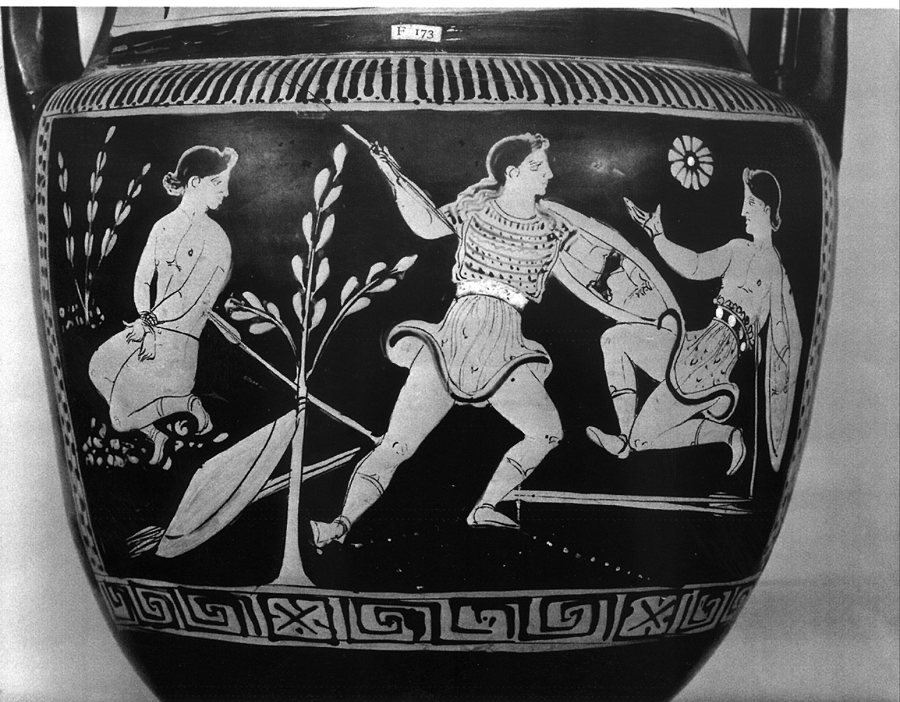
Ancient Greek black-figure vase with three figures; one in a seated position while the other two stand, showcasing intricate detailing and dynamic poses typical of this art form.

WF 11: Apulian red-figure column krater by the Prisoner Painter showing battle scene with wounded prisoner whose arms have been bound. British Museum F 173. (© The Trustees of the British Museum).
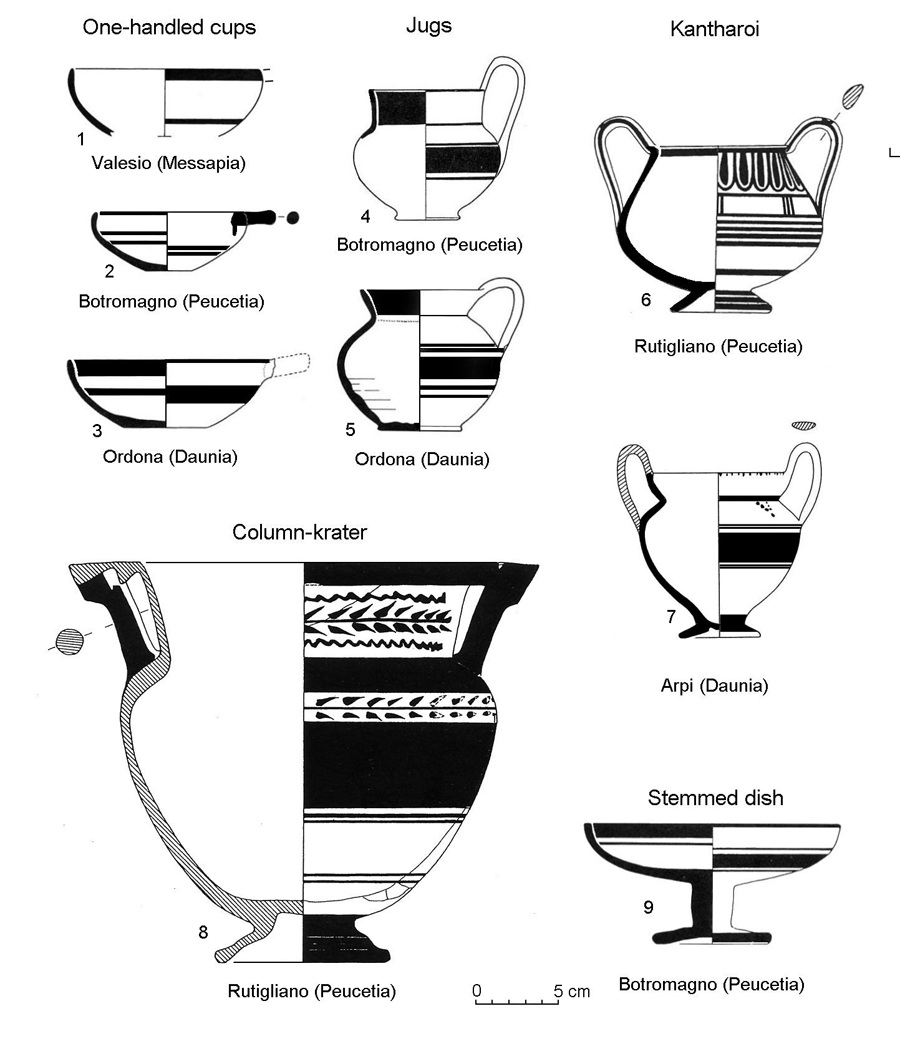
This is a black and white image featuring various types of ancient Greek pottery, including vases with different shapes and styles. The designs on the pots showcase intricate patterns and figures from Greek mythology, representing the artistic and cultural aspects of that time period.

WF 12: Wheel made pottery. Adapted from: De Juliis 1992, no.21 (7); 2006, tav. 26a, cat Dd 4.7 (6); 373, tav. 24a; cat 68.4 (8); Iker 1984, fig. 155.7 (3); fig. 146.2 (5); Saunders and Taylor 1992, 263, fig. 5.115 (9); Whitehouse et al. 2000, 175, fig. 104 (2); 173, fig. 100 (4); Yntema 2001, 66, Form C11.79 (1).