
This is an image depicting a historical artifact from Ancient Apulia. It appears to be a fragment of painted pottery with visible human figures on it, suggesting the representation of people in various positions or activities. The style and quality of the artwork indicate that it may have been part of a larger piece or a series. The artifact's material is not clearly identifiable from the image alone; however, based on its appearance, it could be ceramic or another type of pottery often used in ancient contexts for decoration or storage.

Chapter 8: Marissa Corrente, Red-Figure Vases in Fourth Century B.C.E. Canosa: Images, Assemblages, and the Creation of a Social Hierarchy
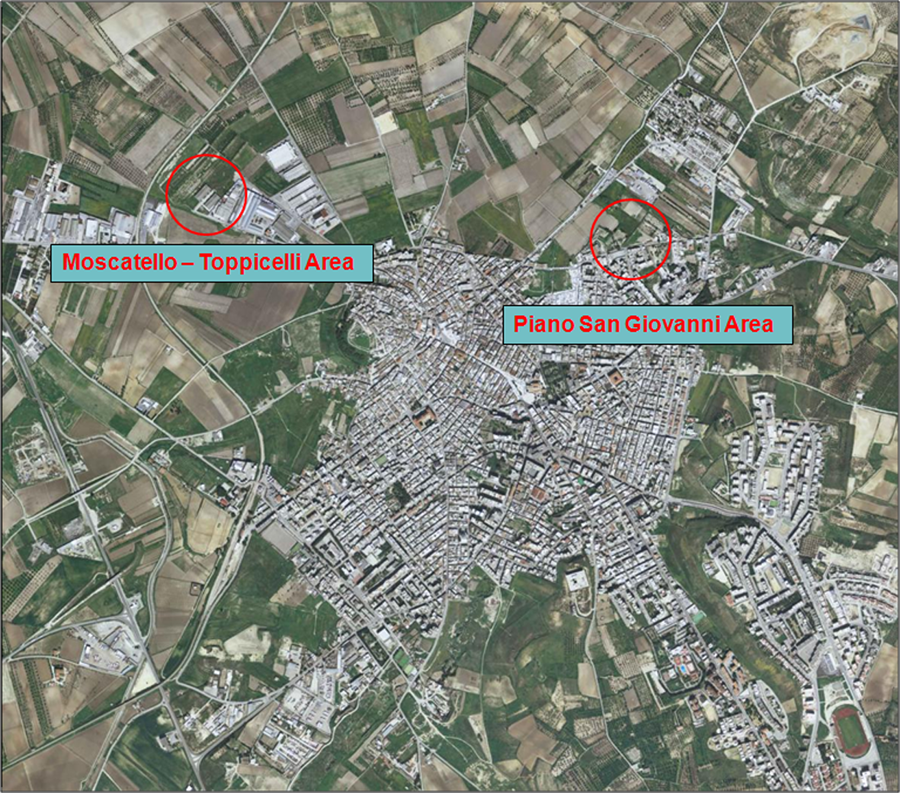
The image shows a satellite view of an area labeled "Moscatello-Toppino" in red text, with two circular annotations pointing at specific locations. The map provides aerial details of agricultural fields, urban areas, and roads, indicating the modern landscape features within these historical or archaeological zones.

WF 99: Aerial view of Canosa. (author)

The image shows an excavated archaeological site with exposed layers of soil revealing fragmented pottery pieces. The objects are scattered across a small area, and their shards suggest they were once part of larger vessels or items made from ceramic material.

WF 100: The "Piccolo Vimini" Tomb, Canosa. (Soprintendenza per I Beni Archeologici della Puglia)

The image displays an array of archaeological artifacts consisting predominantly of various types and sizes of pottery. The pieces show a range of earthenware materials, colors, and patterns indicative of ancient ceramics. Some pots have visible decorations such as geometric designs or abstract motifs, while others appear plain with varying glazing techniques. There are also bowls and cups among the collection, all exhibiting signs of wear and possibly use over time. The pottery fragments are arranged in rows, providing a comprehensive view of this type of archaeological find.

WF 101a: Funerary assemblage from the "Piccolo Vimini" Tomb, Canosa. (Soprintendenza per I Beni Archeologici della Puglia)

The image displays a collection of archaeological artifacts primarily made of metal, including what appears to be pans, hooks, and other cooking implements. The most prominent items are two large, round, lidded pots with handles, showing signs of rusting and corrosion. These pieces likely represent kitchenware from an earlier historical period, suggesting they were used for cooking or storage purposes in a past culture.

WF 101b: Funerary assemblage from the "Piccolo Vimini" Tomb, Canosa. (Soprintendenza per I Beni Archeologici della Puglia)
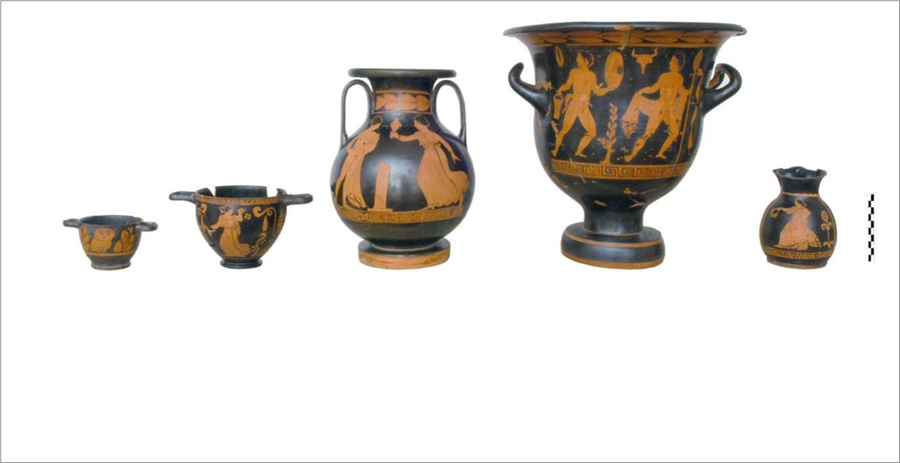
The image shows a collection of ancient Greek-style vases with painted scenes on them, featuring black figures against an orange background. The vases are arranged in a line and vary in size from smaller pieces at the left to larger ones towards the right. The material appears to be ceramic or earthenware.

WF 102: Apulian red-figure vases from the "Piccolo Vimini" Tomb. (Soprintendenza per I Beni Archeologici della Puglia)
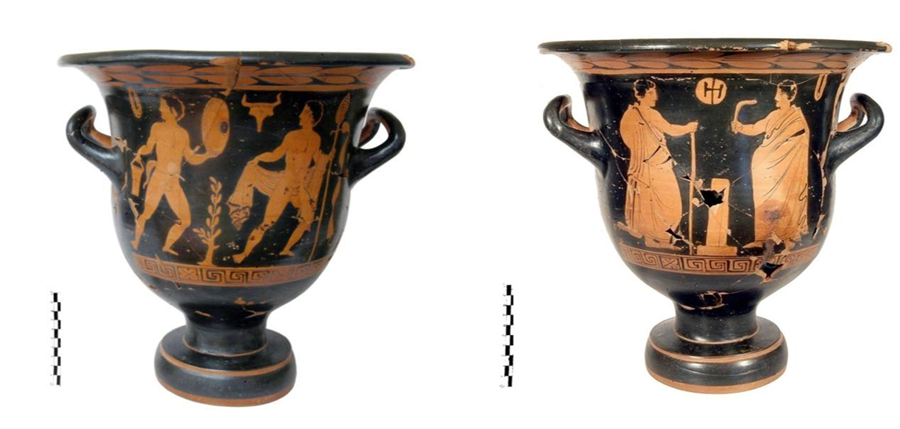
The image displays two identical Greek vases with black-figure pottery decoration. These antique vessels showcase scenes involving human figures, typically in a narrative style characteristic of classical Greek artistry. The craftsmanship includes details such as facial expressions and attire, providing insights into the cultural narratives and artistic techniques of ancient Greece.

WF 103: Bell krater by the Schiller Painter from the "Piccolo Vimini" Tomb, Canosa. (Soprintendenza per I Beni Archeologici della Puglia)
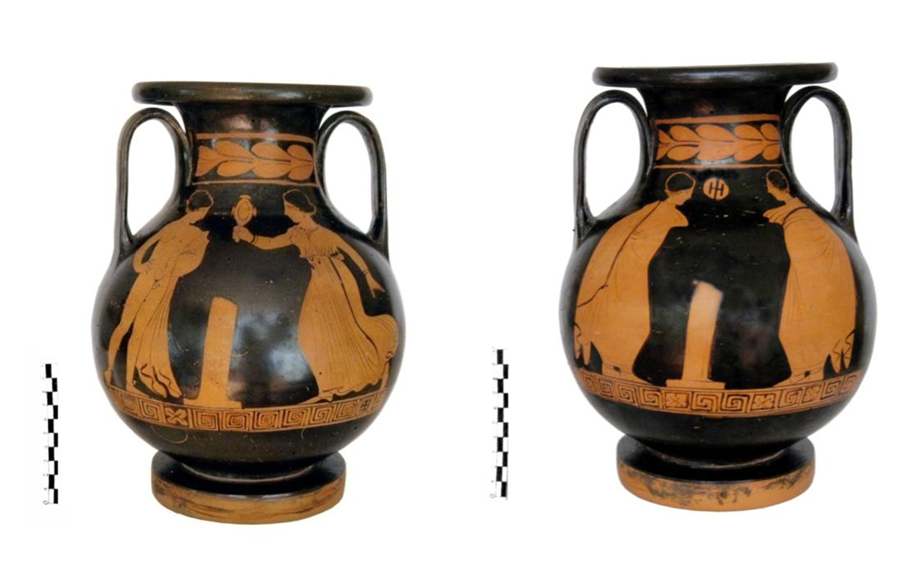
The image shows a pair of identical vases with a red-brown color. Each vase has handles on either side and is adorned with intricate patterns, including designs resembling faces at the top and textured decorations along its sides. The material appears to be clay or ceramic, indicative of pottery from an ancient culture.

WF 104: Pelike by the Painter of Bologna 498 from the "Piccolo Vimini" Tomb, Canosa. (Soprintendenza per I Beni Archeologici della Puglia)
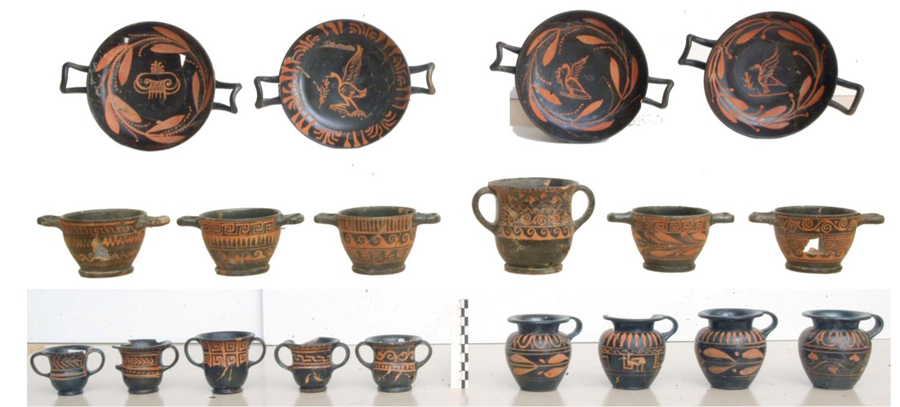
The image shows an array of ancient Greek-style ceramics, including a variety of bowls and vases with intricate painted designs. These artifacts feature prominent decorative elements such as geometric patterns, floral motifs, and human figures, which are characteristic of Greek pottery from the Geometric, Black-Figure, and Red-Figure periods. The craftsmanship is evident in the smooth surfaces and vibrant colors that have survived over time.

WF 105: Overpainted drinking vessels from the "Piccolo Vimini" Tomb, Canosa. (Soprintendenza per I Beni Archeologici della Puglia)
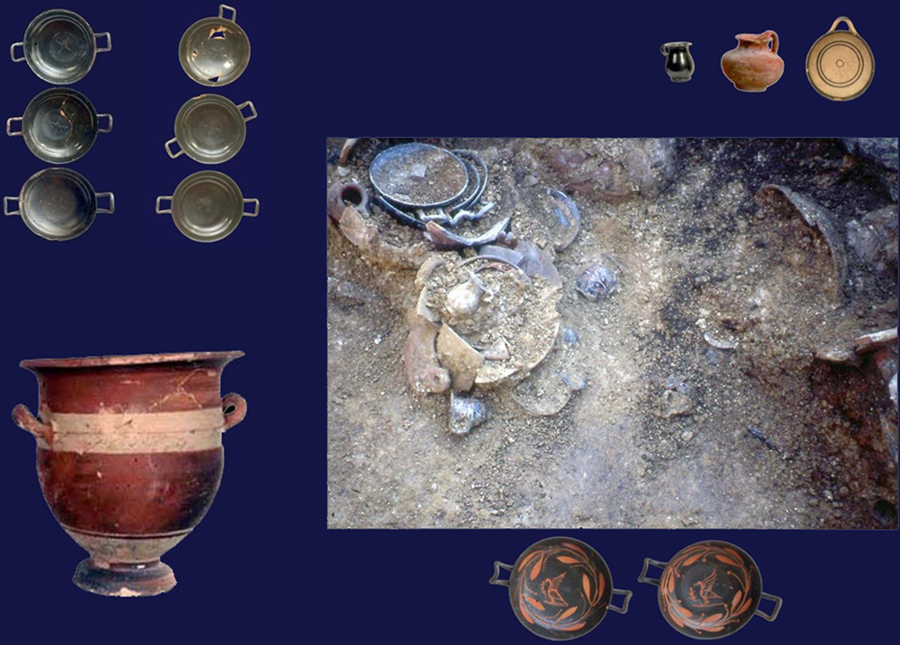
The image depicts an archaeological display featuring various types of ancient pots and pottery fragments. The items are arranged in a grid, showing their diversity in shapes, sizes, and decorative motifs, indicating they come from different time periods or cultures. The central focus is a detailed photograph of excavated pieces lying on the ground, surrounded by dirt, highlighting the process of unearthing these artifacts.

WF 106: Banded krater and cups from the "Piccolo Vimini" Tomb, Canosa. (Soprintendenza per I Beni Archeologici della Puglia)
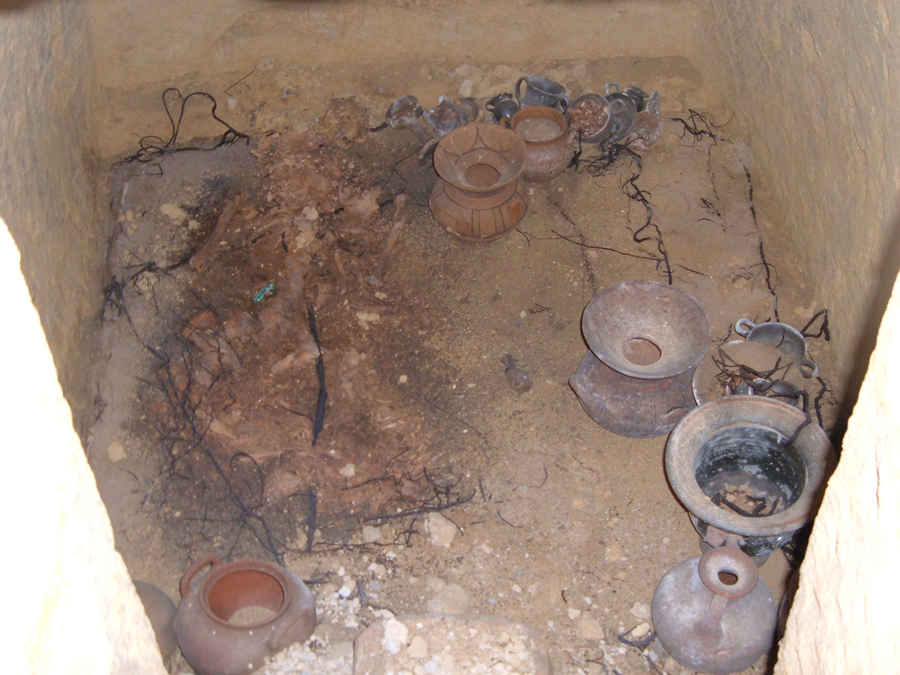
The image depicts an archaeological excavation site featuring a collection of pottery shards scattered on the ground, with some pieces appearing intact. The material looks like ceramic, and there's no visible text or distinctive marks that provide specific information about the origin or age of the artifacts.

WF 107: Tomb 8/08, Canosa. (Soprintendenza per I Beni Archeologici della Puglia)
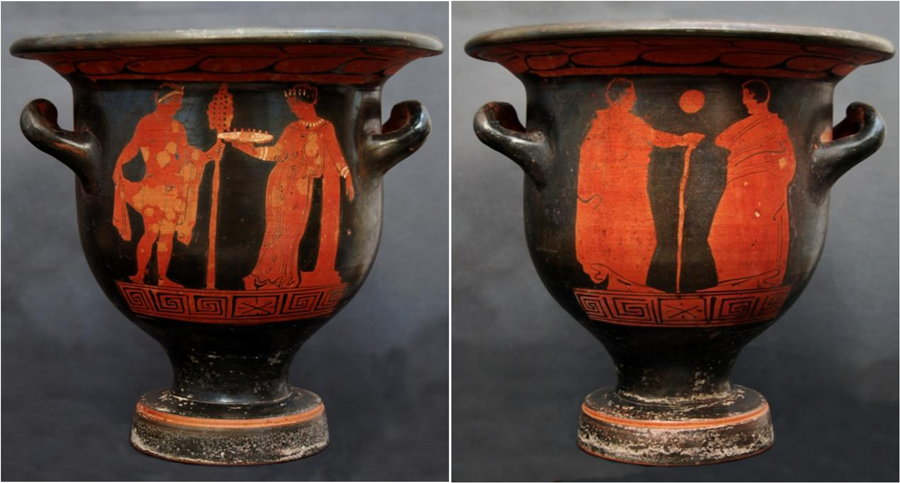
This is a series of three images featuring an ancient Greek vase with painted scenes on it. The vases are made of ceramic and display figures, suggesting they depict stories from mythology or daily life.

WF 108: Bell krater from Tomb 8/08, Canosa. (Soprintendenza per I Beni Archeologici della Puglia)
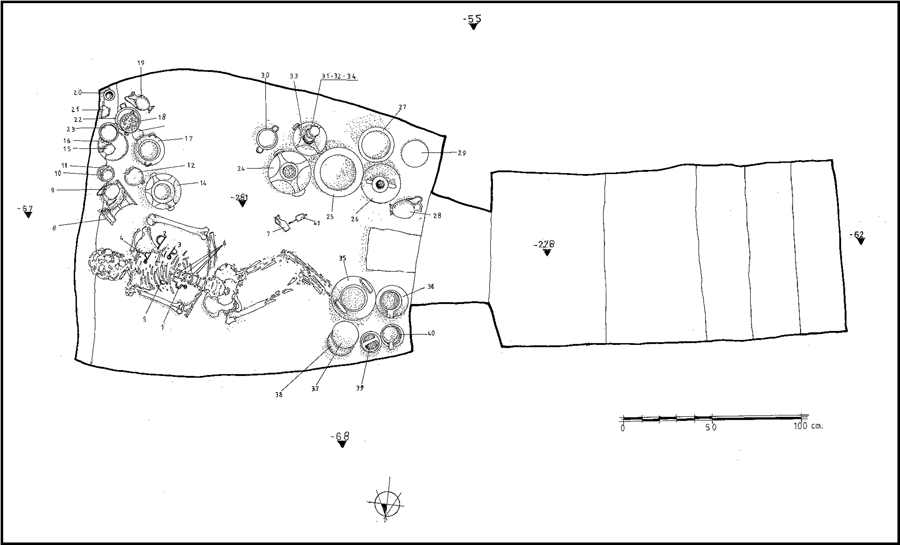
The image appears to depict a technical drawing or illustration of an archaeological artifact, likely a fragment of pottery. The key visual features include measurements and annotations that provide context for the object's size, shape, and possibly its significance. However, without more specific details, it's not possible to determine the exact nature of the material or the historical period it represents.

WF 109: Plan of Tomb 8/08, Canosa. (Soprintendenza per I Beni Archeologici della Puglia)
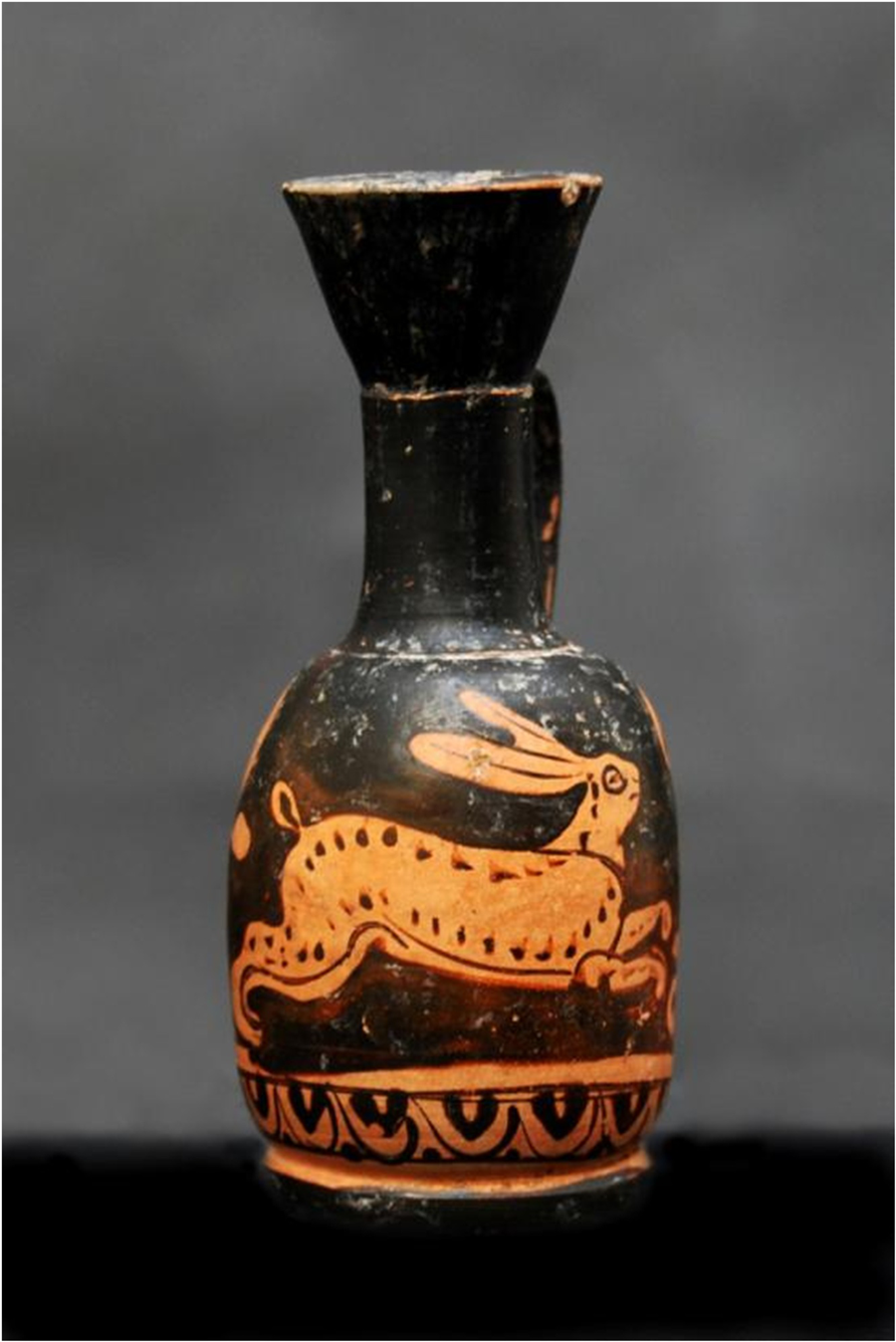
Ancient Greek amphora with a stylized image on its body. The vase's neck is narrow and flared at the top, while its base is wider than the top due to an inverted bell-shaped design.

WF 110: Lekythos with running hare, from Tomb 8/08, Canosa. (Soprintendenza per I Beni Archeologici della Puglia)
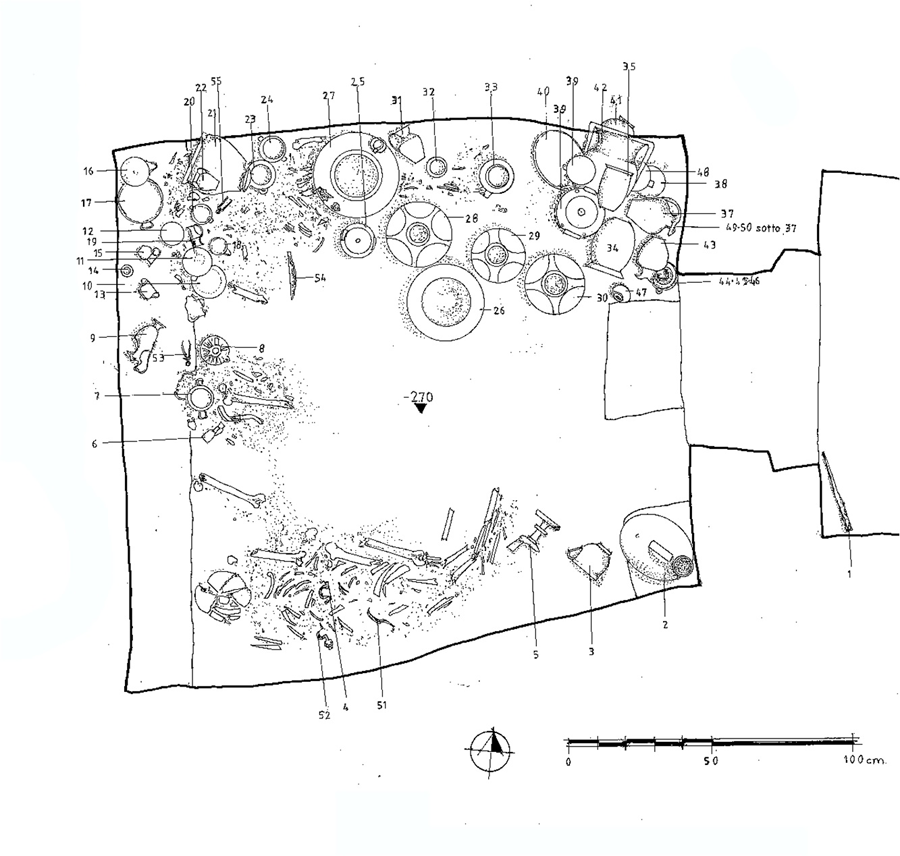
This is an antique mechanical device with intricate metal parts. It appears to have a complex system of gears and other components, likely designed for precise movement or function. The machine has been carefully preserved and displayed on a flat surface, indicating its significance as an artifact.

WF 111: Plan of Tomb 1/08, Canosa. (author)
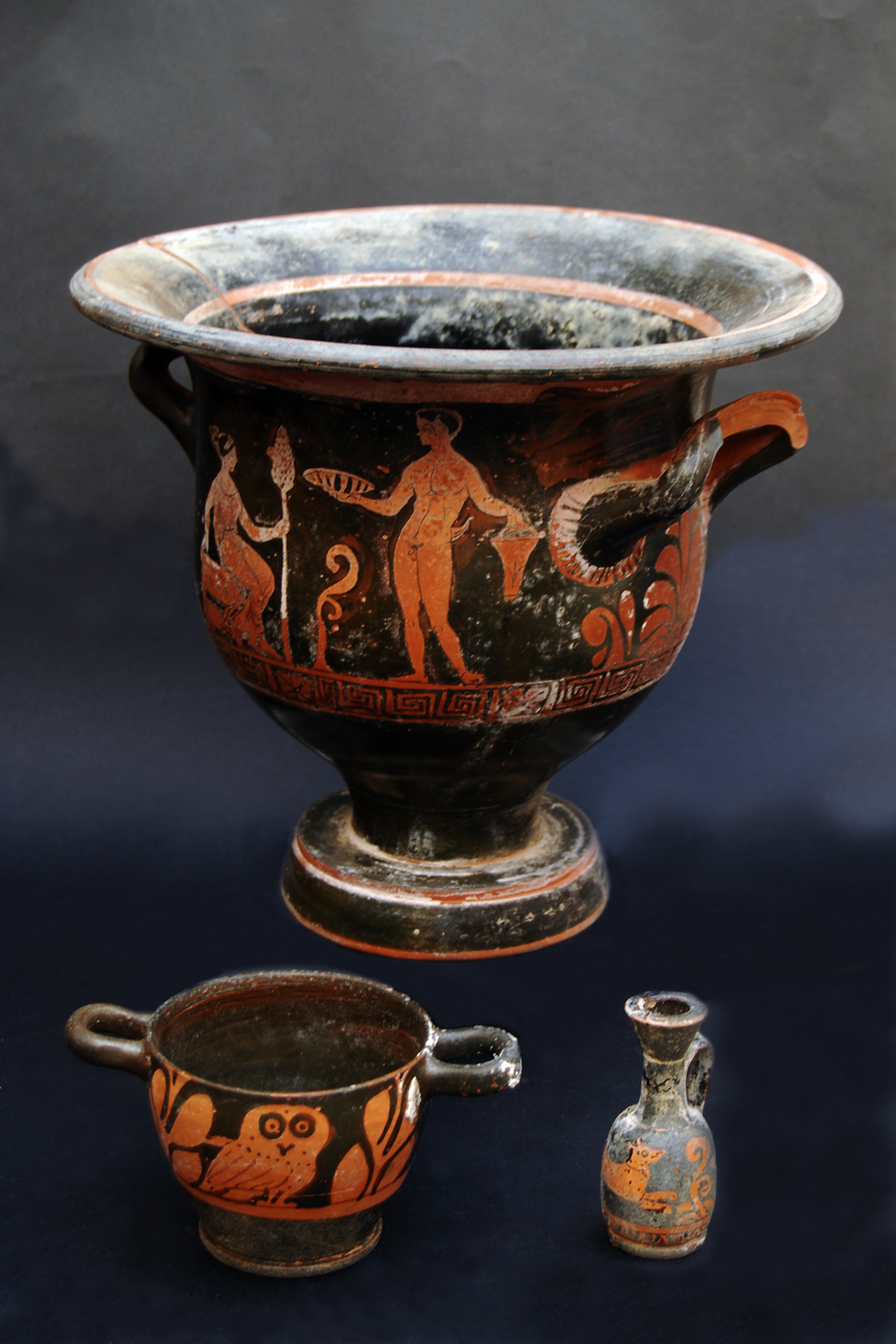
This is an image of a large ceramic vase with a lid. The vessel has intricate black-figured decorations featuring human figures and patterns. It appears to be an antique Greek or Roman pot, showcasing the artistic styles of those ancient civilizations.

WF 112: Bell krater, skyphos and lekythos from Tomb 1/08, Canosa. (Soprintendenza per I Beni Archeologici della Puglia)