
This is an image depicting a historical artifact from Ancient Apulia. It appears to be a fragment of painted pottery with visible human figures on it, suggesting the representation of people in various positions or activities. The style and quality of the artwork indicate that it may have been part of a larger piece or a series. The artifact's material is not clearly identifiable from the image alone; however, based on its appearance, it could be ceramic or another type of pottery often used in ancient contexts for decoration or storage.

Chapter 6: Ada Riccardi, Apulian and Lucanian Pottery from Costal Peucetian Contexts
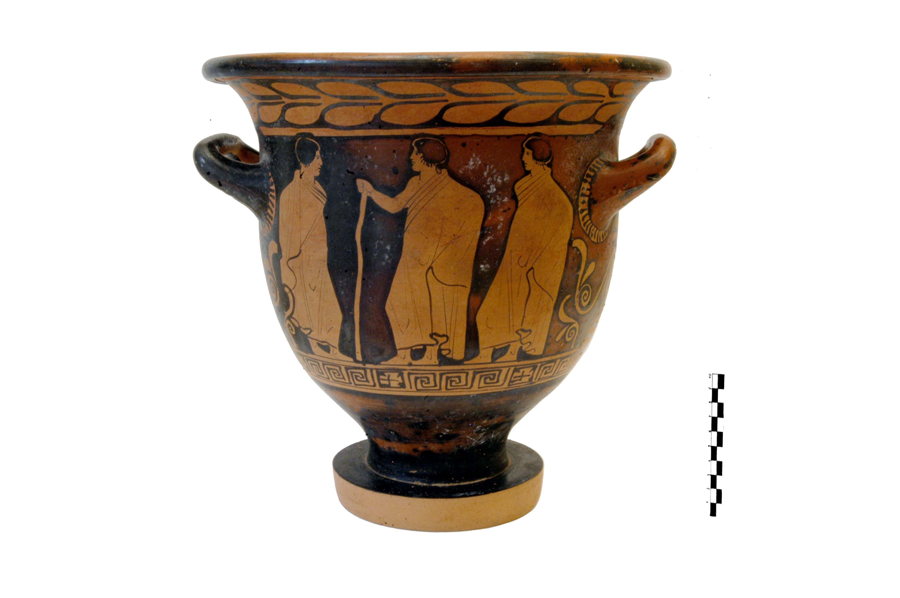
This is a black-figure amphora from ancient Greece, made of clay, featuring classical human figures in dynamic poses on its body, with visible scenes and details painted on the surface. The handles are attached at both the neck and base, and there's an incised design around the neck area.

WF 66a: Turi. Bari, inv. 43798 (Soprintendenza per I Beni Archeologici della Puglia, storeroom)
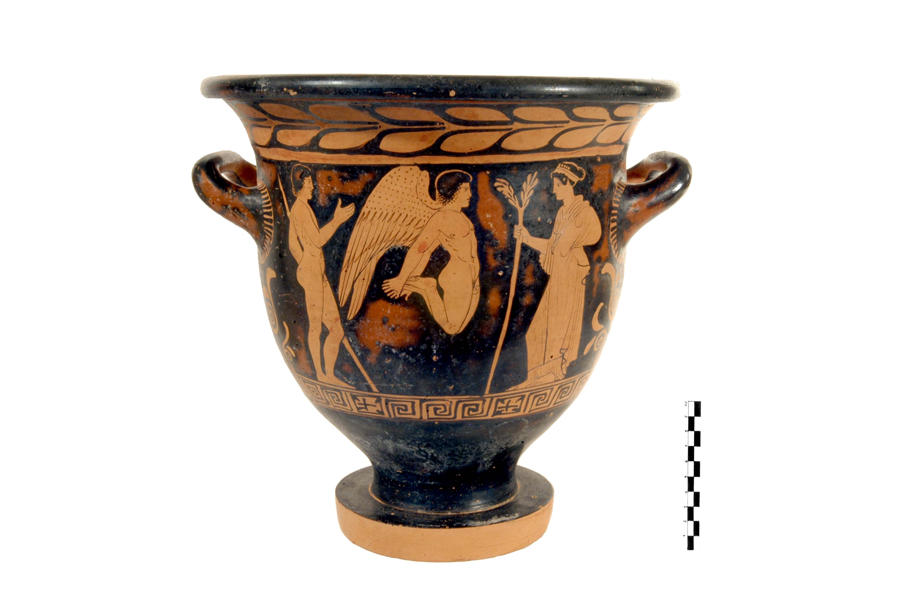
The image shows an ancient Greek vase with black-figure pottery technique. It is a round-bodied, short-necked vessel featuring figures on the sides in profile poses, typical of early Attic ceramics from around the sixth to fifth centuries BCE.

WF 66b: Turi Bari, inv. 43798 (Soprintendenza per I Beni Archeologici della Puglia, storeroom)

The image displays an ancient Greek vase with a mythological scene depicted on it. The vase is made of terracotta and features two figures, one male and one female, with the male having wings, suggesting he may represent an angel or a deity.

WF 66b (detail): Turi. Bari, inv. 43798 (Soprintendenza per I Beni Archeologici della Puglia, storeroom)
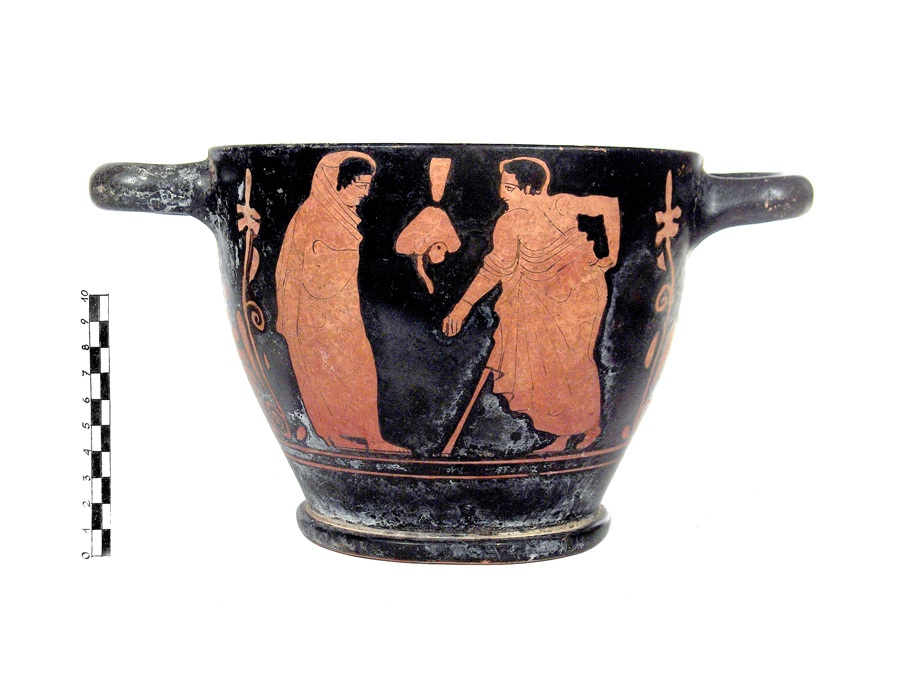
The image shows a black-figure vase from ancient times, featuring Greek artistry with human figures depicted in profile. The style is characteristic of Athens' golden age and is commonly associated with Etruscan art as well.

WF 67: Bari, inv. 43799 Skyphos (Soprintendenza per I Beni Archeologici della Puglia, storeroom)
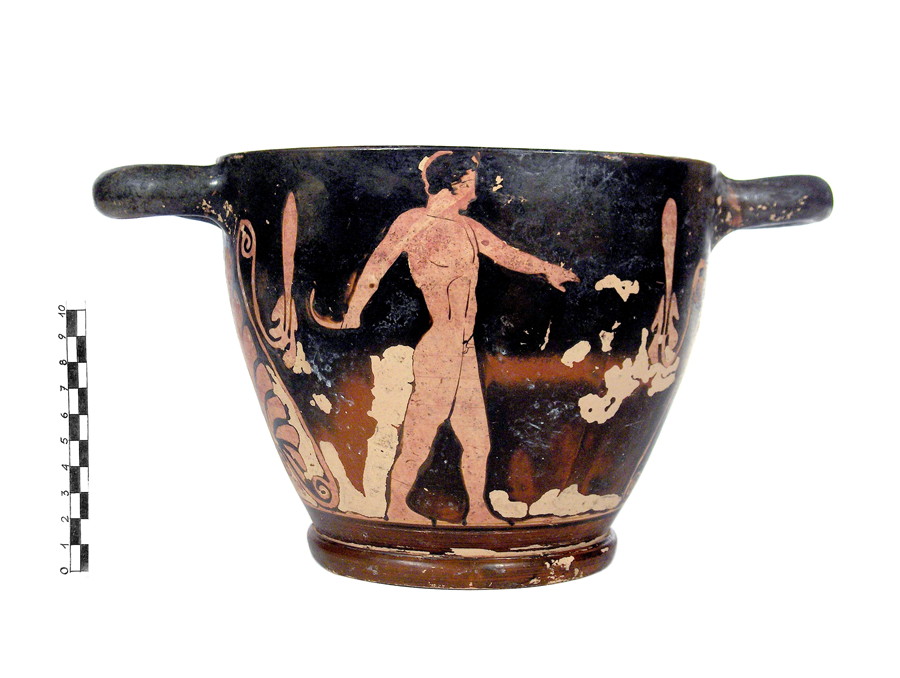
This is a photograph of an ancient Greek vase featuring a depiction of two figures in profile, one appearing to be walking away from the other. The vase has a faded color with hints of original red and black detailing and is likely made of terracotta.

WF 68: Bari, inv. 43800 Skyphos (Soprintendenza per I Beni Archeologici della Puglia, storeroom)

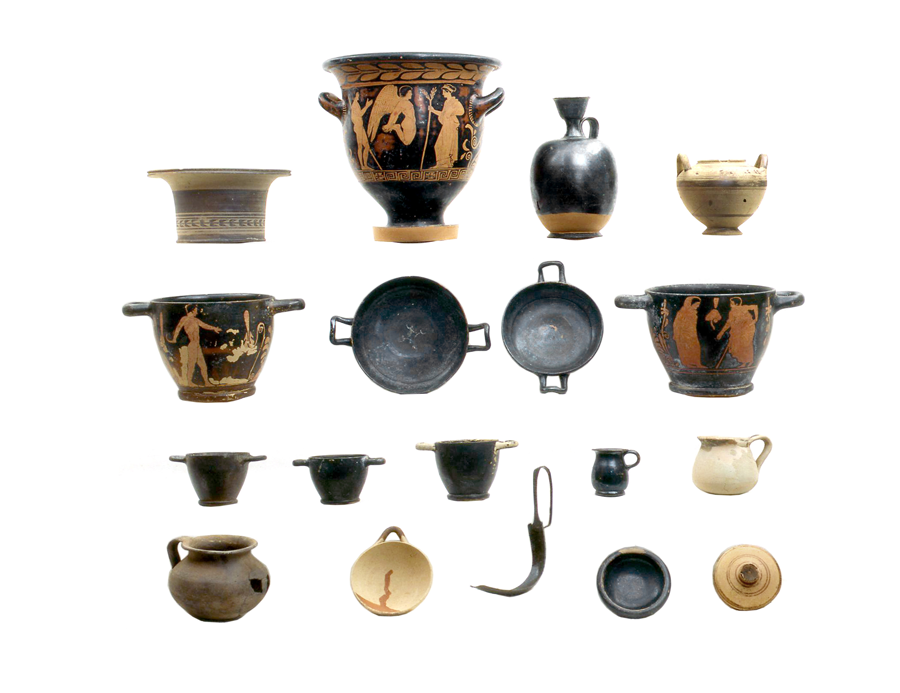
The image depicts a collection of archaeological artifacts, primarily comprising pottery pieces with various shapes and sizes. The materials appear to be clay, some parts showing signs of wear and aging. Some pots are intact while others are fragmented or broken. There is a range in the colors of the glaze or paint on the surfaces, indicating possible variations in their use or origin.

WF 69: Funerary assemblage (after Tarditi 1996, 101-105, 171-172)
The image shows a collection of ancient Greek and Roman ceramics. The artifacts include various types of vases, bowls, and cups with visible decorative elements such as painted figures, patterns, and handles. Each piece exhibits different shades of brown and black, indicative of the techniques used in their creation, such as the red-figure technique for some vases.

WF 70: Bari, inv. 43799 in tomb group (Soprintendenza per I Beni Archeologici della Puglia, storeroom)
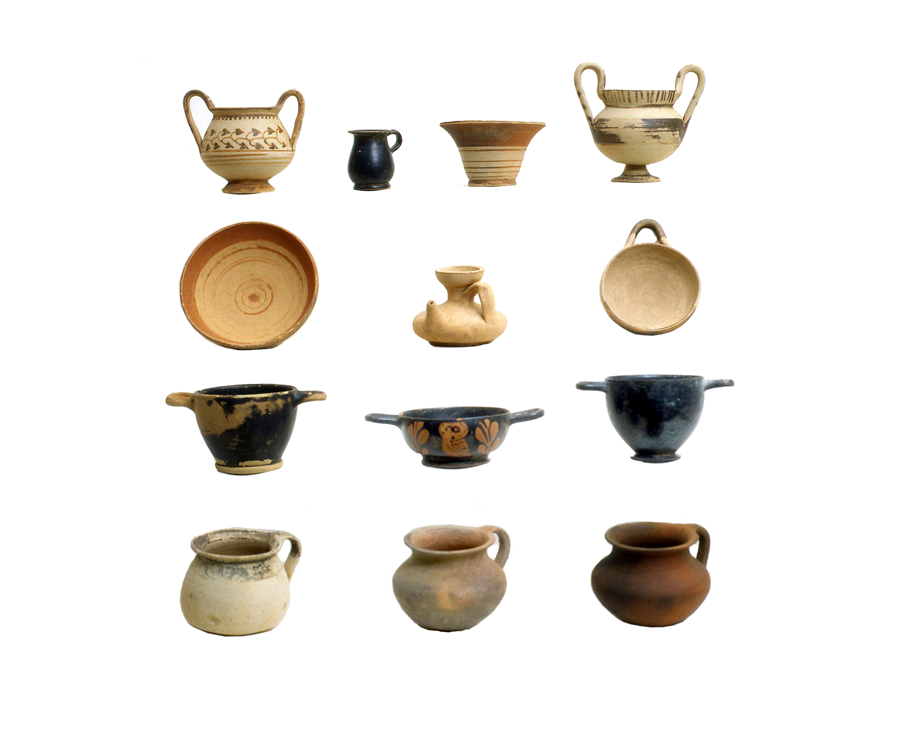
The image displays a collection of ancient Greek and Roman vases, showcasing various shapes, sizes, and decorative styles. These vases are typically made of ceramic and feature designs ranging from geometric patterns to scenes depicting mythological figures or daily life activities.

WF 71: Bari, inv. 43749 – 43751 in tomb group (Soprintendenza per I Beni Archeologici della Puglia, storeroom)
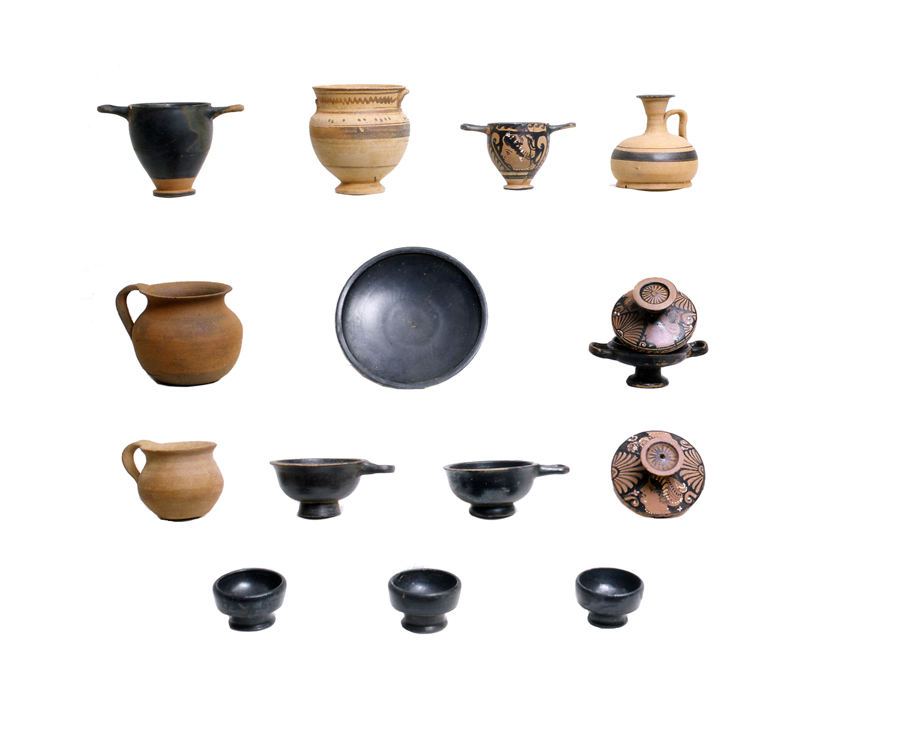
The image displays a collection of ancient pottery items. Among them are intact and fragmentary pieces with various shapes, sizes, and designs on their surfaces. The material appears to be clay, indicative of their likely terracotta construction, which is common for pottery from the past. Some fragments show visible decoration or glazing that might suggest cultural significance or artistic value when considered within an archaeological context.

WF 72: Funerary assemblage, Via Castellana, Tomb 2. (Soprintendenza per I Beni Archeologici della Puglia)
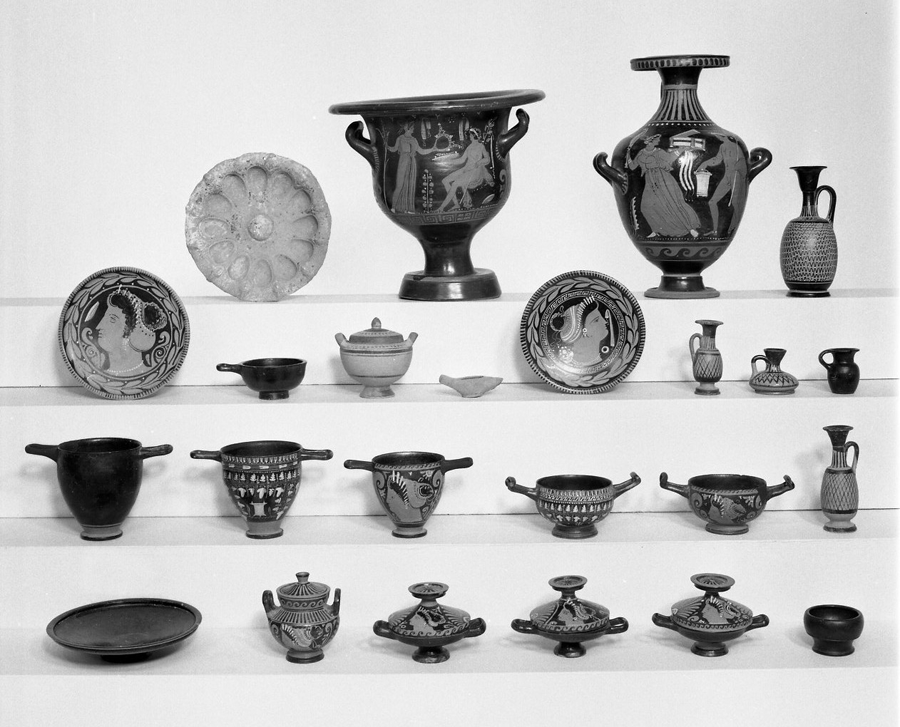
The image displays a collection of antique vases, plates, and bowls with intricate designs. They are crafted from ceramics and feature various shapes, colors, and patterns, reflecting the craftsmanship and styles from different periods in history. The items showcase a range of decorative elements such as scenes, figures, and geometric motifs.

WF 73: Funerary assemblage, Via Castellana Tomb 1. (Soprintendenza per I Beni Archeologici della Puglia)
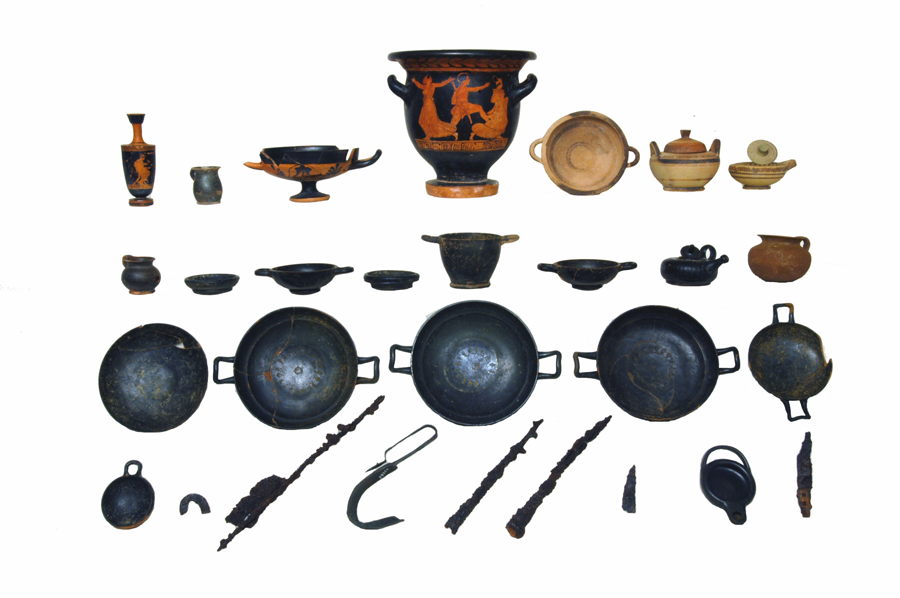
The image displays a collection of ancient Greek and Roman vases, each with its own distinct design and color patterns. They showcase a variety of styles from different historical periods, providing an overview of the evolution of pottery techniques and artistic preferences in classical antiquity. The materials used are typically clay and other earthenware components, which have been fired to produce hard and durable ceramics.

WF 74: Funerary assemblage, Ruvo, Tomb A. Bitonto, Museo Archeologico della Fondazione De Palo – Ungaro
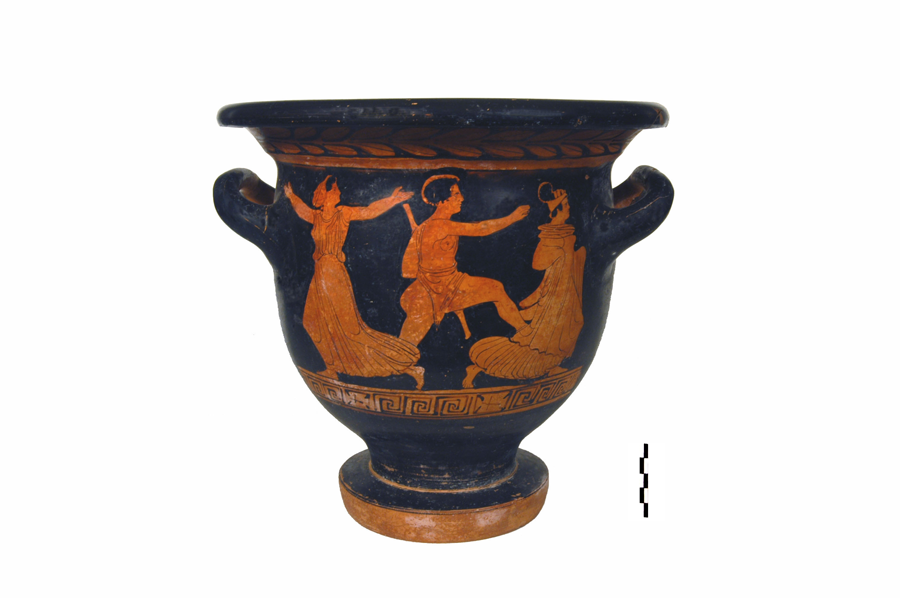
The image shows a black-figured Greek vase with visible human figures depicted on its surface. The scene is likely from mythology or daily life in antiquity, rendered in the distinctive style of ancient Greek pottery. The vase has a round body and stands on an integral base, with handles for carrying at either end.

WF 75: Bitonto, Museo Archeologico. Bari inv. 38321. Bell krater (Soprintendenza per I Beni Archeologici della Puglia)
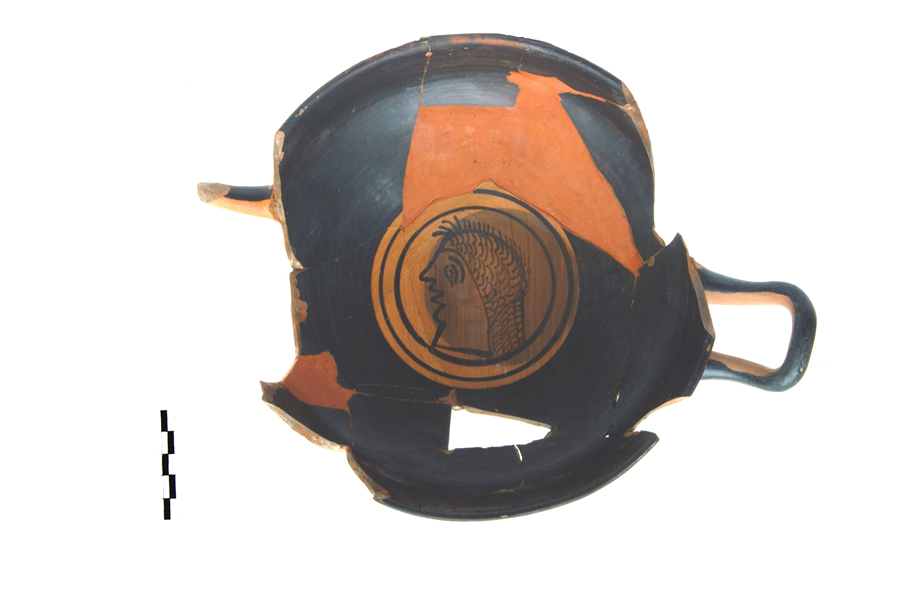
The image shows a fragment of an ancient pot with visible decorative elements. The ceramic has a reddish-orange slip on its surface, and there is a partially obscured human figure design in the center, suggesting it could have been part of a larger scene or narrative.

WF 76: Bitonto, Museo Archeologico. Bari inv. 38331. Cup (Soprintendenza per I Beni Archeologici della Puglia)
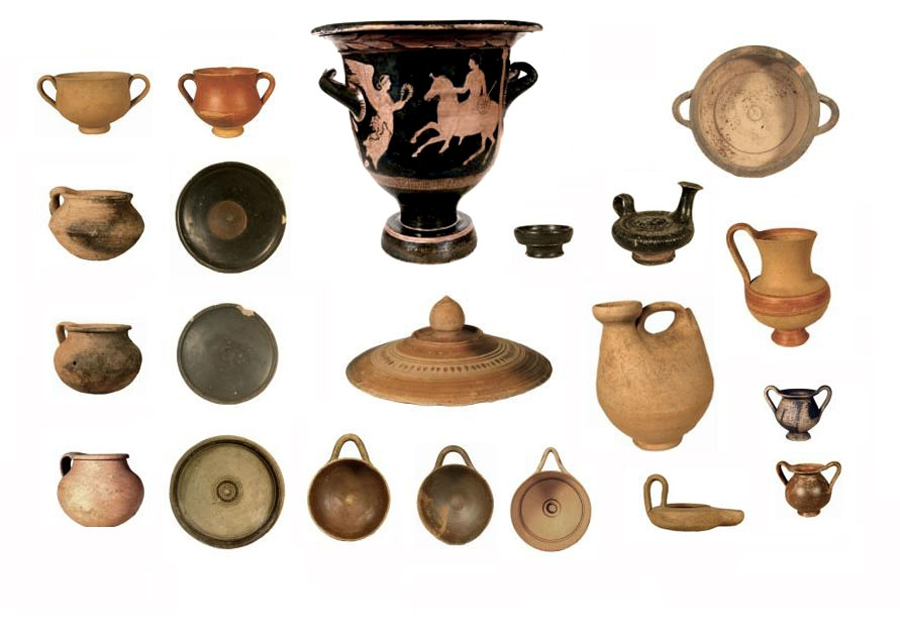
The image displays a collection of ancient Greek pottery items. The objects are predominantly made of terracotta, with visible glazes and painted designs typical of classical period ceramics. Key features include handles, lids, rims, and decorative motifs such as scenes or patterns that can provide insight into the cultural contexts in which these artifacts were created.

WF 77: Funerary assemblage of Ruvo, Tomb 1/1993 (Soprintendenza per I Beni Archeologici della Puglia Bari, storeroom)
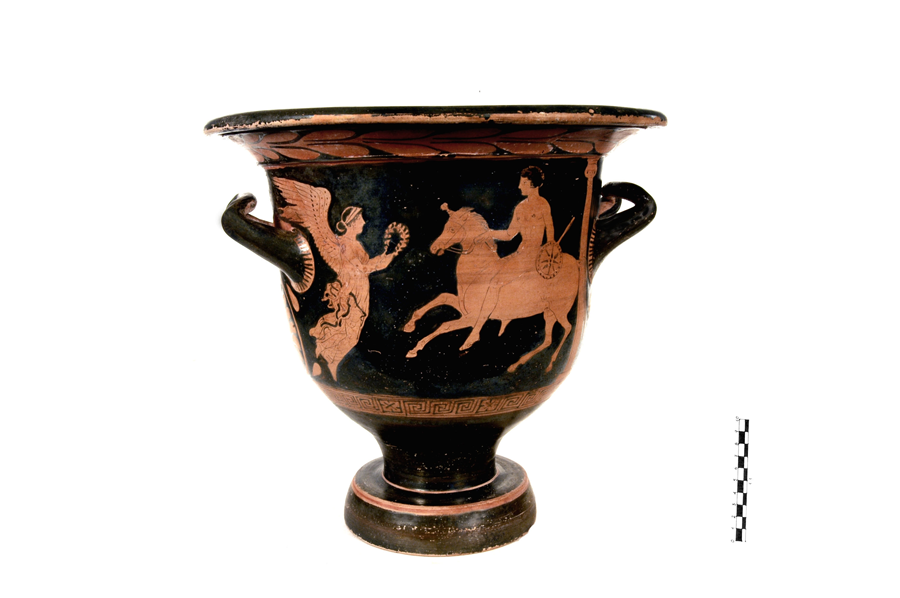
This is an antique pottery bowl with a horse motif depicted on its side. The bowl appears to be made from dark-colored clay and has visible handles for holding, which suggests it may have been used in the past for serving or consuming food or drink. The intricate design on the bowl adds to its aesthetic appeal and historical significance.

WF 78: Bari, inv. 57884. Bell krater (Soprintendenza per I Beni Archeologici della Puglia, storeroom)
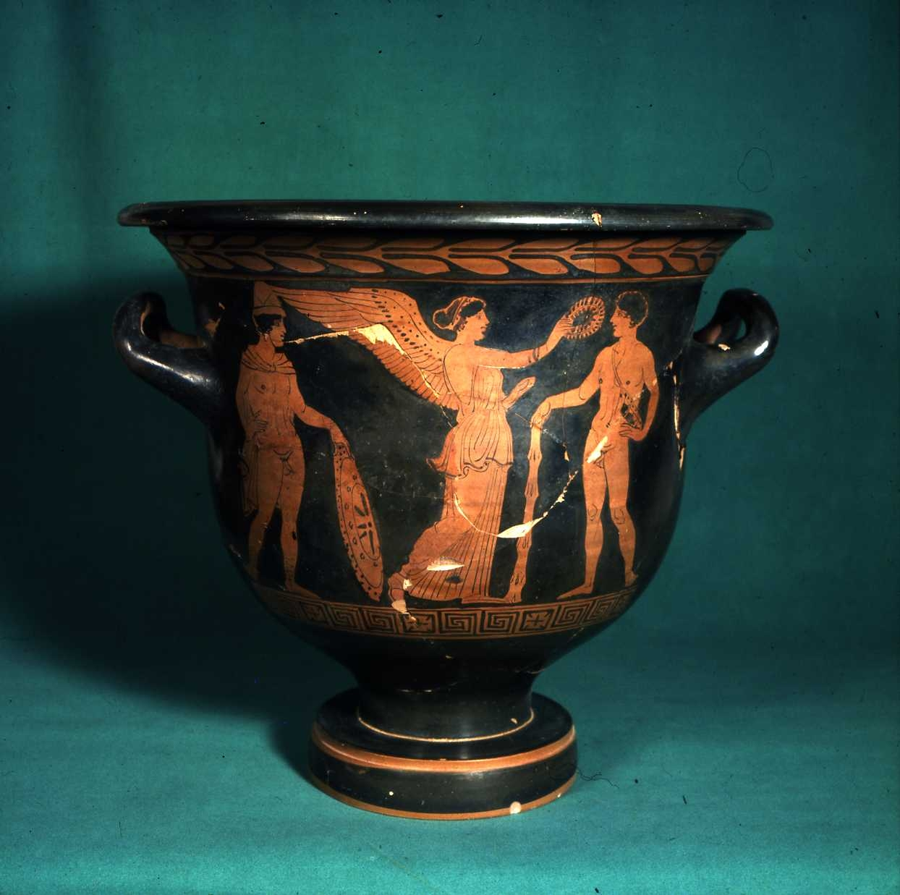
This is an ancient Greek vase, made from terracotta with black-figure decoration. The vase depicts scenes with figures wearing robes and engaging in various actions. It showcases intricate details of the attire and the postures of the human forms depicted on its surface.

WF 79: Bell krater from tomb 29/1978, Rutigliano (Soprintendenza per I Beni Archeologici della Puglia)
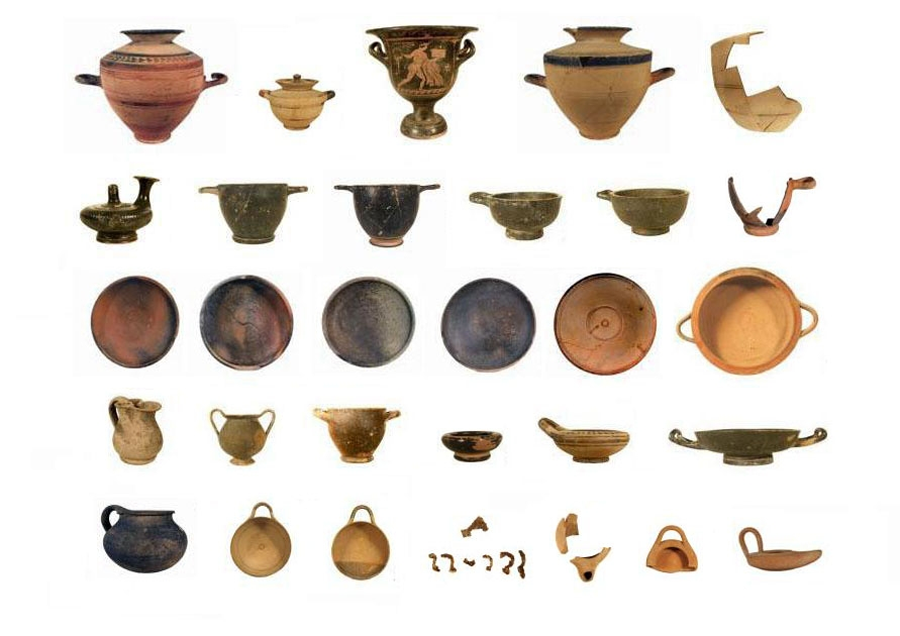
The image displays a variety of ancient pottery vessels with different shapes, sizes, and designs. The pots are made from ceramic materials and show signs of wear indicative of their age. The photo is taken against a neutral background which helps to highlight the details and colors of the objects.

WF 80: Funerary assemblage from Ruvo, Tomb 2/1997 (Soprintendenza per I Beni Archeologici della Puglia)
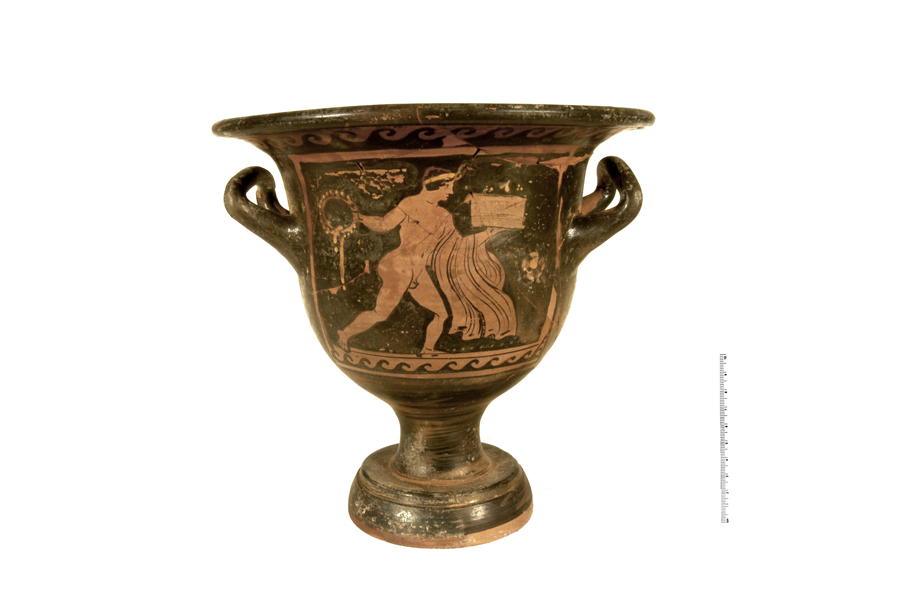
Ancient Greek vase depicting a figure in mid-stride, possibly on horseback, with intricate patterns and text inscriptions; made of terracotta.

WF 81a: Bell krater, Chevron Group (Soprintendenza per I Beni Archeologici della Puglia, storeroom)
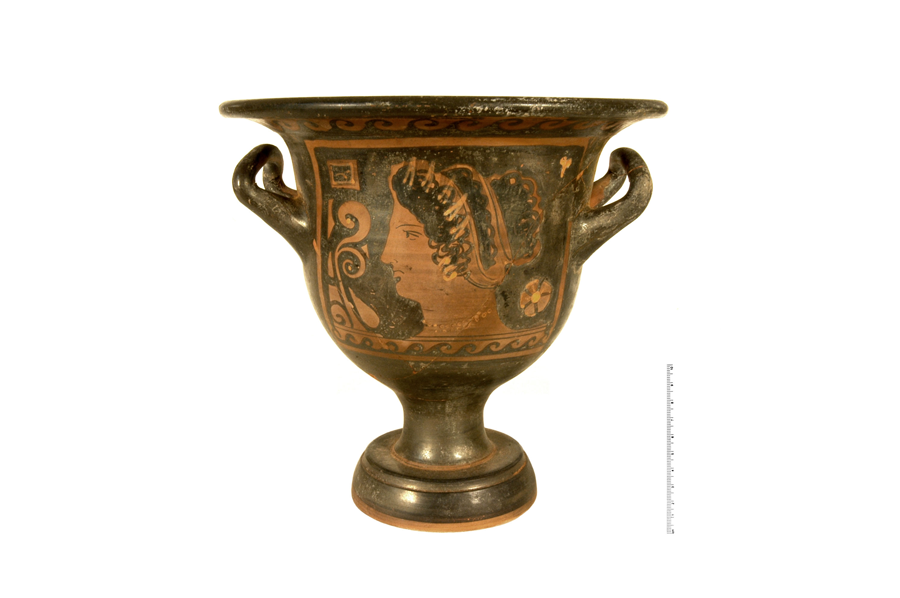
Ancient artifact resembling a drinking cup with handle, featuring intricate designs on its side and base, made from a material that has aged into a dark color, possibly bronze or copper.

WF 81b: Bell krater, Chevron Group (Soprintendenza per I Beni Archeologici della Puglia, storeroom)
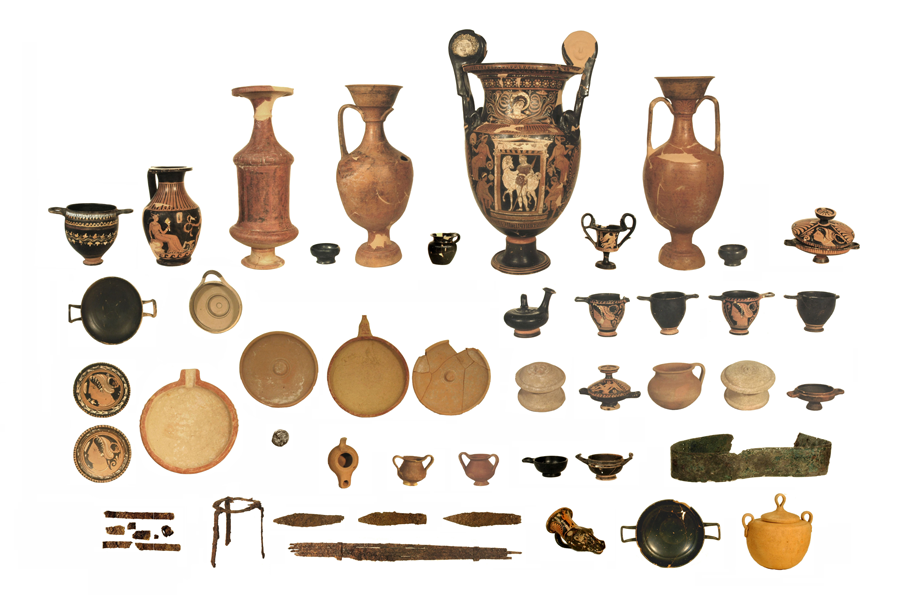
This is an image featuring a collection of ancient Greek vases, known as amphorae. They are made from terracotta clay and display various colors due to the firing process and decorative techniques used in antiquity. Each vase exhibits different designs and patterns indicative of the artistic styles and cultural themes from the time period they were created. The varying sizes and shapes also suggest their functional roles, such as storage or transportation of liquids like oil or wine.

WF 82: Funerary assemblage from Ruvo Tomb B (Soprintendenza per I Beni Archeologici della Puglia)
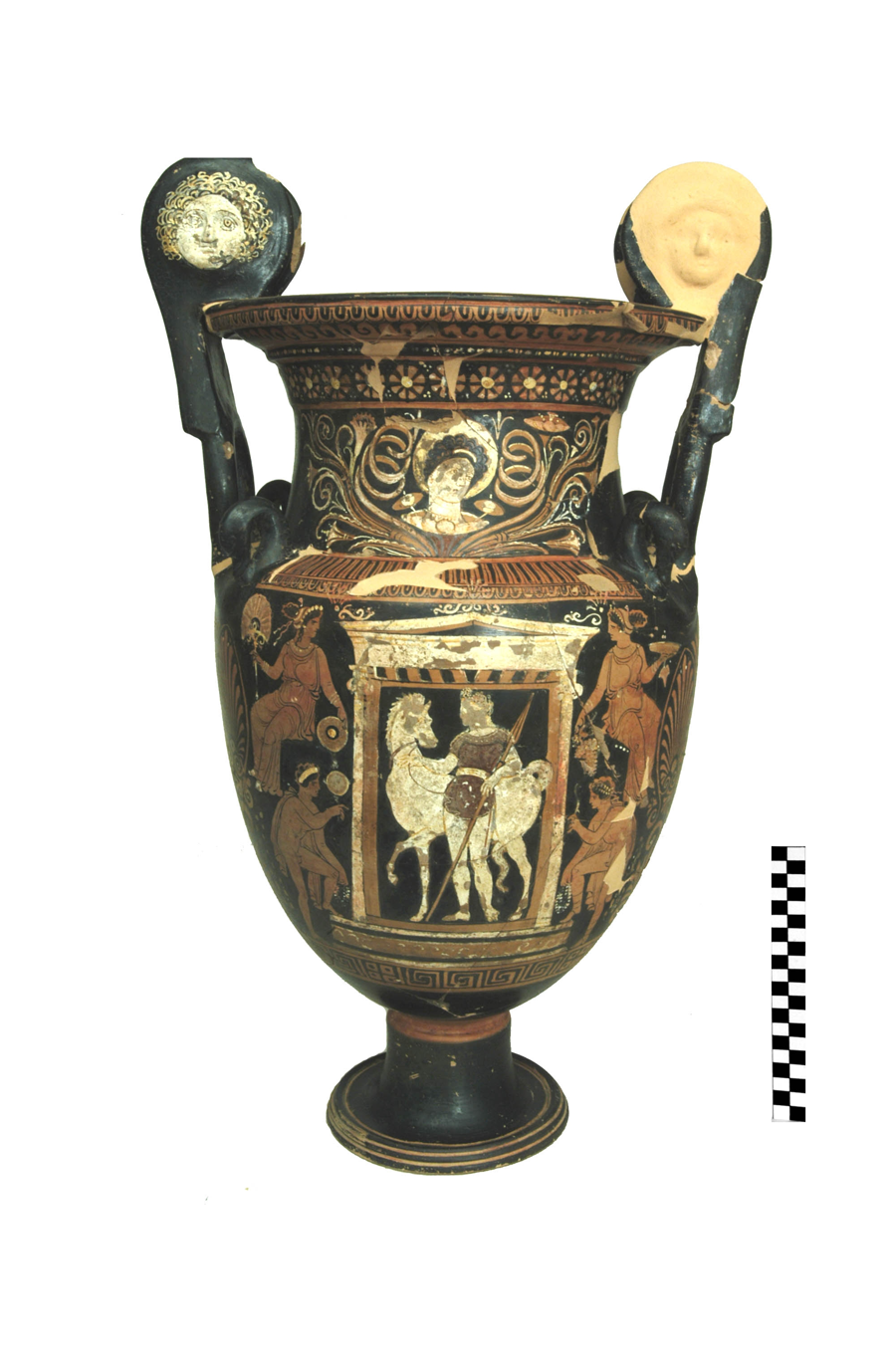
The image displays an intricately decorated ancient Greek vase known as a krater. It is cylindrical with two handles and depicts various scenes, including human figures. The style of the art on the vase suggests it may be from the Hellenistic period, which was characterized by dramatic and detailed storytelling through pottery designs.

WF 83: Bitonto, Museo Archeologico. Bari inv. 57825. Volute krater, Baltimore Painter (Soprintendenza per I Beni Archeologici della Puglia)

Ancient Greek vase with black glazed surface depicting scenes of warriors in classical attire.

WF 83 (detail): Bitonto, Museo Archeologico. Bari inv. 57825. Volute krater, Baltimore Painter (Soprintendenza per I Beni Archeologici della Puglia)
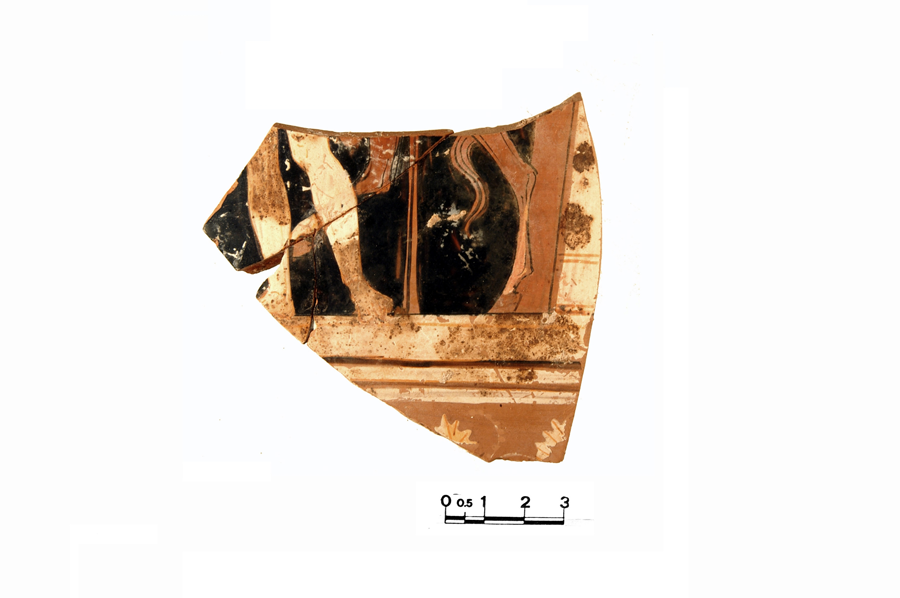
The image shows a fragment of an ancient ceramic shard with visible patterns and designs. The object appears to be made of clay, and its key visual features include the textured surfaces and intricate decorations typical of historical pottery pieces.

WF 84: Fragment from Ceglie del Campo, Baltimore Painter (Soprintendenza per I Beni Archeologici della Puglia)