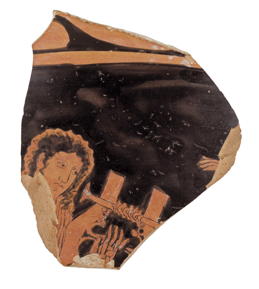
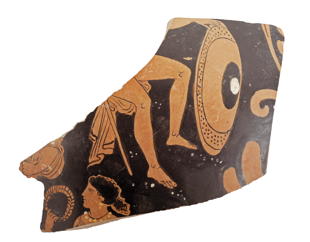
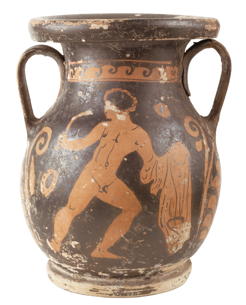
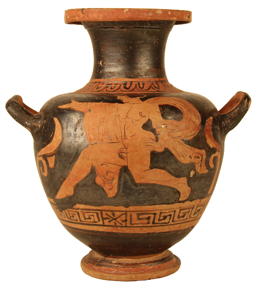
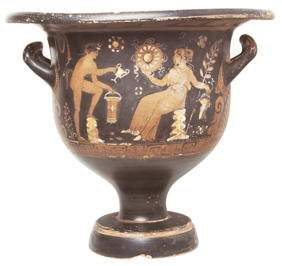
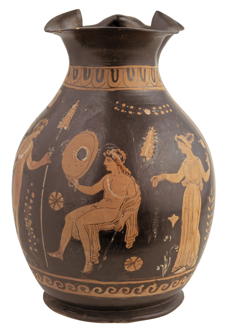
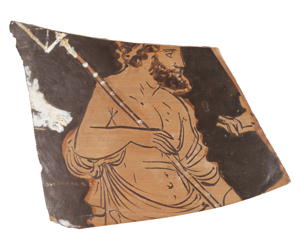
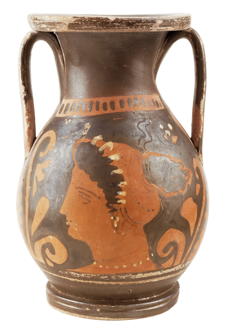
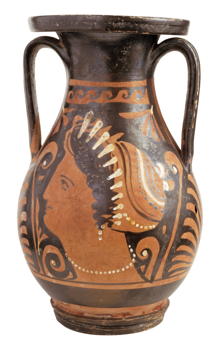
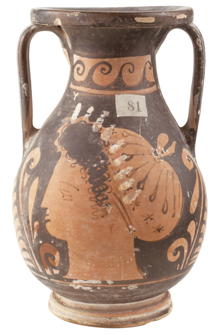
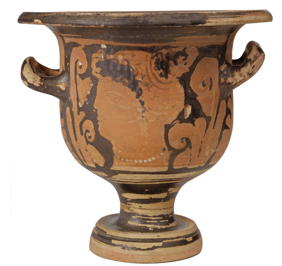
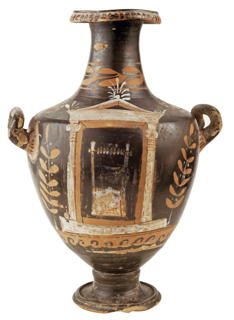
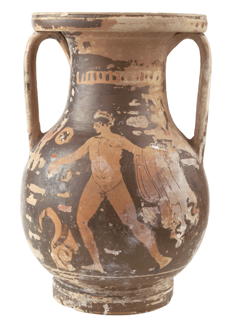
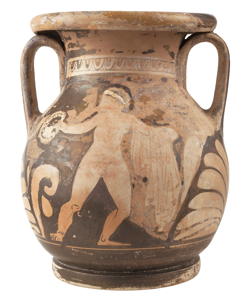
Ancient ceramic fragment with intricate designs and patterns, featuring what appears to be a face profile at one end.

Vases Analyzed in Ch. 11

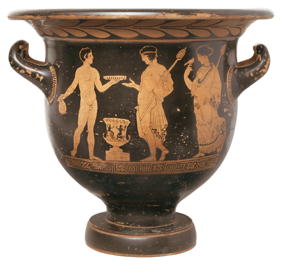
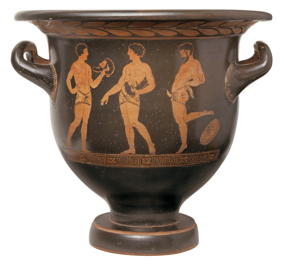
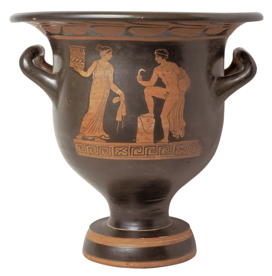
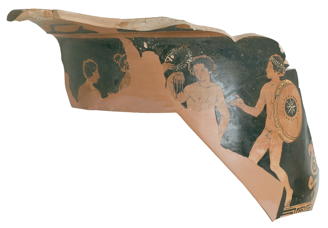
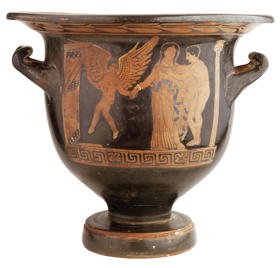
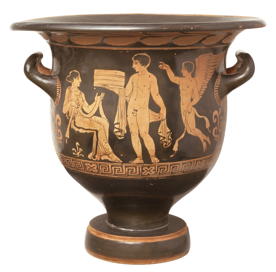
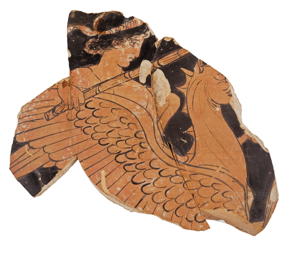
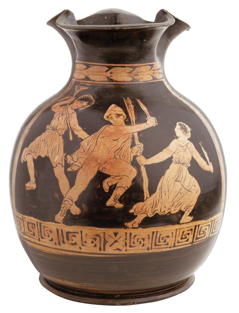
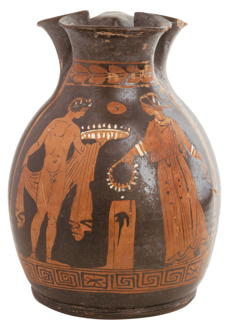
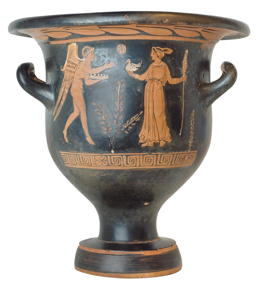
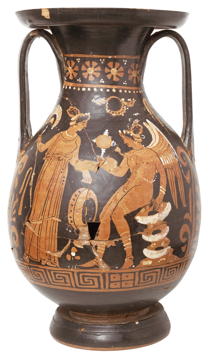
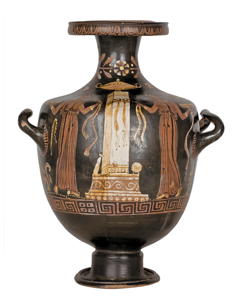
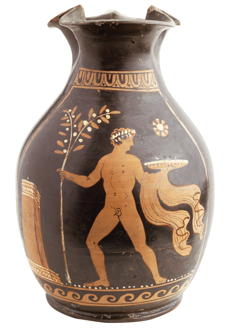
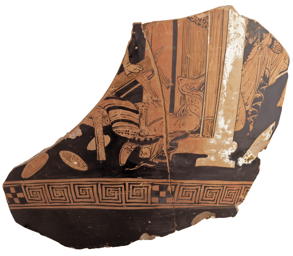
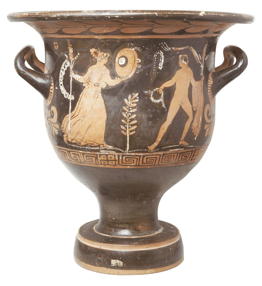
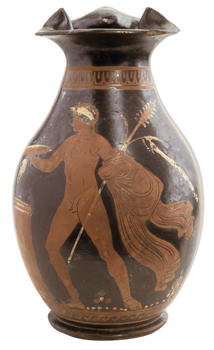
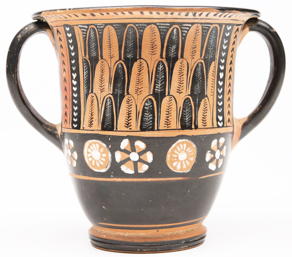
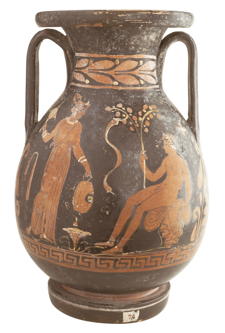
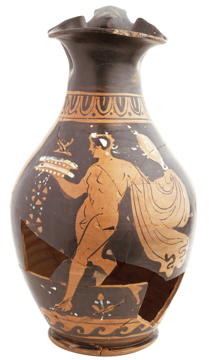
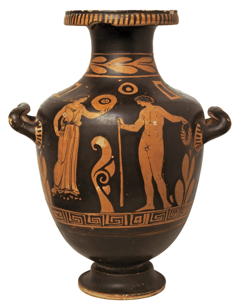
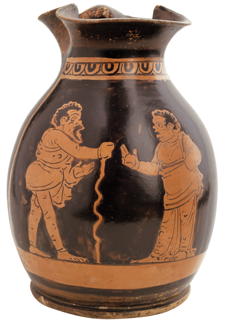
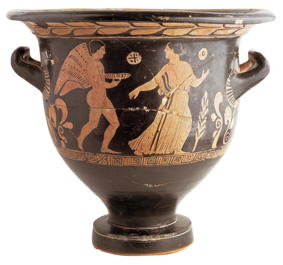
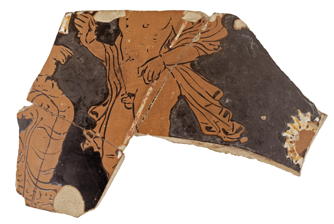
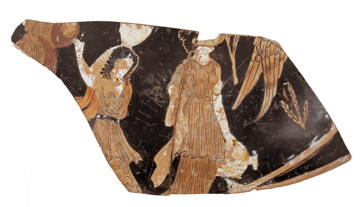
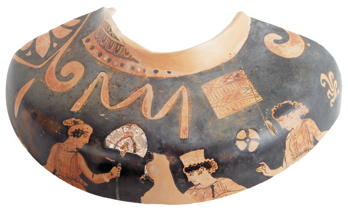
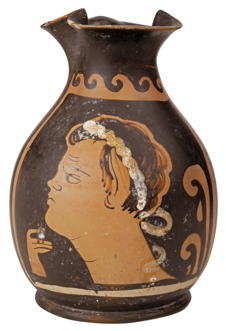
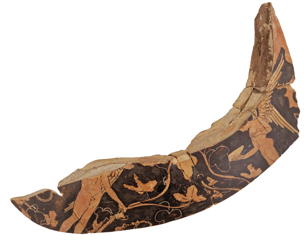
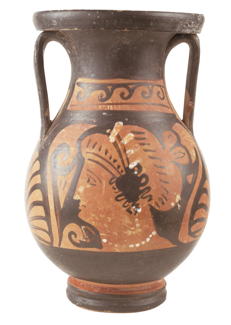
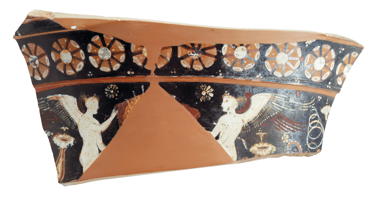
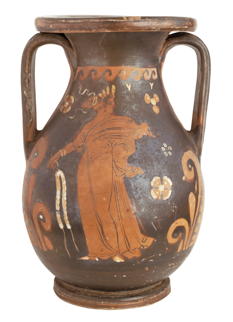
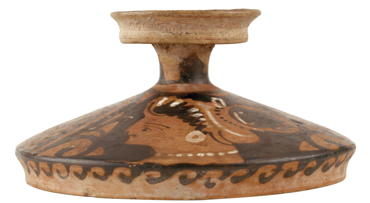
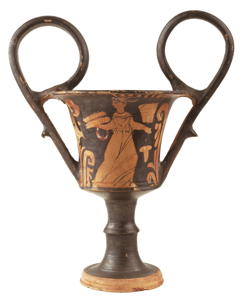
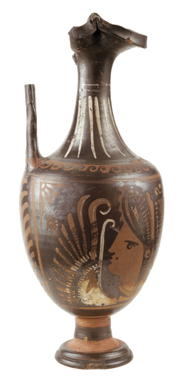
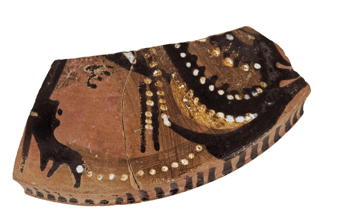
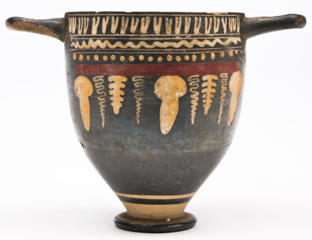
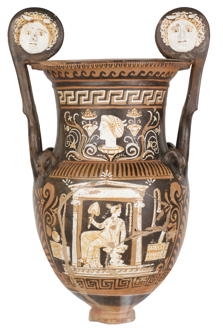
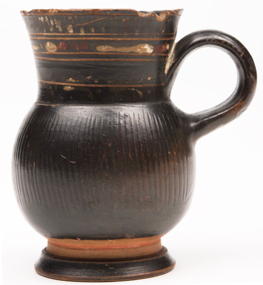
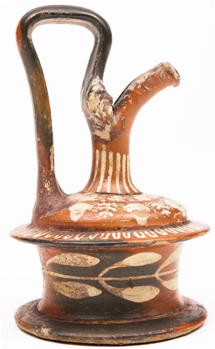
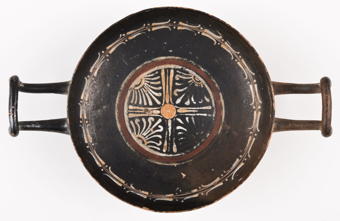
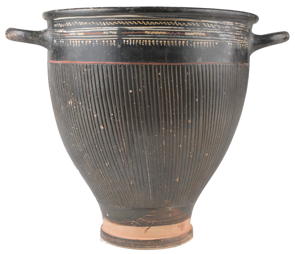
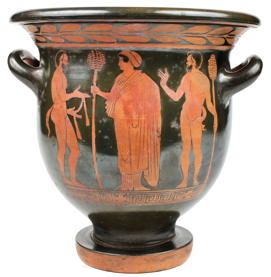
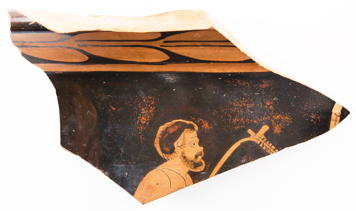
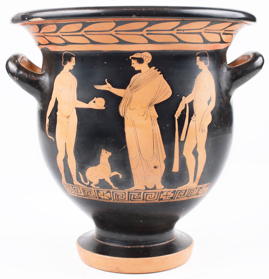
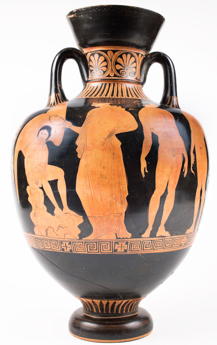
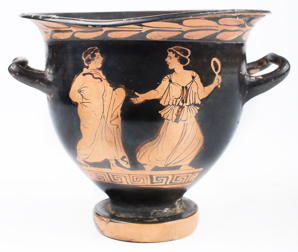
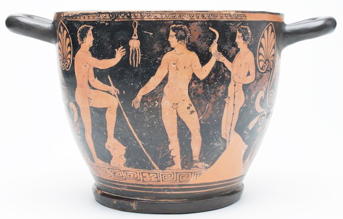
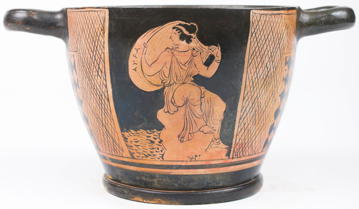
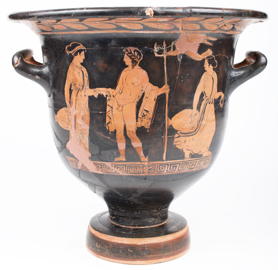
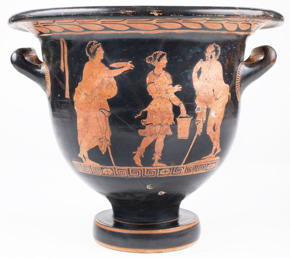
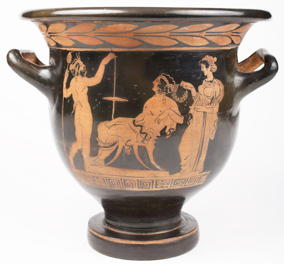
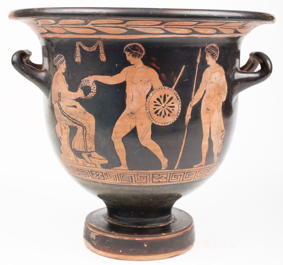
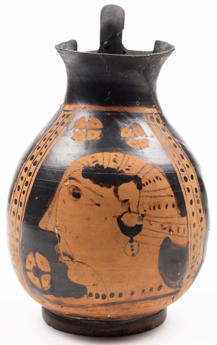
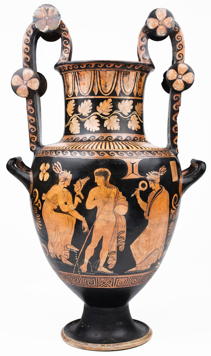
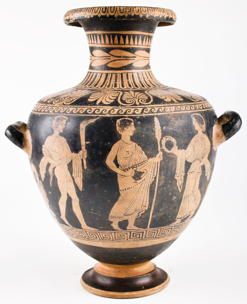
Visual of vases in the Nicholson Museum, Sydney analyzed and discussed in Chapter 11, E.G.D. Robinson, "Archaeometric Analysis of Apulian and LucanianRed-Figure Pottery."

A textual list is available.

CVA refers to the first and second fascicules in the Australia series

Apulian red-figure

The image shows a fragment of an ancient pot with painted details. The visible part includes depictions of figures and possibly elements related to mythology, suggesting it may have been used for religious or ceremonial purposes.

1 Inv. 51.37

This is a vase with an intricate scene depicted on its surface, featuring human figures engaged in various activities. The design includes multiple lines and patterns, suggesting a classical motif possibly from ancient Greek or Roman culture. The material of the vase appears to be clay, indicating it could be an example of ancient pottery craftsmanship.

2 Inv. 54.4

This is an ancient Greek vase with a depiction of three male athletes in athletic poses. The vase has a dark brown color and features intricate details on the body, including figures engaged in activities and textured patterns along the rim and handles. It appears to be a ceramic piece, possibly made for decorative or ceremonial use.

3 Inv. 47.5

This is a photograph of an Ancient Greek vase with a painted scene featuring two figures, possibly gods or goddesses, engaged in what appears to be a ritual or mythological event. The vase has intricate designs and patterns, which are characteristic of the pottery style from ancient Greece.

4 Inv. 98.44

The image depicts a fragment of an ancient Greek vase featuring intricate black-figure pottery decoration, which typically includes figures and scenes from mythology or everyday life. The visible scene includes at least two individuals in traditional attire, suggesting a narrative element typical of such artwork.

5 Inv. 97.187

Ancient Greek amphora with a scene depicting two winged gods assisting a third figure, rendered in black-figure technique, featuring intricate details and decorative motifs on the handles and neck.

6 Inv. 98.42

The image displays an ancient Greek vase, specifically a krater, which is typically used for mixing water and wine during symposia. The krater features intricate black-figure decoration with scenes of gods or mythological figures, including one figure holding a torch, indicating the presence of light or illumination in the depicted narrative.

7 Inv. 46.48

The image shows a fragment of an ancient pottery artifact featuring an anthropomorphic creature with bird-like wings, depicted in a classical style. The fragment is brown and black in color, suggesting earthenware material.

8 Inv. 97.193

The image shows an Ancient Greek terracotta krater, featuring a scene of two male figures in athletic attire. The vase has handles on either side and is decorated with red-figure painting technique, which is characteristic of certain periods in ancient Greek pottery.

9 Inv. 88.2

Ancient Greek terracotta amphora with two figures on its side; one is a woman holding an object while standing, and the other appears to be seated, possibly a male figure in a pose indicative of the time period. The vase has handles at both ends, suggesting it was used for storage or transport of liquids, such as oil or wine.

10 Inv. 98.46

This is a classical Greek vase with black-figure pottery technique, depicting two human figures: one standing and holding what appears to be an object above the other figure who is seated on a bench or low seat. The image showcases intricate detailing in the characters' attire and pose, along with architectural elements in the background.

11 Inv. 46.3

This is a fragment of an ancient ceramic vessel with intricate patterns, featuring what appears to be a human figure engaged in some form of activity, possibly dancing or playing musical instruments. The artifact is characterized by its fine detailing and earthy color tones.

12 Inv. 51.48

The image depicts an antique vase crafted from earthenware. It showcases a scene with three figures, likely representing people, in dynamic poses which suggest movement and action. The design features intricate lines and patterns around the neck of the vase, adding to its aesthetic appeal. The overall style and composition suggest that this piece may be of historical or cultural significance.

13 Inv. 73.2

This is an ancient Greek vase with a depiction of figures engaged in what appears to be a mythological scene, possibly from Homeric epic. The vase is made of terracotta and exhibits detailed line-drawn designs.

14 Inv. 98.62

This is an ancient Greek vase featuring a scene with figures, possibly deities or mythological beings, surrounded by various decorative motifs and patterns. The material appears to be clay with multiple colors used in the decoration, suggesting that this is a type of pottery known for its intricate designs.

15 Inv. 98.43

This is an image of an ancient Greek vase featuring a painted scene with human figures. The vase appears to have two handles and a neck, suggesting it is designed for holding liquid. The color palette consists mostly of earth tones with decorative accents and patterns in lighter colors.

16 Inv. 98.59

The image shows a large vase with intricate designs, including depictions of figures and possibly mythological scenes. It is made from a dark-colored clay material, and the patterns are highlighted in lighter colors such as tan or white. The craftsmanship suggests it could be an ancient artifact, likely Greek due to the style of the artwork.

17 Inv. 86.8

This is an image of a black-figure amphora with red detailing. The vase features a scene depicting a nude male figure holding what appears to be a branch, while another character in profile can be seen behind him. The border of the vase has decorative motifs including foliage and floral elements.

18 Inv. 46.47

The image shows a fragment of an ancient Greek vase with intricate black-figure style decoration on the visible side. The material appears to be clay, and there is a pattern consisting of linear designs and possibly a figure, which are typical elements in classical Greek pottery.

19 Inv. 53.10

The image displays a large, round ceramic vase with two handles on either side. The vase is adorned with intricate black-figure designs featuring human figures and decorative elements in the ancient Greek style. Its material appears to be pottery or earthenware, and its color ranges from dark brown to black due to the applied glaze.

20 Inv. 98.153

The image shows a whole ancient vase with human figures on it, likely depicting a scene from mythology or daily life in historical times. The key visual features include the intricate designs and the two figures engaged in some kind of interaction. The material appears to be clay, suggesting that the object may have been fired in a kiln for preservation.

21 Inv. 52.59

The image shows a black-figure Greek vase with intricate designs. The vase appears to be in good condition and is decorated with rows of floral motifs, which are characteristic of this style of pottery. It has two handles on either side for gripping.

22 Inv. 70.3

The image shows a Greek amphora, which is a type of vase typically used for storage in antiquity. It appears to be made from clay with red-figured decoration, featuring human figures and other motifs typical of ancient Greek pottery. The style suggests it may originate from the Hellenistic period (323–31 BCE).

23 Inv. 98.73

Ancient Greek black-figure amphora with a depiction of nude figures, possibly gods or goddesses in a mythological scene. It features intricate details and is characteristic of Greek pottery from the Archaic period.

24 Inv. 62.803

The image shows an ancient Greek vase with a black figure decoration. It depicts human figures engaged in what appears to be a scene from mythology, featuring stylized clothing and hair styles characteristic of the period. The vase has a rounded body and handles on both sides for lifting.

25 Inv. 98.54

This is an amphora, a type of Greek vase used in antiquity for transporting wine or oil. The amphora features a scene depicting two men in what appears to be a wrestling match or struggle.

26 Inv. 75.2

Ancient Greek amphora with two figures depicted in profile; one male with wings, holding a staff, and the other female, wearing a long dress and a veil over her head. Both characters are rendered in an elegant, stylized manner characteristic of classical Greek pottery.

27 Inv. 98.74

This is a fragment of a historical ceramic with visible designs on its surface, including figures that could be human-like characters or mythological creatures. The material appears to be fired clay, and the coloration consists of earthy tones with some areas showing signs of wear and age.

28 Inv. 51.40

The image shows a fragment of ancient Greek black-figure pottery featuring two figures in a scene with one standing and possibly another seated or lying down, rendered with detailed lines and shading. The style suggests a high level of craftsmanship from the classical period.

29 Inv. 51.39

This is a fragmented ancient Greek black-figure vase, featuring human figures engaged in a scene that appears to include music and dance. The visible parts show detailed human figures with textural details like muscles and clothing, along with painted patterns on the surface of the pottery.

30 Inv. 97.184

This is an antique ceramic vase featuring a figure with curly hair, possibly indicative of classical artwork. The person depicted appears to be wearing a headband and has their hand near the face. The style suggests it could be from a historical period, such as Greek or Roman times.

31 Inv. 97.186

The image shows a fragment of an ancient ceramic vessel. The visible part displays intricate designs with various motifs, including what appears to be animals and decorative patterns. The material looks to be earthenware, and the coloration is a combination of brown, black, and orange hues that suggest some form of glazing or firing technique used in its creation.

32 Inv. 51.38

This is an antique earthenware vase depicting a human figure in dynamic pose on its body. The piece shows signs of age and wear, with slight discoloration and the visible texture typical of clay pottery.

33 Inv. 98.47

The image shows a classical Greek vase known as a hydria, typically used for carrying water. It is made of clay and features black-figure painting with intricate designs and figures on its body and handles, which are characteristic of the artistic style during the Archaic period in Ancient Greece.

34 Inv. 98.68

Ancient Greek amphora with two figures painted in black-figure technique, showing a seated woman holding an object and a standing man; visible decorations include floral elements and patterns.

35 Inv. 98.58

The image shows an ancient Greek vase with a depiction of two human figures on one side, adorned in classical attire and engaged in a dance-like pose. The vase is cylindrical with handles and a lid at the top. It features ornamental patterns around its circumference, including geometric shapes and meanders, which are characteristic of ancient Greek pottery artistry.

36 Inv. 52.60

The image shows a fragment of an ancient Greek vase with a painted scene featuring a figure that appears to be male, possibly a deity or hero, in a draped garment. The artwork displays the classical style typical of Greek pottery from the Hellenistic period.

37 Inv. 97.182

The image is of a terracotta amphora with visible decoration on the body in the form of human figures and patterns. The style suggests it could be from an Ancient Greek or Roman period.

38 Inv. 98.67

The image shows an intact clay vase with a decorative pattern featuring human figures. The vase has handles on either side for carrying and is displayed against a plain background, highlighting its details. It appears to be of historical or cultural significance, possibly from an ancient civilization given the style of the design.

39 Inv. 98.65

Ancient ceramic vase with intricate patterns featuring a central profile portrait. The vase is in dark brown tone, and there are visible handles on either side for carrying.

40 Inv. 98.52

This is a photograph of an antique Greek vase with a two-toned color scheme featuring figures, possibly mythological gods and goddesses. The vase has handles on the sides and decorative motifs along its body.

41 Inv. 98.64

The image shows an ancient ceramic pot with a handle. The pot has visible decoration consisting of geometric patterns.

42 Inv. 51.43

Ancient ceramic vase with painted figures; likely terracotta with remnants of original coloration and designs, featuring a human figure and floral motifs.

43 Inv. 98.66

Ancient terracotta lidded jar with intricate patterns, featuring a human-like figure on one side and a floral design around the rim. The artifact is cylindrical with a wide opening at the top and a narrow neck for its handle.

44 Inv. 98.55

Ancient Greek vase with elaborate black-figure decoration, made from terracotta clay; notable for its detailed mythological scene, intricate detailing, and the visible wear on the surface indicating age.

45 Inv. 98.53

The image shows a whole ancient Greek vase, likely made of terracotta. The vase is decorated with intricate scenes and patterns, including figures on its sides.

46 Inv. 98.57

Ancient ceramic vessel with human figures depicted on its side; the pottery shows signs of age and wear, with parts of the imagery faded.

47 Inv. 98.56

The image depicts an antique pottery vase with visible classical motifs. The vase appears weathered, suggesting age and possibly having been excavated from an archaeological site. The design features human figures in a pose reminiscent of ancient Greek or Roman art styles.

48 Inv. 98.61

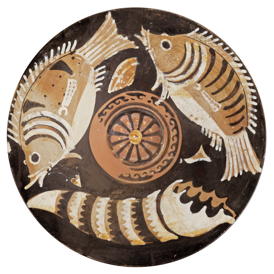
The image depicts an archaeological artifact in the form of a circular fragment of pottery with a decorative motif. The visible designs include stylized fish and aquatic creatures, suggesting marine themes. The fragment appears to have been part of a larger ceramic object, such as a dish or bowl, featuring scenes that likely represent underwater life.

49 Inv. 80.48


“Provincial” Apulian pottery

This is a photograph of an archaeological artifact: an ancient Greek vase with painted scenes on its sides. The vase appears to be made from terracotta and features handles at the top, indicating that it was designed for carrying or transporting liquids. The artwork includes human figures in profile, which is characteristic of certain periods of Greek pottery art.

50 Inv. 98.51

This is an image of a small, round-necked ceramic jar with intricate patterns on its body. The jar has a handle for carrying and appears to have a lid, suggesting it was used for storing liquids or other items in the past.

51 Inv. 97.1

This is an ancient ceramic bowl with visible gold accents around its rim. The bowl has a unique pattern or design on its exterior, possibly depicting animals or decorative motifs, but the exact details are not clearly distinguishable from this angle. The material appears to be earthenware due to its brownish-orange color and texture.

52 Inv. 97.68

This is an ancient Greek vase made from clay with a handle on either side. It features intricate black-figure pottery detailing, which includes human figures and motifs. The vase's shape suggests it was designed for holding liquid or perhaps as a container for ashes.

53 Inv. 98.9

This is an ancient Greek vase, likely a lekythos, made from terracotta with painted decoration. The body of the vase features scenes depicting mythological figures and stories in profile, while the neck has handles for carrying. The overall style suggests it may be related to Athens' black-figure pottery tradition.

54 Inv. 54.7

The image shows an intact ceramic jug with a dark glazed exterior and lighter-colored interior. It has two handles for carrying, suggesting its functional design. The key visual features are the glossy surface of the jug and its overall shape, which is indicative of pottery from historical periods.

55 Inv. 66.155

This is an image of a ceramic amphorae, which is an ancient pottery container with two handles for lifting. The artifact features decorations on its body and base.

56 Inv. 98.84

The image shows a small circular artifact with intricate designs, including a central motif resembling a compass rose. It appears to be made of metal, possibly brass or bronze, and is encased in what looks like a protective material, perhaps wood or plastic. The object has a patina that suggests age and might be an archaeological find.

57 Inv. 53.29

Ancient Greek black-glazed pottery vase with an intricate pattern around its rim.

58 Inv. 98.92


Lucanian red-figure

The image shows a large antique vase made of clay with an intricate design. It depicts human figures in various poses, suggesting scenes from mythology or daily life. The background color is dark, allowing the lighter painted details to stand out prominently. The overall style and craftsmanship indicate that this is likely a piece from classical antiquity.

59 Inv. 46.53

This is an image showing a fragment of an ancient ceramic object, possibly part of a vase or pottery dish. The key visual features include visible painted decoration with human figures and what appears to be a musical instrument, suggesting this may have been used for artistic or ceremonial purposes. The material appears to be clay, characteristic of many ancient ceramics.

60 Inv. 52.63

Ancient Greek amphora with two male figures depicted on the side in profile, standing against a background featuring a bird and other embellishments, crafted from black-glazed clay.


61 Inv. 48.2

This is an image of a Greek black-figure vase with figures depicted on its body, featuring intricate details and patterns typical of this style of pottery. The vase has a handle visible at the top.


62 Inv. 82.32

This is a ceramic vessel featuring two human figures depicted in profile, likely representing an ancient mythological scene. The vase has a traditional design with handles and a base that are part of the overall structure.

63 Inv. 42.1

This is an image of a Greek amphora, which is a two-handled jar with sloping shoulders and a narrow neck. The key visual feature is the black-figure decoration on its body, depicting figures from ancient Greek mythology or history.

64 Inv. 53.31

The image shows an Ancient Greek amphora with a visible handle and body decorated with a narrative scene featuring human figures. The artifact is made from clay and exhibits signs of age, including color fading and slight warping indicative of natural wear over time.

65 Inv. 53.30

This is an image of a ceramic vessel with Greek-style painted decoration featuring human figures engaged in activities. The vase appears to be intact and has handles on either side, suggesting it could be used for storage or as a container for liquids.

66 Inv. 98.41

Ancient Greek black-figure vase with three standing figures and inscriptions on its body; it appears to depict a scene from myth or history, characteristic of the style used by ancient Greek artists for storytelling through pottery decoration.

67 Inv. 98.45

This is an antique Greek vase featuring black-figure pottery artistry, depicting human figures engaged in a narrative scene. The key visual features include the figures' detailed attire and postures, which convey a story from ancient mythology or daily life in classical Greece.

68 Inv. 48.3

Ancient Greek black-figure vase with intricate scenes depicting figures in robes, seated and standing, likely representing mythological characters.

69 Inv. 57.4

The image displays a dark clay vase with an intricate design featuring a face on one side. The style of the face and the decorative patterns suggest it may be from an ancient civilization, possibly Greek or Roman.

70 Inv. 98.79

This is a large Greek vase with intricate black-figured designs depicting human figures engaged in various activities, reflecting scenes from mythology or daily life in ancient Greece. The style of the pottery and its decorations are characteristic of the late archaic period.

71 Inv. 46.46

This is an antique vase made of ceramic. The vase has a distinctive handle on one side with a series of engravings depicting people, possibly in a ceremonial or social context, and the body of the vase features intricate patterns or designs. The style of the artwork suggests it could be from a historical civilization known for such pottery.

72 Inv. 54.1