
| The focus of this book is on the Italic people of Apulia during the fourth century BC, when Italic culture seems to have reached its peak of affluence. Scholars have largely ignored these people and the region they inhabited. During the past several decades archaeologists have made significant progress in revealing the cultures of Apulia through excavations of habitation sites and un-plundered tombs, often published in Italian journals. This book makes the broad range of recent scholarship - from new excavations and contexts to archaeometric testing of production hypotheses to archaeological evidence for reconsidering painter attributions - available to English-speaking audiences. In it thirteen scholars from Italy, the United States, Great Britain, France, Switzerland, and Australia present targeted essays on aspects of the cultures of the Italic people of Apulia during the fourth century BC and the surrounding decades. | 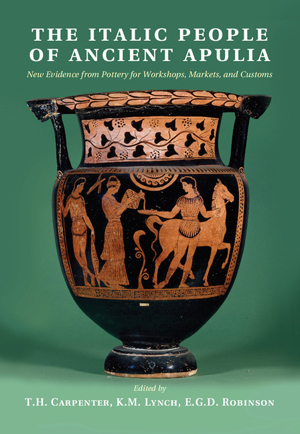 |
© Cambridge University Press 2014