
This is an image depicting a historical artifact from Ancient Apulia. It appears to be a fragment of painted pottery with visible human figures on it, suggesting the representation of people in various positions or activities. The style and quality of the artwork indicate that it may have been part of a larger piece or a series. The artifact's material is not clearly identifiable from the image alone; however, based on its appearance, it could be ceramic or another type of pottery often used in ancient contexts for decoration or storage.

Chapter 3: Didier Fontannaz, Production and Functions of Apulian  Red-Figure Pottery in Taras: New Contexts and Problems of Interpretation

If not specified, all fragments here come from Taranto and are conserved in the National Archeological Museum of Taranto.
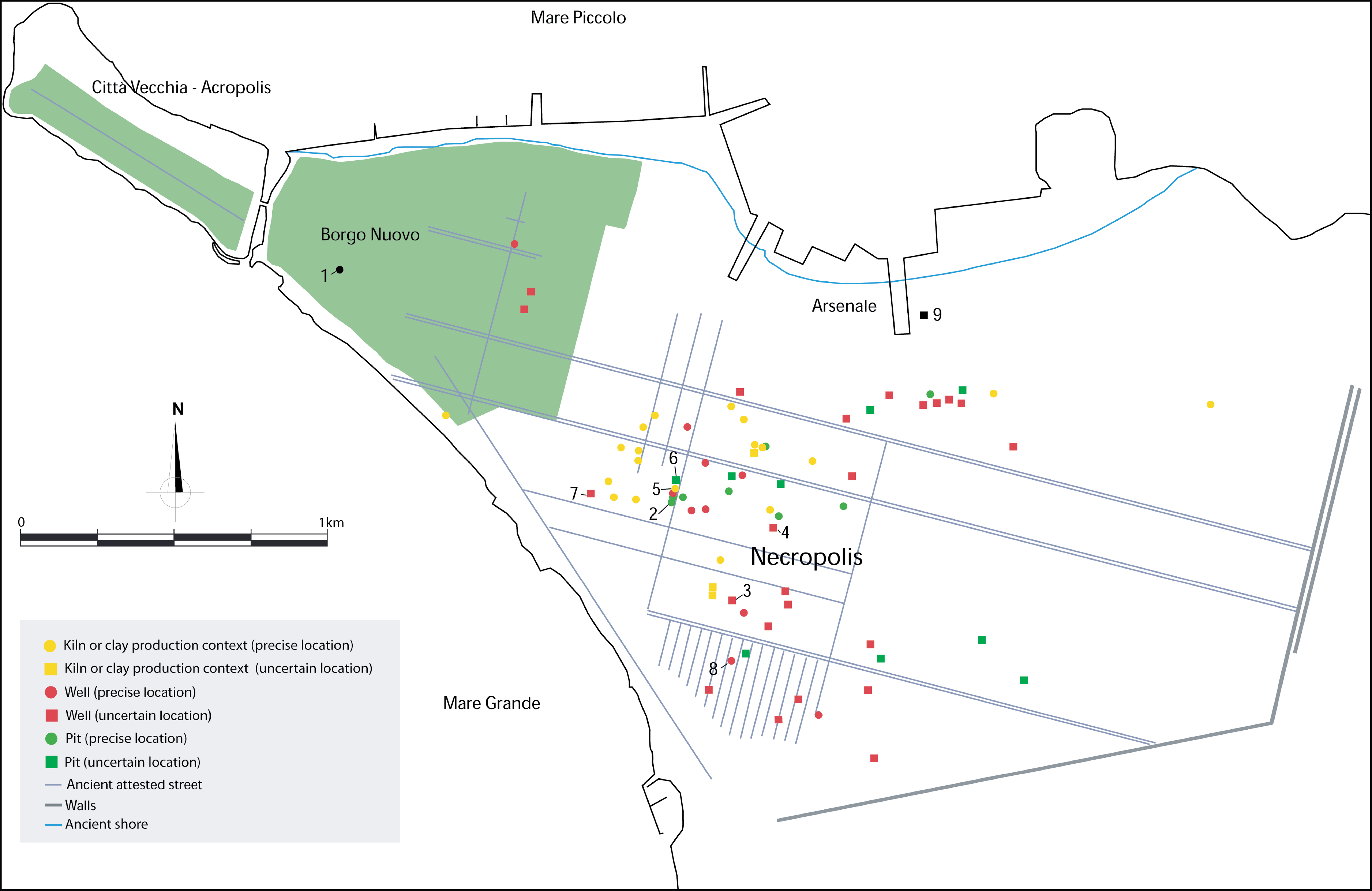
The image appears to be a map with various colored dots, possibly representing locations of archaeological findings. Each dot seems to have a different color label near it, which could indicate the type or classification of the artifacts found at those sites. The labels are too small to read clearly, but they likely correspond to specific types of artifacts such as pottery, tools, or other objects from an archaeological excavation.

WF 26: Map of Classical Taras. Housing/settlement area of the acropolis and Borgo Nuovo (green). The area to the east inside the walls is principally dedicated to the necropolis. In yellow, the location of kiln and clay production contexts of all periods. In green and red, wells and pits with Early Apulian red-figure pottery (D. Fontannaz, adapted from Lippolis 2002).
1. Via Cavour 28.
2. Pit-dump, at the corner of via D'Alò Alfieri and via Leonida, 10-14.05.1959.
3. Well 2, Corso Italia, 1992.
4. Well 111, via G. Giovine, 8.04.1952.
5. Via Leonida 52.
6. Pit-dump, at the corner of via Leonida and via Dante, 28.04.1934.
7. Well 1, via Crispi, between via Dante and viale Virgilio, 13-17.01.1956.
8. Well, at the corner of via Umbria and Medaglie d'Oro, 13-16.07.1965.
9. Maritime Military Arsenal, probable location of red figure finds of the excavations in 1910s.

The image shows an ancient Greek vase fragment with a depiction of a human head in profile. The figure is wearing a crown, suggesting they may represent royalty or deity.

WF 27a: Hydria fragment by the Painter of the Berlin Dancing Girl, Taranto, Museo Archeologico, without inventory number, from Saturo, Spring sanctuary, 16.04.1977. Head of a woman. Unpublished (D. Fontannaz)
This is a fragment of an ancient ceramic vase featuring an artistic depiction of a human figure holding what appears to be a bow and arrow. The style suggests it may be from the Greek or Roman period, known for such narrative pottery art.

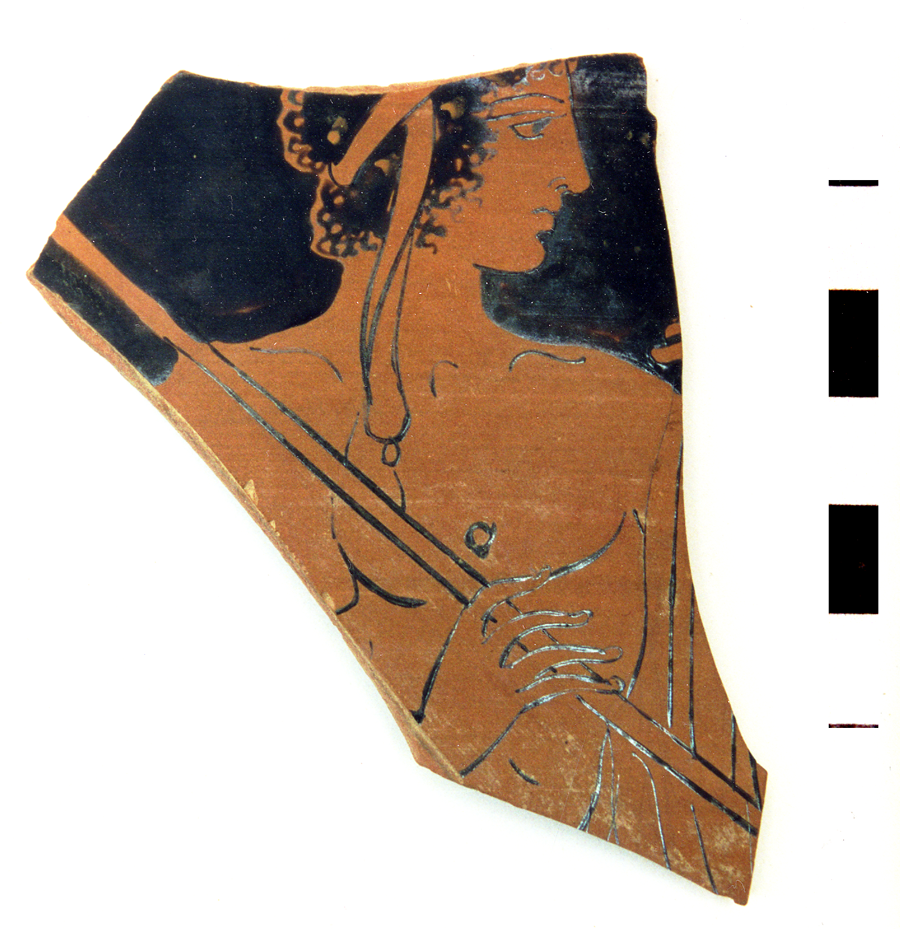
WF 27b: Fragment without inventory number by the Painter of the Berlin Dancing Girl, from Taranto, Corso Italia (SIP), well 2, 31.01.1992. Same context as WF 030. Head and chest of a youth (symposiast ?). (D. Fontannaz)

The image shows a fragment of an ancient Greek pottery with orange-red slip over a black background, displaying part of a figure, possibly female, characterized by flowing garments and drapery, indicative of the style from around 500 BCE to 300 BCE.

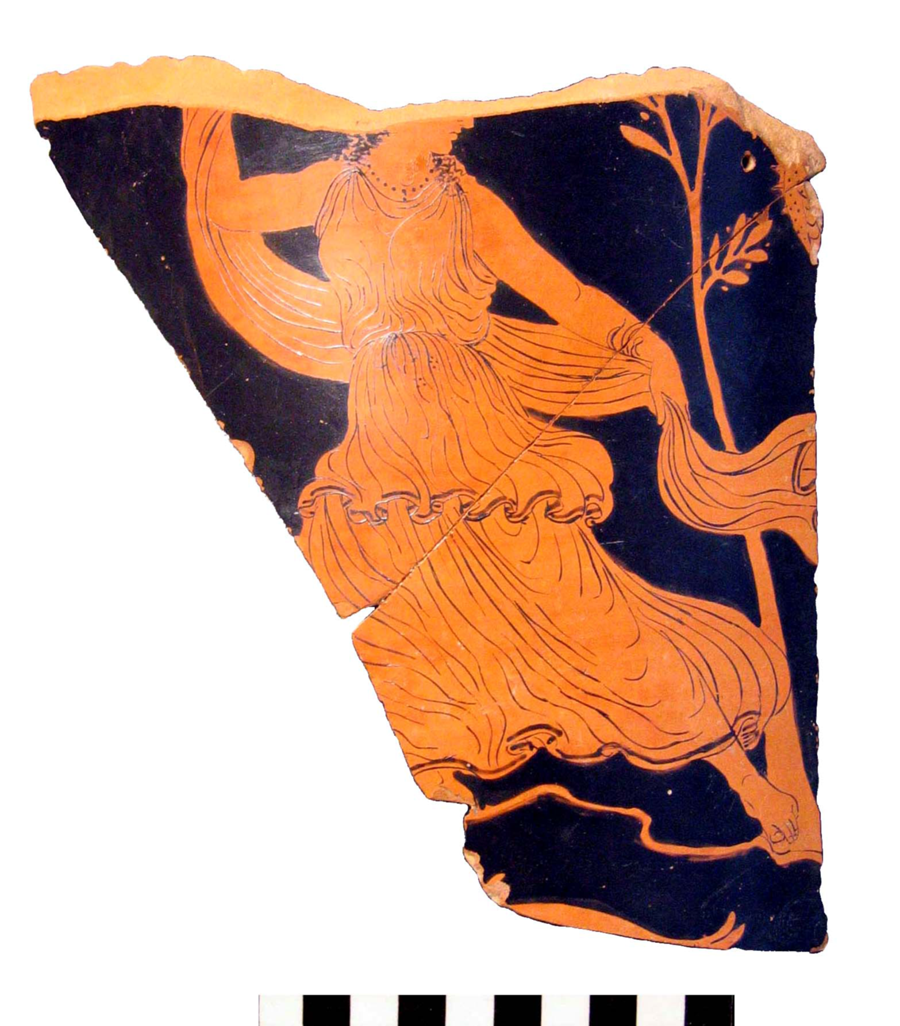
WF 27c: Fragment IG 227227 by the Sisyphus Painter, Arsenal "1912 ?". Unpublished. A woman fleeing a dragon (probably myth of Peleus and Thetis). (D. Fontannaz)
The image shows a collection of ancient ceramics laid out on a surface for study or display. The items include various types of vases and bowls, with visible decorations such as patterns and possibly handles intact. The material appears to be earthenware, characterized by its organic tones and porous texture.

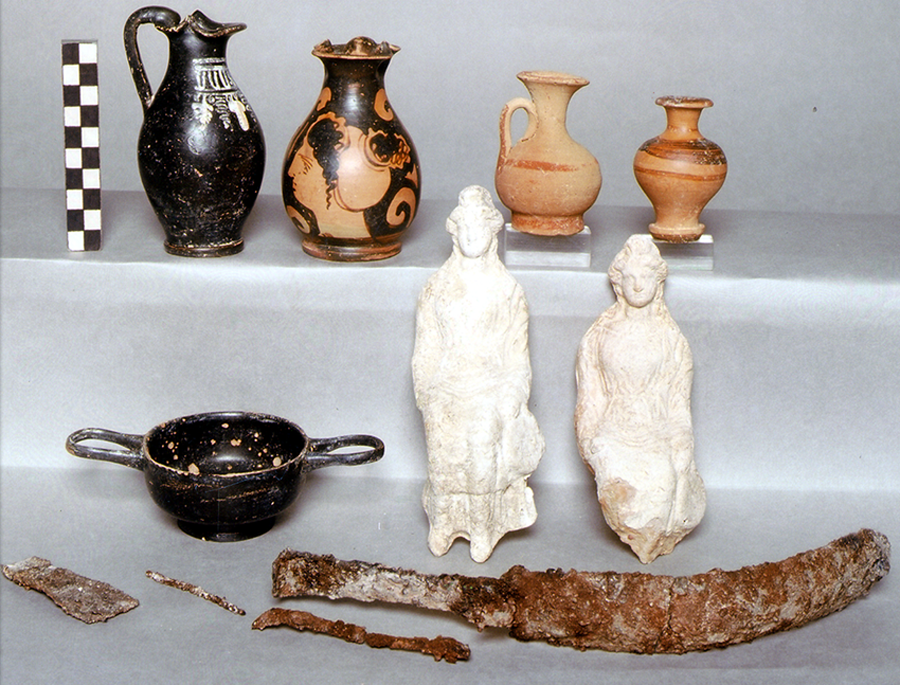
WF 28: Tomb 9, from Pezza Petrosa (chora of Taras). (From the CD of AttiTaranto 41, (Soprintendenza per I Beni Archeologici della Puglia)
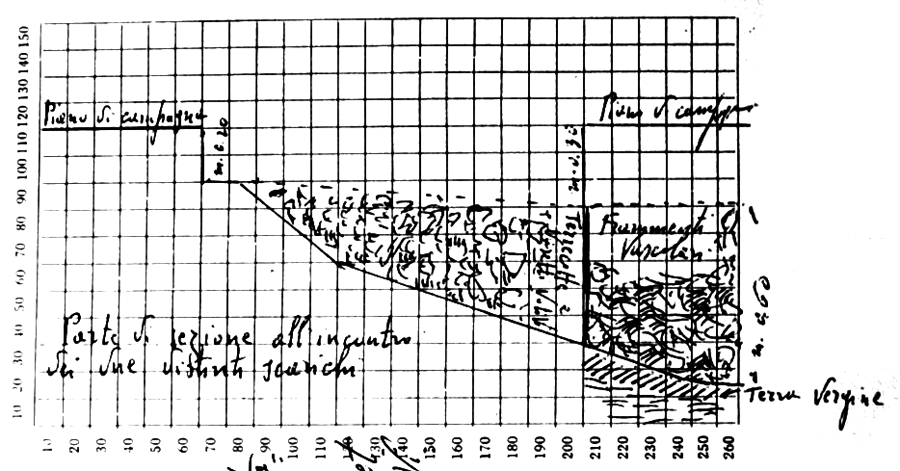
The image is a black and white photograph showing a chart with handwritten annotations on graph paper. The text is too small to read, but it appears to include numerical data points connected by a line graph, which suggests the presentation of scientific or historical information. The material of the artifact being described is not visible in the image.

WF 29: Sketch on a context sheet of a pit with "thousands" of votive miniature vases cut by another pottery deposit at the corner of via D'Alò Alfieri and via Leonida, 10-14.05.1959 (IG 116167-116597). (Soprintendenza per I Beni Archeologici della Puglia)

This is an archaeological image showing fragmented pieces of a vessel with a distinctive design featuring red and brown stripes, possibly made from clay, on a white surface labeled with measurements for scale.

WF 30: Drilled skyphoi, without inventory number, Corso Italia (SIP), well 2, 31.01.1992. Unpublished (D. Fontannaz)
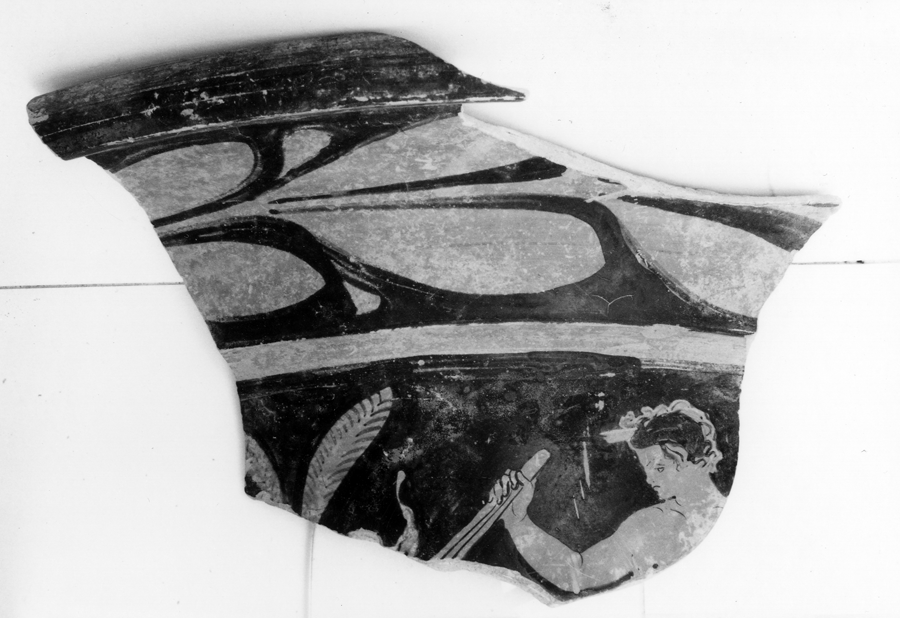
This is a fragment of an ancient pottery vessel with artistic designs. The visible parts show intricate patterns and black glazing on a pale background, indicating possible historical significance.

WF 31: Calyx krater fragment from the well 111, Contr. Vaccarella, via G. Giovine, 8.04.1952. Unpublished (D. Fontannaz)
a. IG 54953, probably by the Lecce Painter. Satyr. Diam. 53 cm
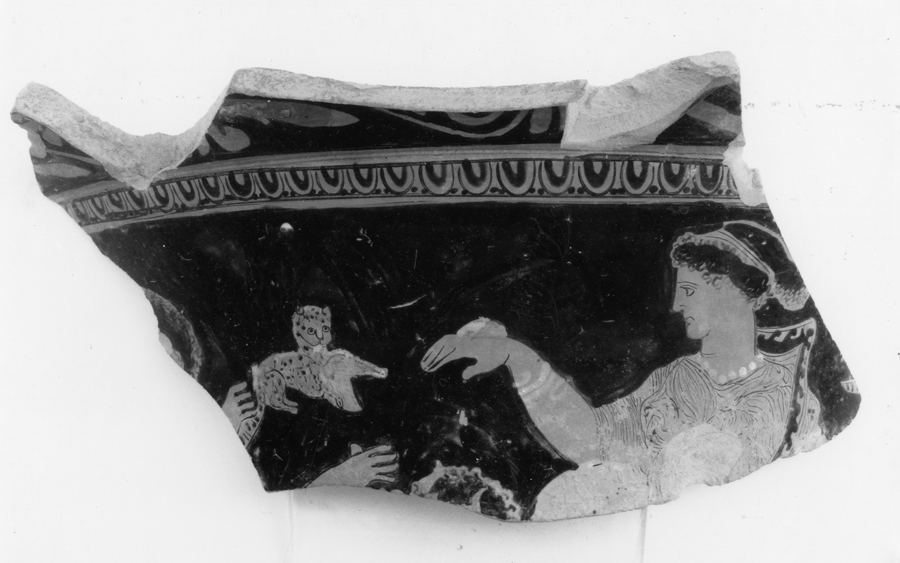
The image shows a fragment of an ancient Greek vase with visible black-figure pottery technique. The piece features what appears to be human figures and possibly mythological creatures, showcasing the artistic style typical of such artifacts from classical antiquity. The condition suggests it may have been damaged or intentionally broken into pieces, as indicated by the rough edge of the fragment.

WF 31: Calyx krater fragment from the well 111, Contr. Vaccarella, via G. Giovine, 8.04.1952. Unpublished (D. Fontannaz)
b. IG 54954, by the Lecce or the "Gorgoneion Painter" (see Fontannaz 2005, 142, near IG 124007, RVAp I 2/18). Pan, woman with a little panther or a cat (?). Diam. 46 cm
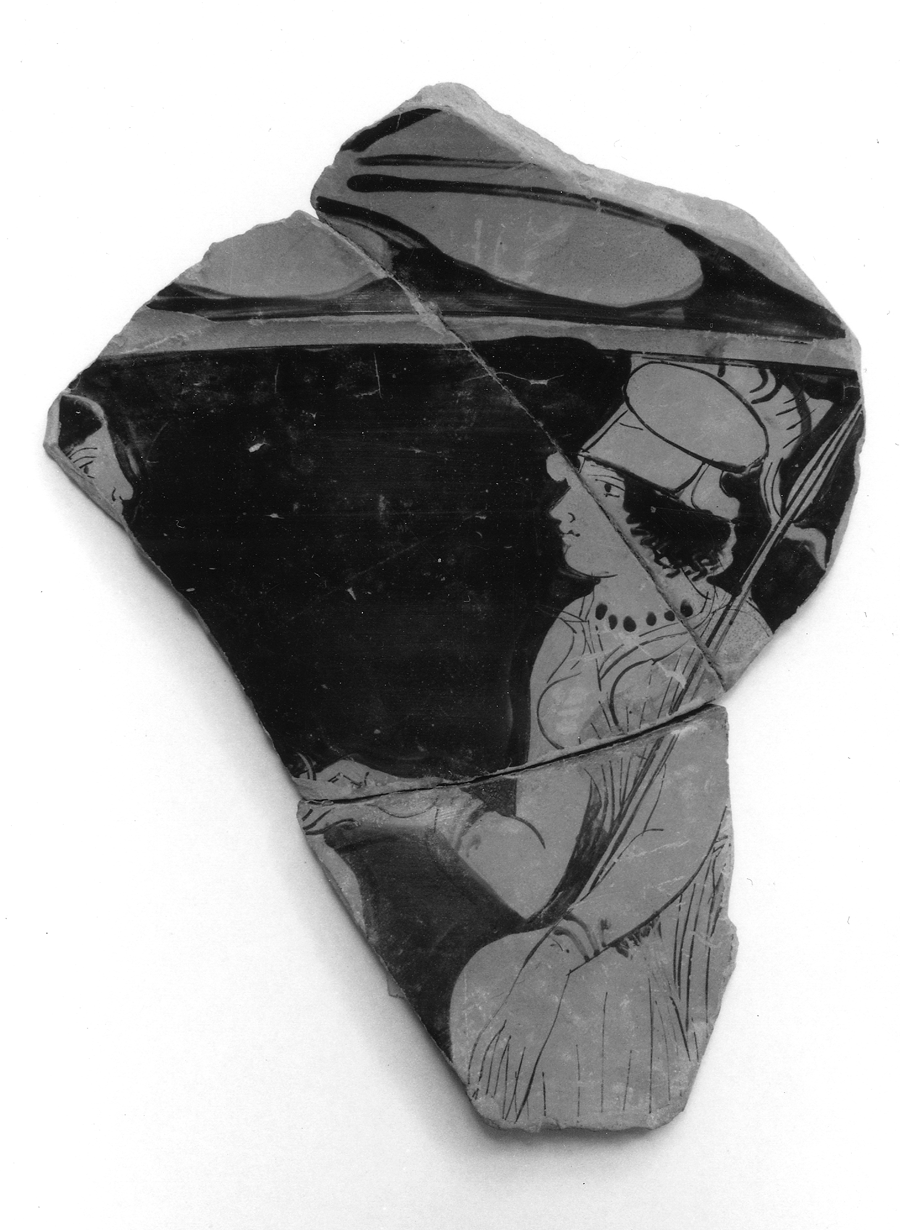
The image shows a fragmented piece of ancient ceramic pottery with visible designs or motifs. The artifact appears to have once been part of a larger vessel, given the presence of curved edges and patterns characteristic of historical ceramics.

WF 31: Calyx krater fragment from the well 111, Contr. Vaccarella, via G. Giovine, 8.04.1952. Unpublished (D. Fontannaz)
c. IG 54951, by the Creusa Painter. Athena with youth. Diam. 29 cm
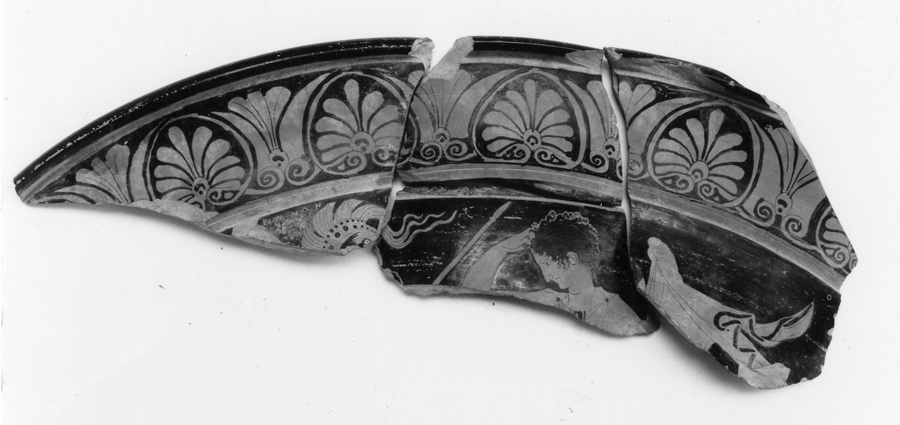
The image shows a fragment of an ornate ceramic or pottery artifact with intricate designs, possibly suggesting an elaborate pattern or motif. The object appears to have been broken and is not complete, revealing its internal structure.

WF 31: Calyx krater fragments from the well 111, Contr. Vaccarella, via G. Giovine, 8.04.1952. Unpublished (D. Fontannaz)
d. IG 54955, by an "Early Lucanian" Painter (Mesagne Painter ?). Inscriptions: [M]em(m)non (with correction), Eos and O[dysseus ?]. Diam. 46 cm

This is an image of a fragment of ancient Greek pottery, specifically what appears to be a portion of a vase with painted decoration. The visible artwork includes human figures and intricate patterns in the black-figure style characteristic of Athenian vases from around the fifth century BCE.

WF 31: Calyx krater fragment from the well 111, Contr. Vaccarella, via G. Giovine, 8.04.1952. Unpublished (D. Fontannaz)
e. IG 54952, by the Arnò Painter. Satyr and Aphrodite (?). Diam. 53 cm
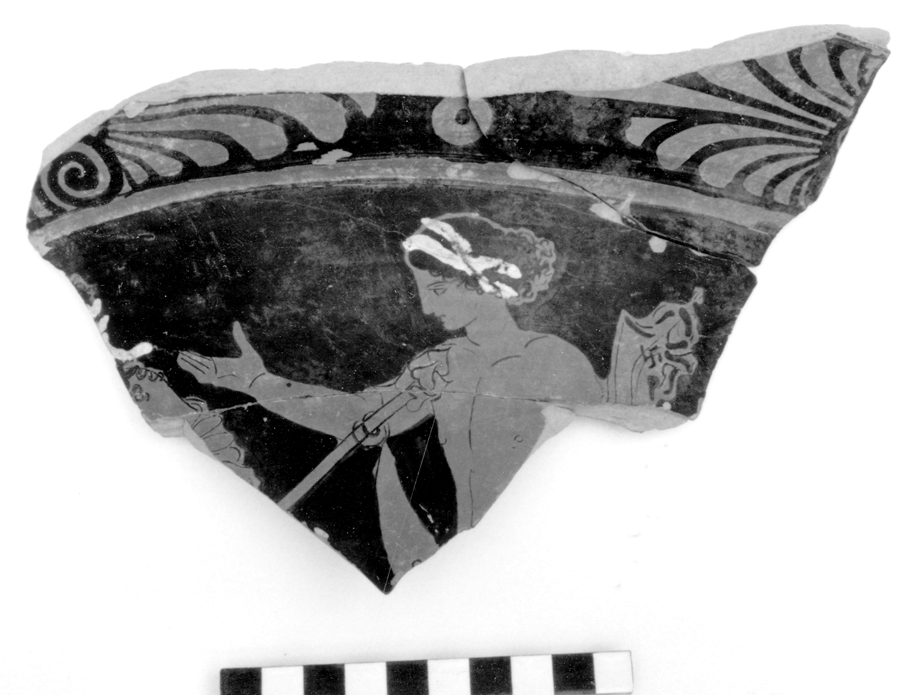
The image shows an archaeologically significant artifact: a large fragment of a decorated ceramic vase. The piece displays intricate designs and possibly depictions of figures, hinting at its historical value. The material appears to be pottery or clay-based, with a visible crack running across the fragment, suggesting it is from an ancient culture.

WF 32: Calyx krater fragments. Unpublished (D. Fontannaz)
a. IG 113628, from a pit, 9.03.1959, Contr. Lupoli, via Cugini. By the Lecce Painter. Dionysiac scene.
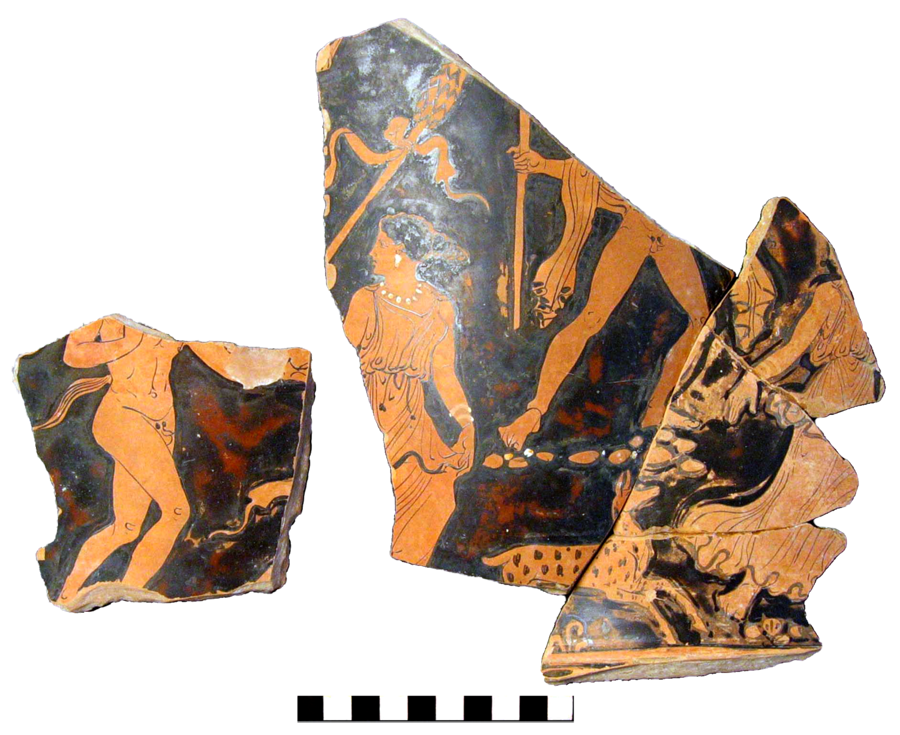
The image shows a collection of ancient Greek pottery shards with visible painted scenes on them. The material appears to be earthenware, and the colors are faded but suggest red and black figures characteristic of Greek vase painting. Key visual features include human figures in dynamic poses and detailed attire, as well as architectural elements that hint at the setting of the depicted narrative.

WF 32: Calyx krater fragments. Unpublished (D. Fontannaz)
b. Without inventory number, well 66, 24.02.1954, Contr. Vaccarella, via Abruzzo. By the Long Overfalls Painter. Dionysiac scene.

The image shows a fragment of an ancient pot with intricate decorations featuring leaves and possibly animal figures. The pottery is made from clay, which appears to have darkened over time, indicating its age and exposure to various conditions. The design elements are primarily in red against a black background, a common technique in certain historical ceramic traditions.

WF 33: Calyx krater fragment of the Middle Apulian style. Unpublished (D. Fontannaz)
a. Without inventory number, well 66, 24.02.1954, Contr. Vaccarella, via Abruzzo. By the Lycurgus Painter. Eros.
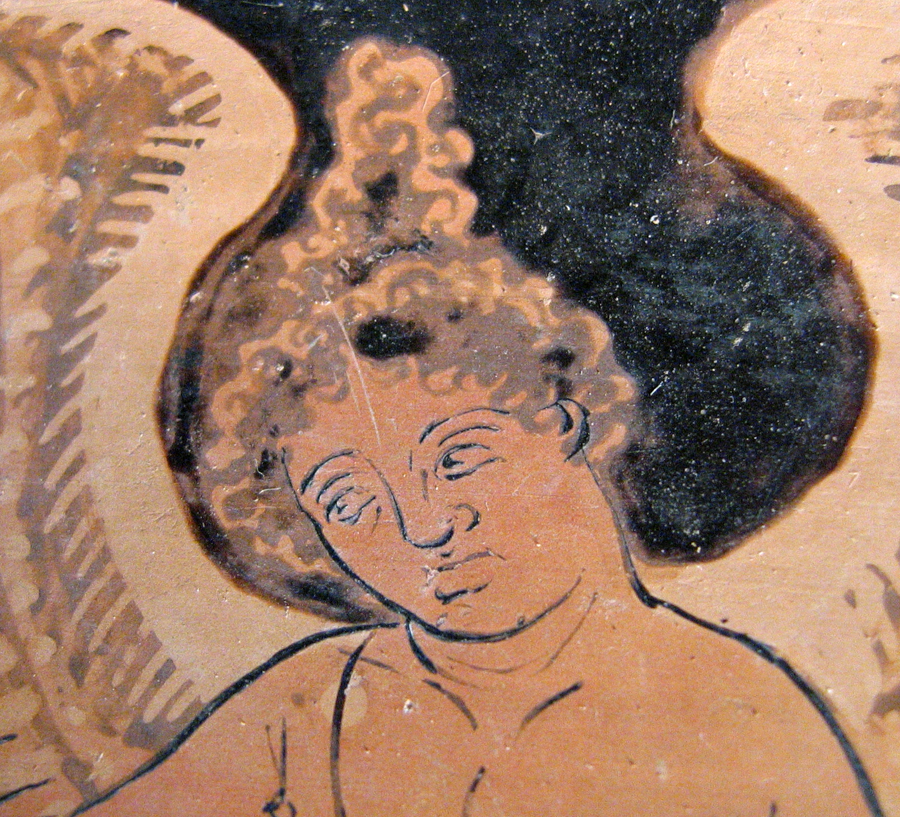
The image shows a fragment of an ancient vase featuring a depiction of a person with a full head of hair and intricate facial details, rendered in a style characteristic of classical pottery artistry. The visible part includes the upper torso and head, suggesting that the complete scene may have been more extensive on the original artifact.

WF 33 (detail): Calyx krater fragments of the Middle and Late Apulian styles. Unpublished (D. Fontannaz)
a. Without inventory number, well 66, 24.02.1954, Contr. Vaccarella, via Abruzzo. By the Lycurgus Painter. Eros.

The image shows a fragment of an antique stone sculpture. It features intricate carvings with floral patterns and depicts a human figure wearing a headdress, suggesting a ceremonial or religious context. The craftsmanship includes fine details and swirling patterns, which contribute to the piece's ancient artistic quality.

WF 33: Calyx krater fragments of the Middle and Late Apulian styles. Unpublished (D. Fontannaz)
b. IG 116581. Via D'Alò Alfieri and via Leonida, 10-14.05.1959. By a Late Apulian Painter.
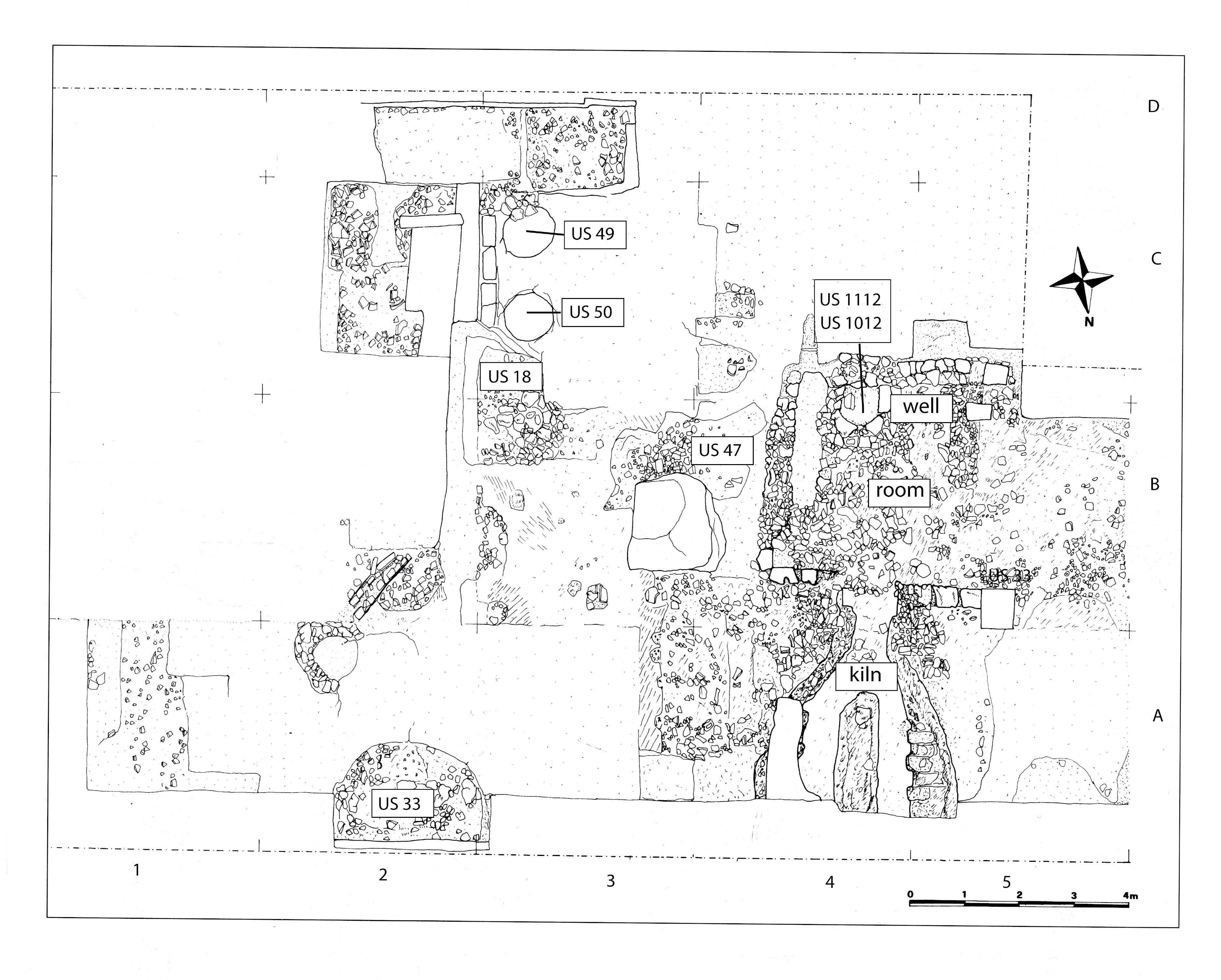
This is an image showing a detailed diagram of an archaeological site with clearly marked levels and sections. The layout includes labels such as "A," "B," "C," "D," "E," and "F," possibly indicating different features or finds within the excavation. There are also various symbols and annotations that suggest specific findings or methods used in the archaeological investigation.

WF 34: Map of the structures at via Leonida 52 with location of some stratigraphic units. (Modified from Dell'Aglio 1996)
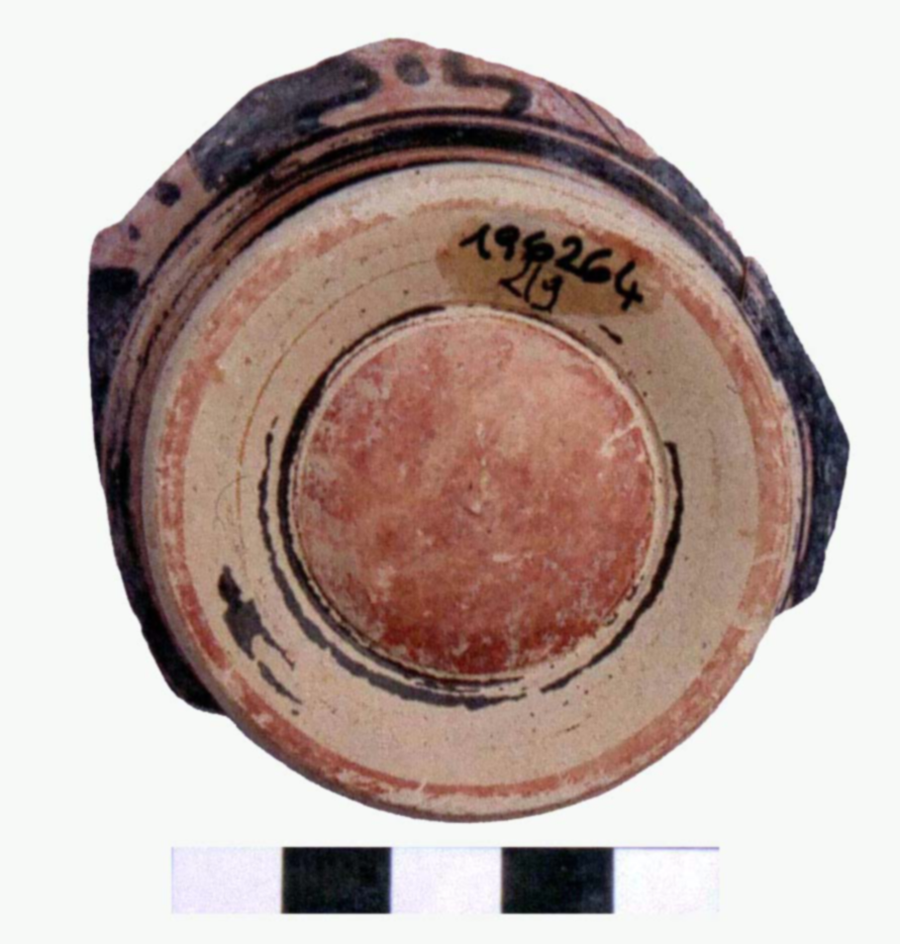
This is an image of a clay pot fragment with visible lines suggesting ridges or texture around its circumference. The artifact appears aged and may have markings or engravings on the surface, indicating cultural significance or method of production.

WF 35: Via Leonida 52. (D. Fontannaz). In the stoke-hole of the kiln, sector A4-B4. q. 1.78 to 1.89m.
a. Owl skyphos IG 196264. Unpublished.

This is an image of a broken ceramic piece with visible patterns and designs, possibly part of an ancient vessel. The material appears to be earthenware, and the fragment has multiple shards jutting out at different angles. The pottery shows signs of wear and could potentially offer insights into the cultural context in which it was used or made.

WF 35: Via Leonida 52. (D. Fontannaz). In the stoke-hole of the kiln, sector A4-B4. q. 1.78 to 1.89m.
b. Owl skyphos IG 196266. Unpublished.
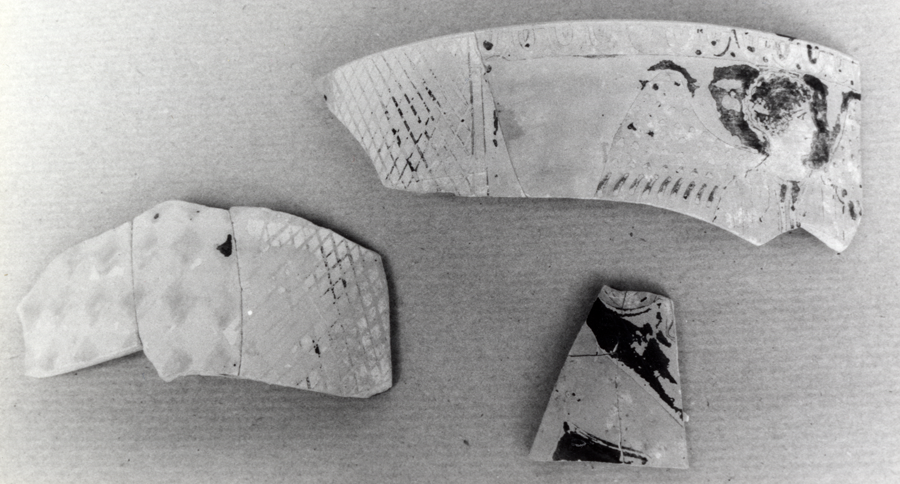
The image shows a collection of broken ceramic shards on a surface. These fragments appear to be from an old clay pot or similar artifact, exhibiting signs of wear and damage. The material looks like earthenware, and the pieces display uneven edges and rough surfaces due to the fragmentation.

WF 35: Via Leonida 52. (D. Fontannaz). US 1012, spits 14-15, in the stoke-hole of the kiln, sector A4-B4. q. 1.78 to 1.89m.
c. Fragments of a skyphos. IG 198570 with detail of the head of a winged figure. Intermediate Group (by the Schwerin Painter ?). Diam. 20.7 cm.
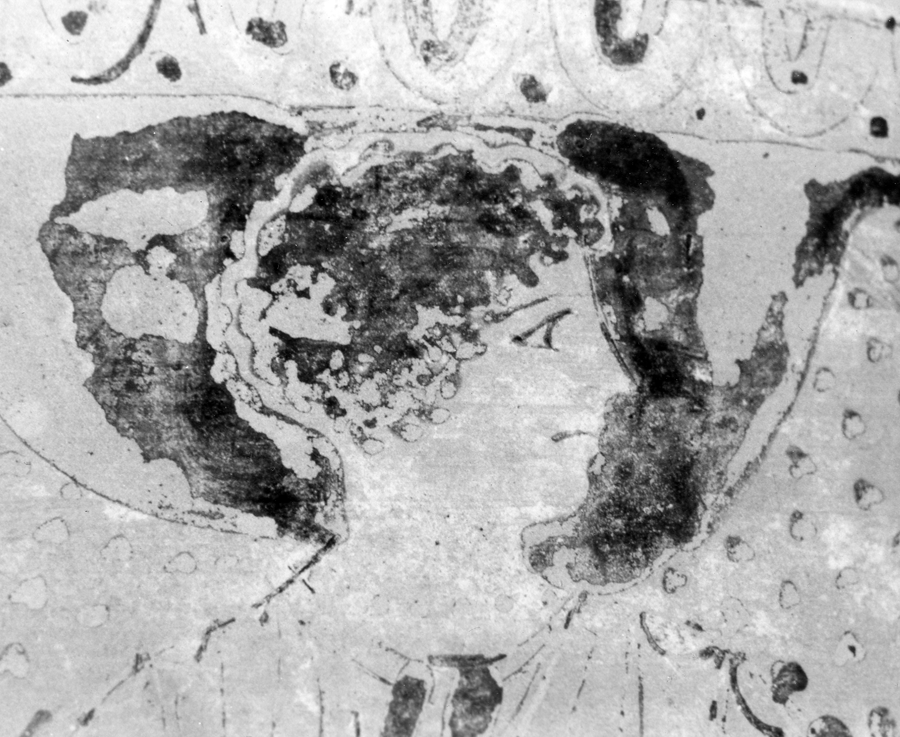
This is an image of a fragment from an ancient ceramic vessel. The visible part shows textured patterns with hints of color, suggesting decorative elements typical of historical pottery. The artifact's fragmented state indicates its age and the passage of time.

WF 35 (detail): Via Leonida 52. (D. Fontannaz). In the stoke-hole of the kiln, sector A4-B4. q. 1.78 to 1.89m.
c. Fragments of a skyphos. IG 198570 with detail of the head of a winged figure. Intermediate Group (by the Schwerin Painter ?). Diam. 20.7 cm.
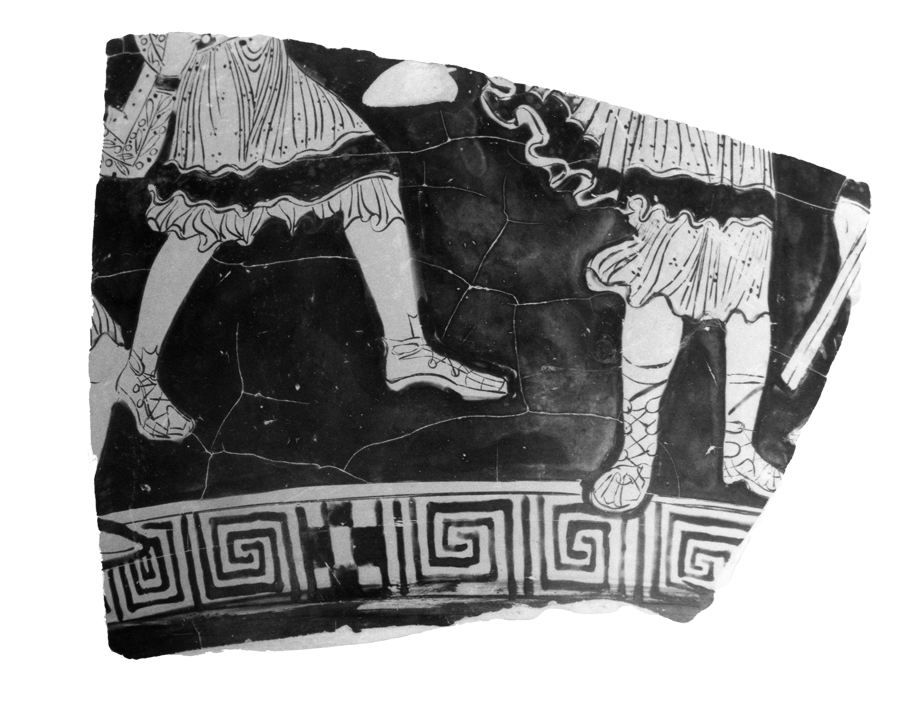
The image shows a fragment of ancient Greek pottery with painted scenes. On one side, there's an illustrated figure wearing a draped garment and what appears to be armor at the waist, possibly depicting a warrior or athlete. The style is characteristic of black-figure Attic vases from the Archaic period.

WF 36: Via Leonida 52. Sarpedon Painter. Unpublished (D. Fontannaz)
a. Fragment of a big closed shape. IG 199436b. US 18, sector B2/C2-B3/C3, q 1.55 to 1.68m. Max. width 33 cm.
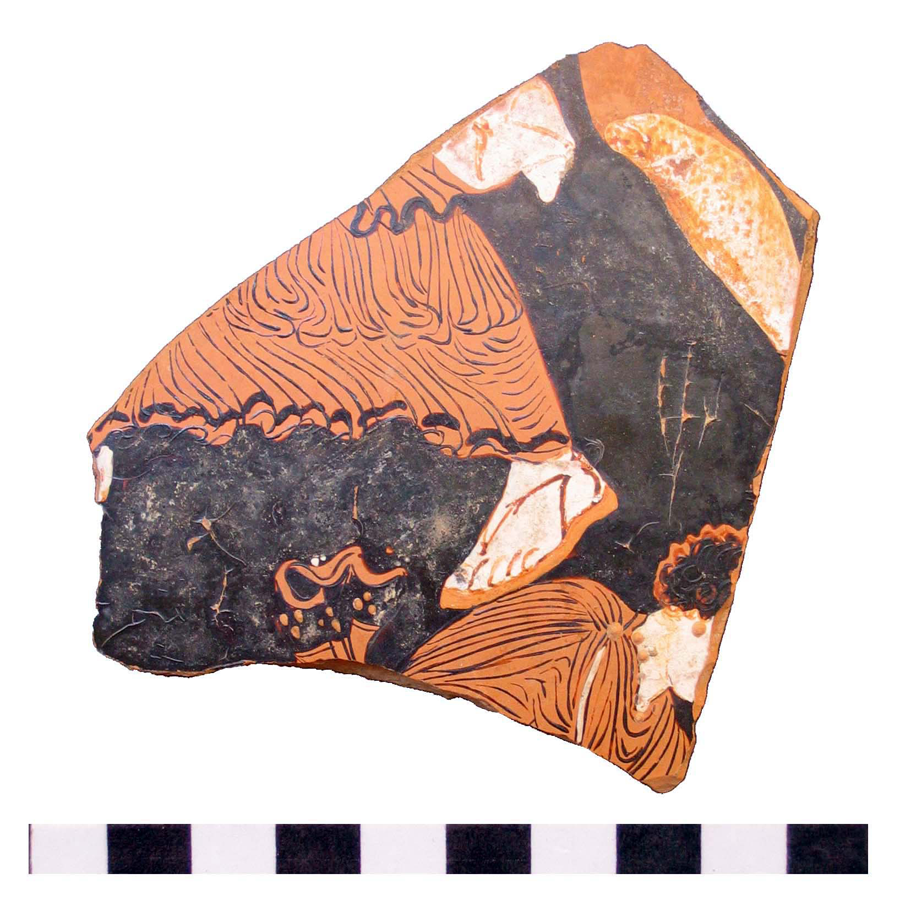
Ancient clay fragment featuring intricate geometric designs with bold black lines against a textured background, possibly part of an ancient vessel or decorative art piece.

WF 36: Via Leonida 52. Sarpedon Painter. Unpublished (D. Fontannaz)
b. Fragment of a closed shape. Without inventory number. US 47, sector B3-B4, q 1.63 to 1.81m.
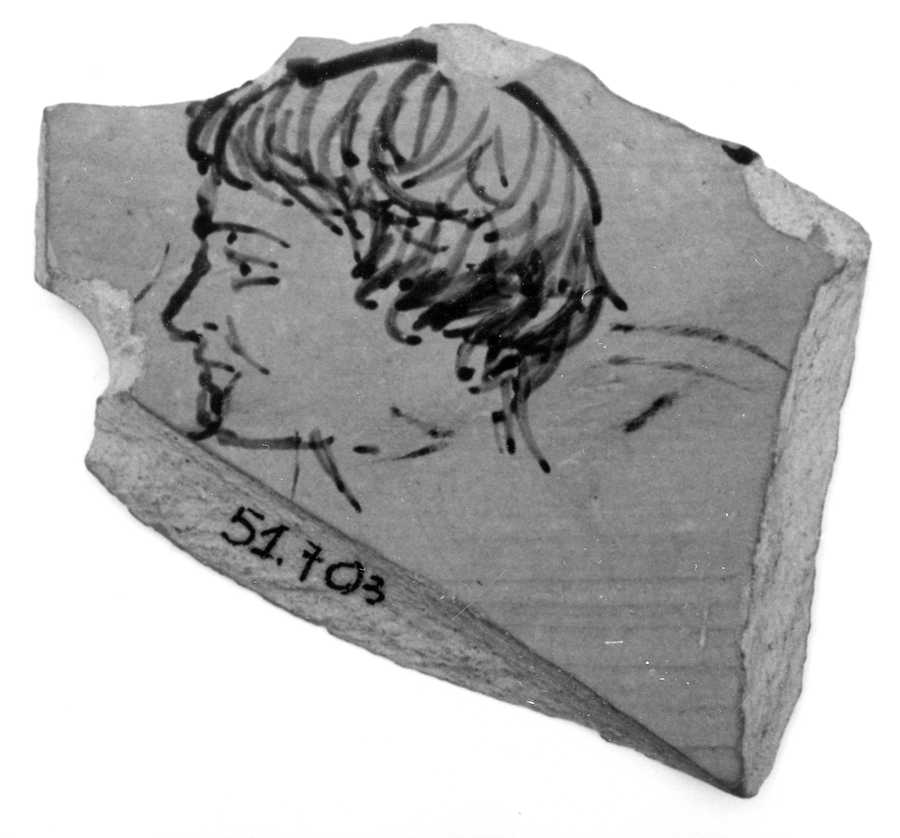
Ancient ceramic shard with a faded black-figure image of a male figure on one side and a partial inscription on the other, showing signs of age and wear.

WF 37: Via Leonida 52. US 18 (D. Fontannaz)
Fragment of a closed shape. IG 51709. Test-piece with a head painted in silhouette technique.
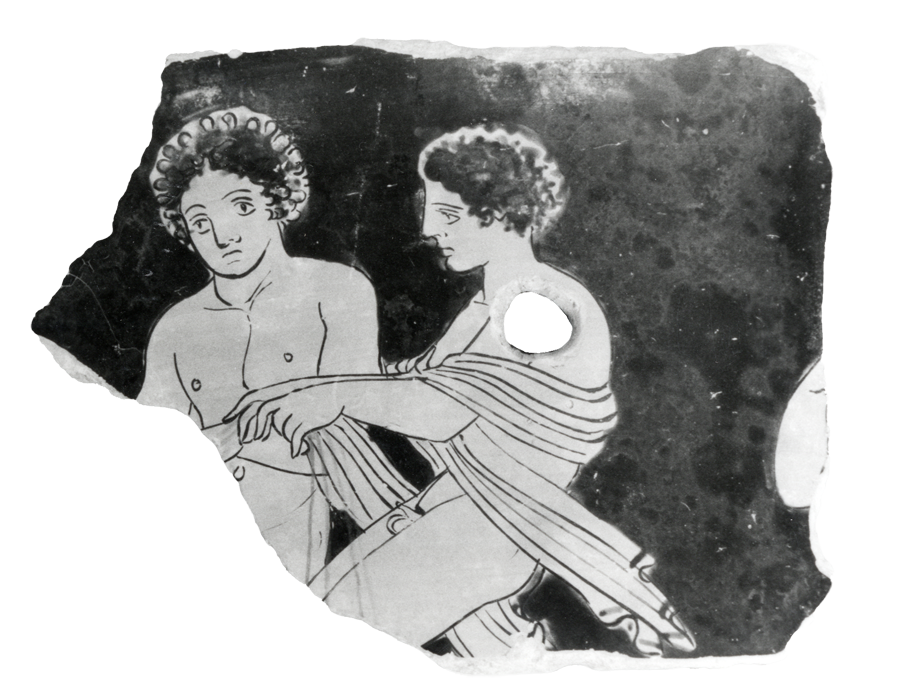
The image is a black-and-white illustration of an ancient Greek vase painting featuring two human figures, likely gods or goddesses due to the classical attire and hairstyles, with draped clothing and intricate details in their hair. The style is indicative of ancient Greek pottery artistry.

WF 38: Test-piece with draw-hole. (D. Fontannaz)
Via Leonida 52, US 18:
a. Fragment of a calyx krater. IG 199436a. Charioteer and other male figure. Early Apulian painter (near Sarpedon Painter ?).
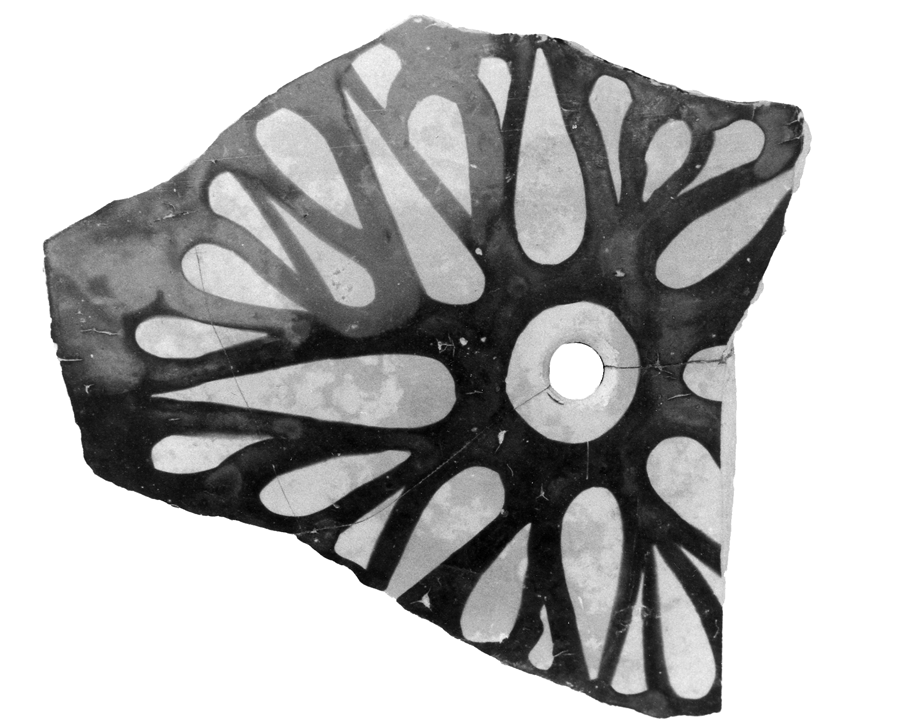
Archaeological artifact: a fragment of an ancient vase with intricate black-figured designs, including floral patterns and a central dot, visible on the interior surface. The material appears to be ceramic.

WF 38: Test-piece with draw-hole. (D. Fontannaz)
Via Leonida 52, US 18:
b. Fragment of a closed shape. IG 199439. Rosette.
This is a fragment of an ancient Greek vase with black-figure pottery style. The visible image shows a horse, possibly being led by a human figure; the scene appears to depict a moment from a narrative or mythological story.

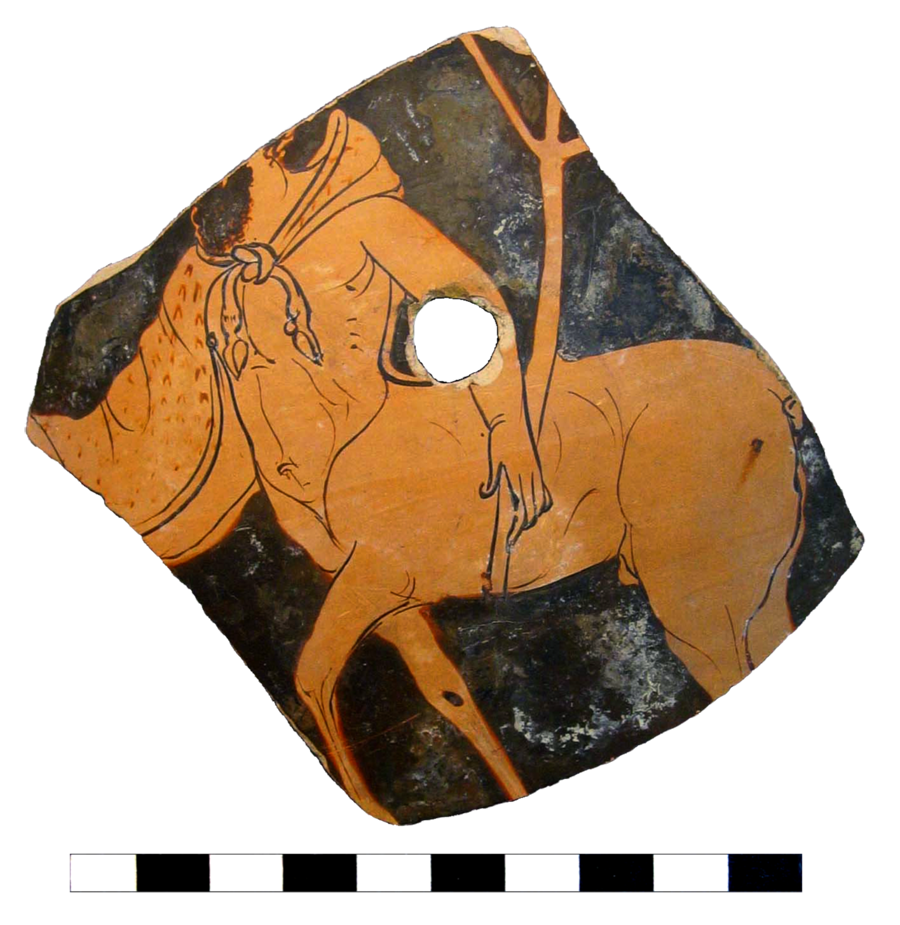
WF 38: Test-piece with draw-hole. Unpublished. (D. Fontannaz)
Dump, contrada Carceri Vecchie, at the corner of via Dante and via Leonida, 28.04.1934:
c. Fragment of an open shape without inventory number. Centaur. Early Apulian Ornate style, near the Painterof the Birth of Dionysos
The image shows a fragment of ancient pottery with red painted designs on a black background. The visible figure appears to be a humanoid shape, possibly part of a decorative motif typical of certain historical periods or regions. There is no visible intact edge for context, so the exact size and nature of the original object are unclear from this fragment alone.

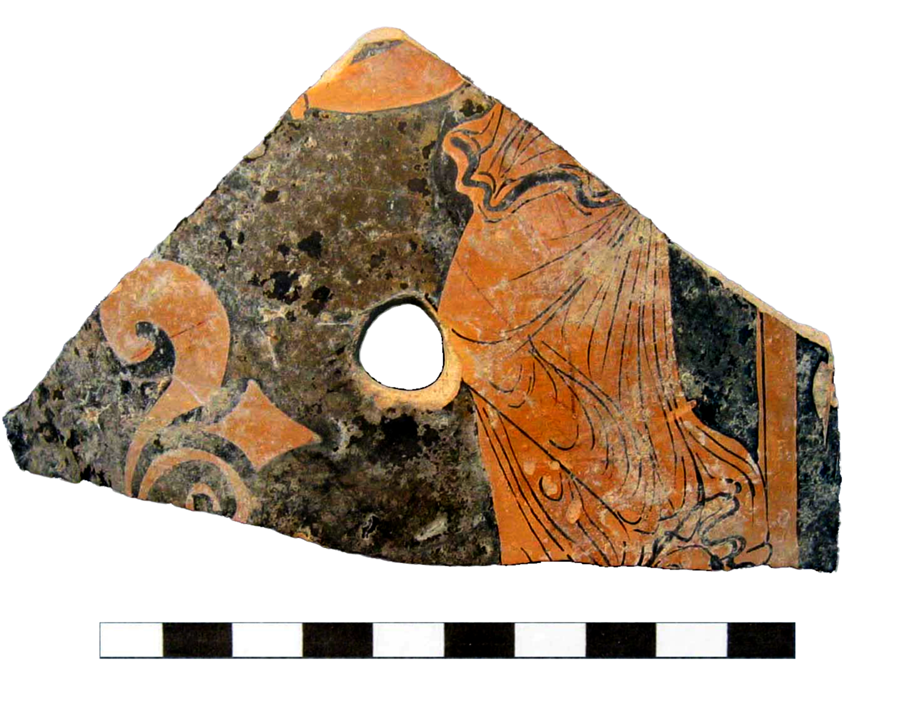
WF 38: Test-piece with draw-hole. Unpublished. (D. Fontannaz)
Dump, contrada Carceri Vecchie, at the corner of via Dante and via Leonida, 24.04.1934:
d. Fragment of skyphos without inventory number. Woman going to the left. Middle Apulian
The image shows a fragment of an ancient Greek black-figured pottery vessel with intricate decoration. The visible part of the artifact includes a handle adorned with swirling patterns and stylized designs, indicative of traditional Greek artistic styles from historical periods such as the Geometric or the Archaic era.

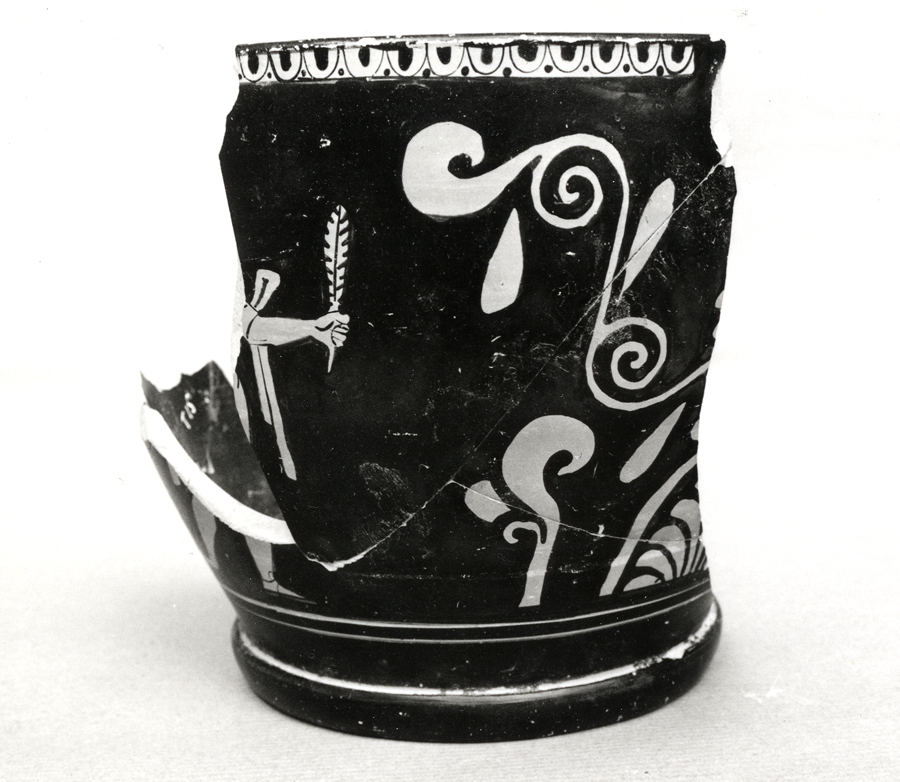
WF 39: Via Leonida 52. Unpublished. (D. Fontannaz)
a. Fragmentary skyphos IG 198568, with cracked base. US 1012, spits 12-15. Early Apulian skyphos (near the Hearst Painter). Victorious youth.
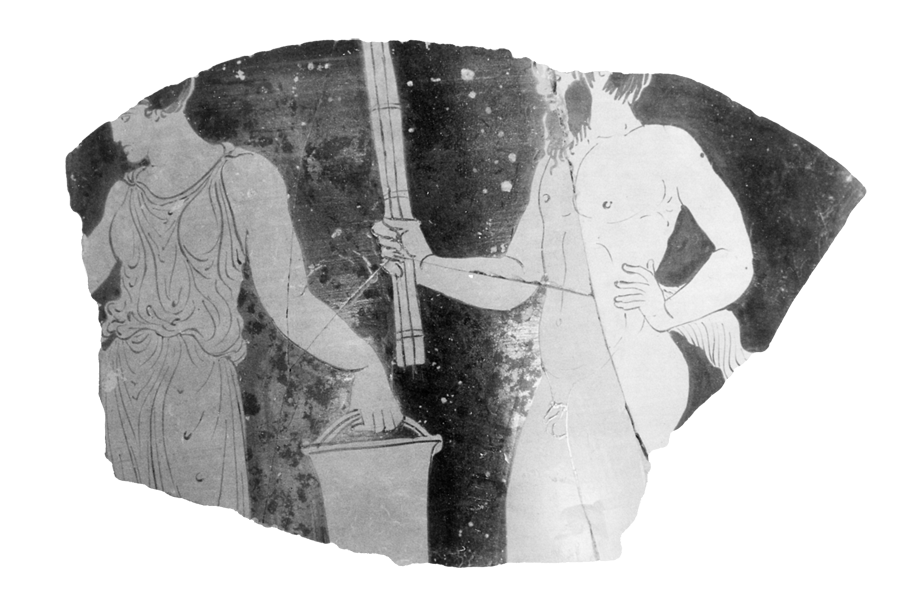
The image shows a fragment of ancient pottery with Greek-style figures. The fragment depicts two male figures, one possibly holding a staff. The art style is indicative of Greco-Roman antiquity.

WF 39 Via Leonida 52. (D. Fontannaz)
b. Fragments of an open shape, IG 199396. US 1012, spits 10-12. By the Hoppin Painter.
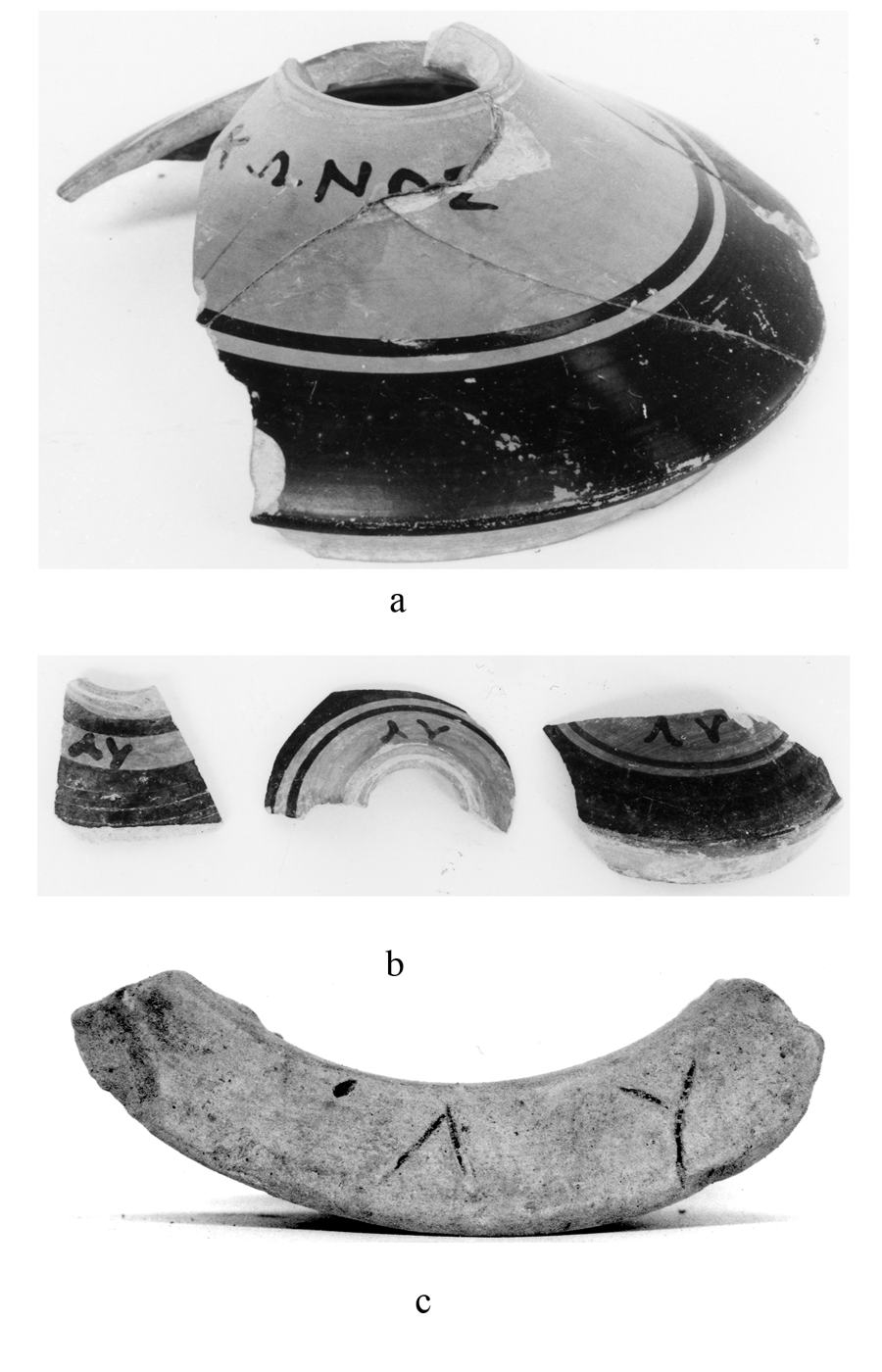
The image shows a collection of broken pieces that appear to be fragments of an ancient ceramic or stone object, possibly a vase or jar. The key visual features include the rough and irregular edges of the fragments, with some parts showing signs of wear and weathering, indicating their age and past use.

WF 40 a-c: Taranto, Contr. Vaccarella, at the corner of via Umbria and Medaglie d'Oro, 13-16.07.1965 kiln firing supports: (D. Fontannaz)
a. IG 124042 and 124041. Lid-type support, with painted inscription "LYKONOS". Diam. 17 cm; h. 6 cm.
b. IG 124044-46. Small supports with the inscription "LY-". min. width 5.6 cm; min. height min. 1.3 cm / max. width 6 cm; max. height 2.7 cm.
c. IG 124038. Support, ring-type with inscription "LY-". Diam max. 11.3; max. height 4 cm.
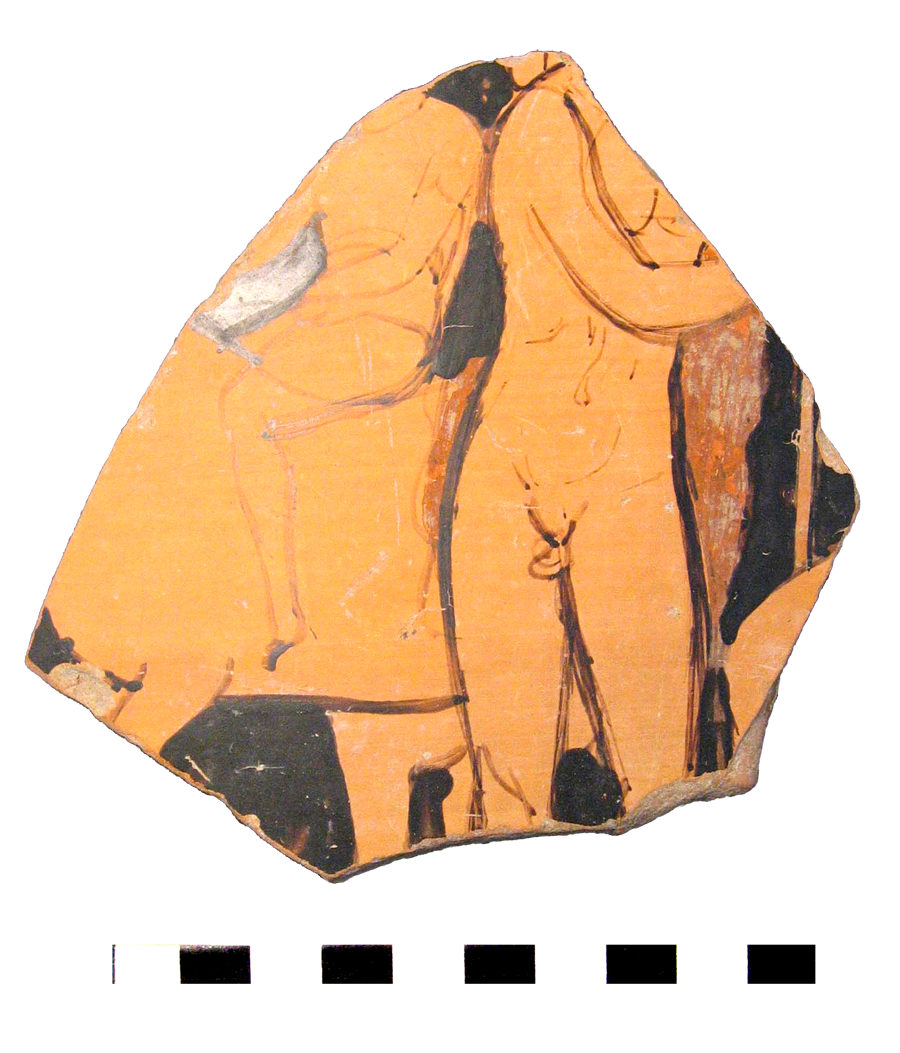
This is an image of a fragment from an ancient ceramic vessel with artistic decorations featuring human figures in profile. The fragment displays one of the figures' heads and upper torsos, showcasing their stylized facial features and clothing details.

WF 41: From the Maritime Arsenal, 1913? (D. Fontannaz). IG 227164.
a. Unfinished fragment of a closed shape with a rider, a man and people inside a naiskos. Unfinished fragment?
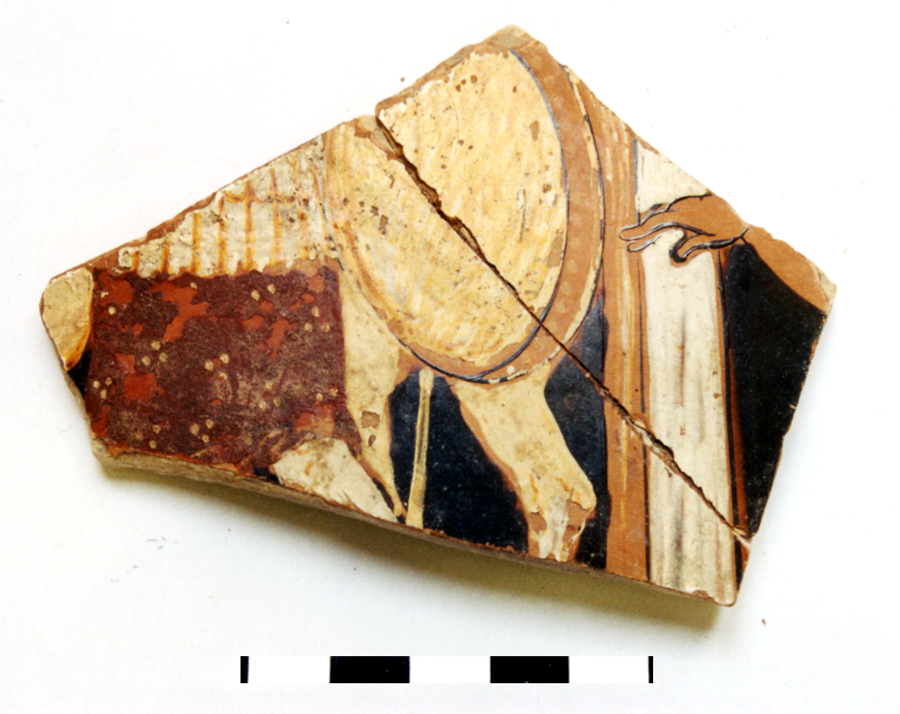
Ancient pottery fragment with intricate painted designs including a woman's face and architectural elements, displaying multiple colors such as red, yellow, brown, and white.

WF 41: From the Maritime Arsenal, 1913? IG 227210. Unpublished (D. Fontannaz.)
b. Fragment of a closed shape with rider and horse in a naiskos.