
This is an image depicting a historical artifact from Ancient Apulia. It appears to be a fragment of painted pottery with visible human figures on it, suggesting the representation of people in various positions or activities. The style and quality of the artwork indicate that it may have been part of a larger piece or a series. The artifact's material is not clearly identifiable from the image alone; however, based on its appearance, it could be ceramic or another type of pottery often used in ancient contexts for decoration or storage.

Chapter 12: T. H. Carpenter, A Case for Greek Tragedy in Fourth Century B.C.E. Apulia
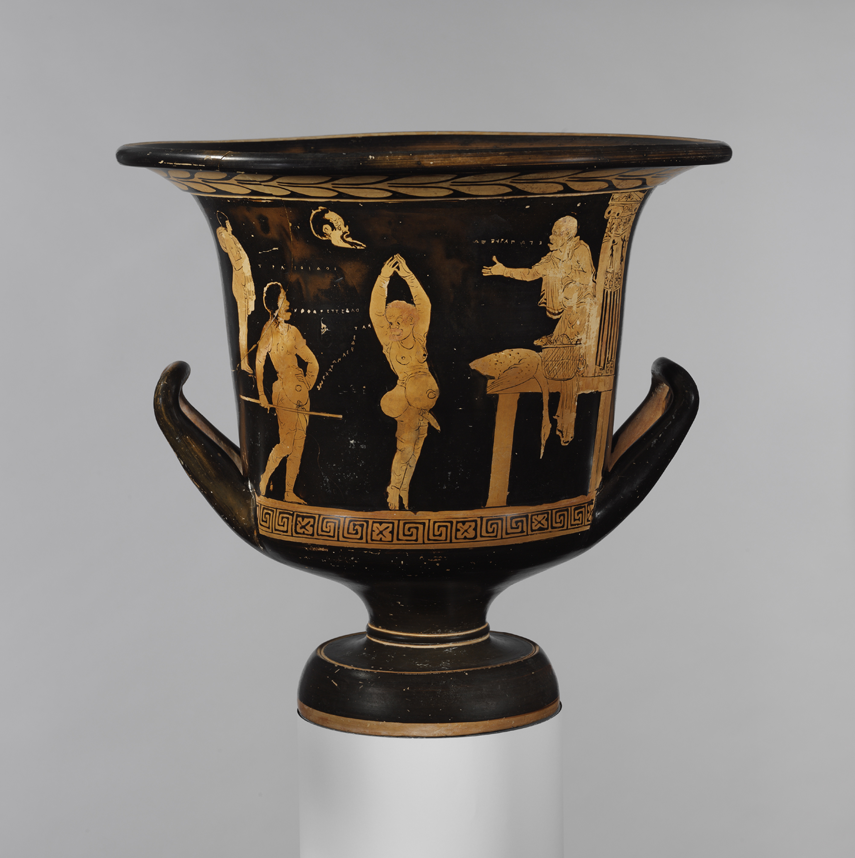
The image displays a classical vase with scenes from mythology. The vase is crafted in the style characteristic of Greek red-figure pottery, where the figures appear to have skin and clothes painted red against a black background. Key visual features include human figures depicted in action poses and intricate details that suggest narrative storytelling within mythological contexts.

WF 144: New York, Metropolitan Museum of Art 24.97.104, RVAp 3/7. Apulian calyx krater by the Tarporley Painter, from Ruvo. (© Metropolitan Museum of Art: Art Resource, NY)
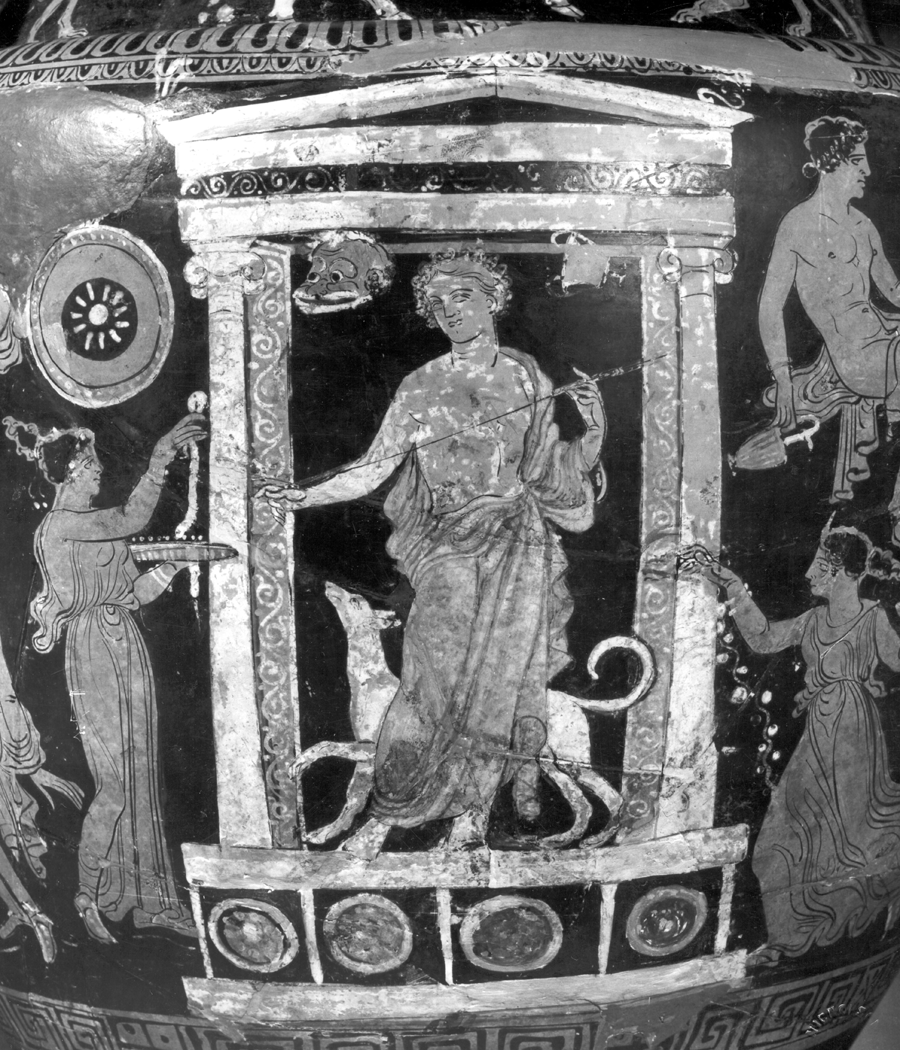
The image shows a detailed ancient Greek vase with black-figure pottery technique depicting a scene from mythology. The central figure is a woman, possibly a goddess or nymph, surrounded by other figures and mythical creatures. The pot is adorned with traditional architectural motifs and is inscribed with a Greek text that likely identifies the characters depicted or narrates their story.

WF 145: Lecce, Museo Provinciale 3544, RVAp 15/69. Apulian volute krater by the Painter of Lecce 3544 from Ruvo. Courtesy Museo Provinciale Sigismondo Castromediano di Lecce.

The image displays a series of black-figure pottery pieces arranged in a row, showcasing various scenes with human figures and animals depicted in a classical style. The figures are engaged in different activities, suggesting narrative or symbolic content often found in ancient Greek or Roman ceramics.

WF 146: Naples, Museo Nazionale Archeologico inv. 81673 (H 3240) ARV 1336.1. Attic volute krater by the Pronomos Painter. (After Furtwängler and Reichhold, pls. 143-5)

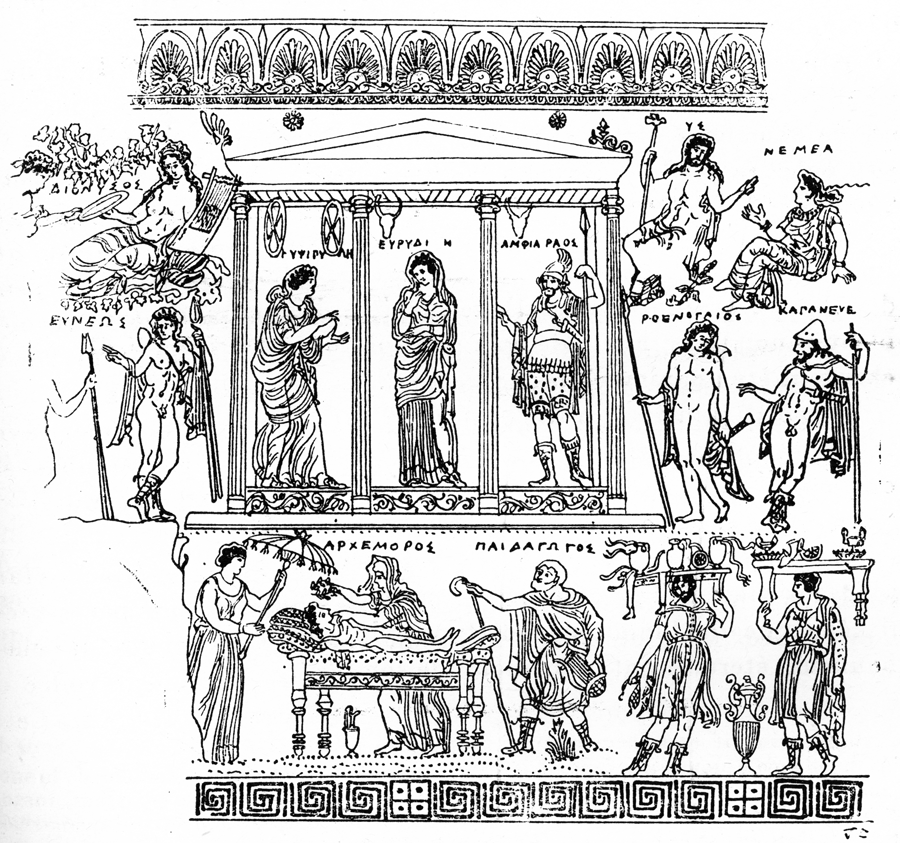
The image shows a black-figured Greek vase with multiple scenes depicting human figures in various poses, including standing, sitting, and lying down. The figures are adorned in what appears to be ancient attire.

WF 147: Naples, Museo Nazionale Archeologico inv. 82922 (H 2411) RVAp 2/8. Apulian volute krater by the Painter of the Birth of Dionysos from Ruvo. (After Furtwängler and Reichhold, pls. 175-6.)
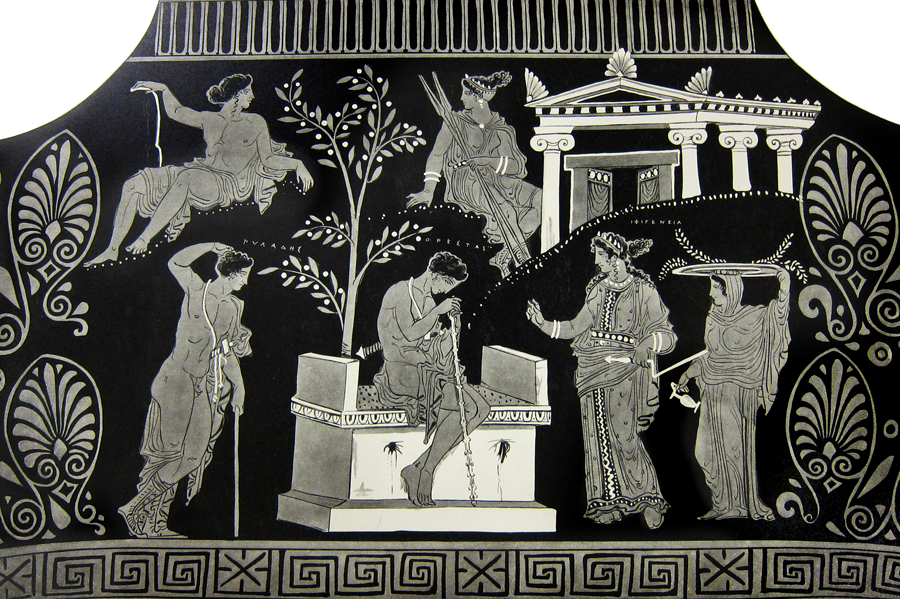
The image shows a black-figured amphora from Ancient Greece, featuring scenes with human figures possibly depicting gods and goddesses in narrative poses. The object is adorned with intricate details typical of Greek pottery artistry.

WF 148: Naples, Museo Nazionale Archeologico inv 82113, (H 3223) RVAp 8/3. Apulian volute krater by the Iliupersis Painter from Ruvo. (After Furtwängler and Reichhold, pl. 148 )
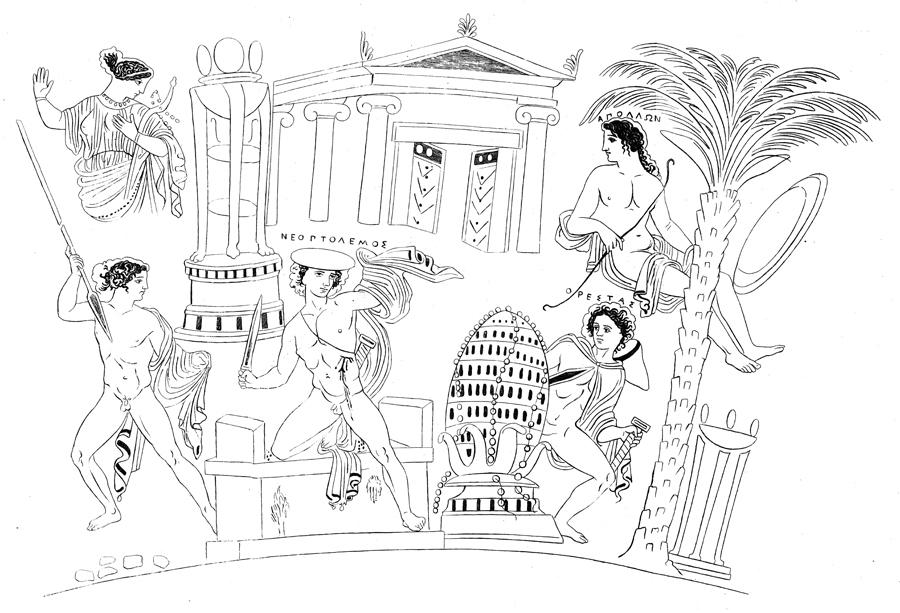
This is an ancient clay pot featuring a scene with figures wearing what appears to be Roman attire, standing near classical structures resembling temples. The artwork showcases human activity in a setting reminiscent of the ancient Mediterranean world.

WF 149: Vicenza, Banca Intesa 111 (239), RVAp 8/4. Apulian volute krater by the Iliupersis Painter from Ruvo (After Annali dell'Instituto di Corrispondenza Archeologica 1868, pl. E)
This is a black and white illustration depicting classical mythology scenes in high detail. The image showcases human figures engaged in various activities, wearing traditional Roman attire. Some figures are on horseback, while others are standing or sitting among architectural elements resembling ancient buildings. Textual fragments accompany the imagery, suggesting that this may represent an ancient manuscript page with annotations or translations related to the depicted events.

WF 150: Naples, Museo Nazionale Archeologico inv. 81934 (H 3255) RVAp 18/42. Apulian volute krater by the Darius Painter. (After Wiener Vorlegeblätter für archeologische Übungen, 1889, pl. XI.2a.)