
This is an image depicting a historical artifact from Ancient Apulia. It appears to be a fragment of painted pottery with visible human figures on it, suggesting the representation of people in various positions or activities. The style and quality of the artwork indicate that it may have been part of a larger piece or a series. The artifact's material is not clearly identifiable from the image alone; however, based on its appearance, it could be ceramic or another type of pottery often used in ancient contexts for decoration or storage.

Chapter 10: Fabio Colivicchi, "Native" Vase Shapes in Southern Italian Red-Figure Pottery
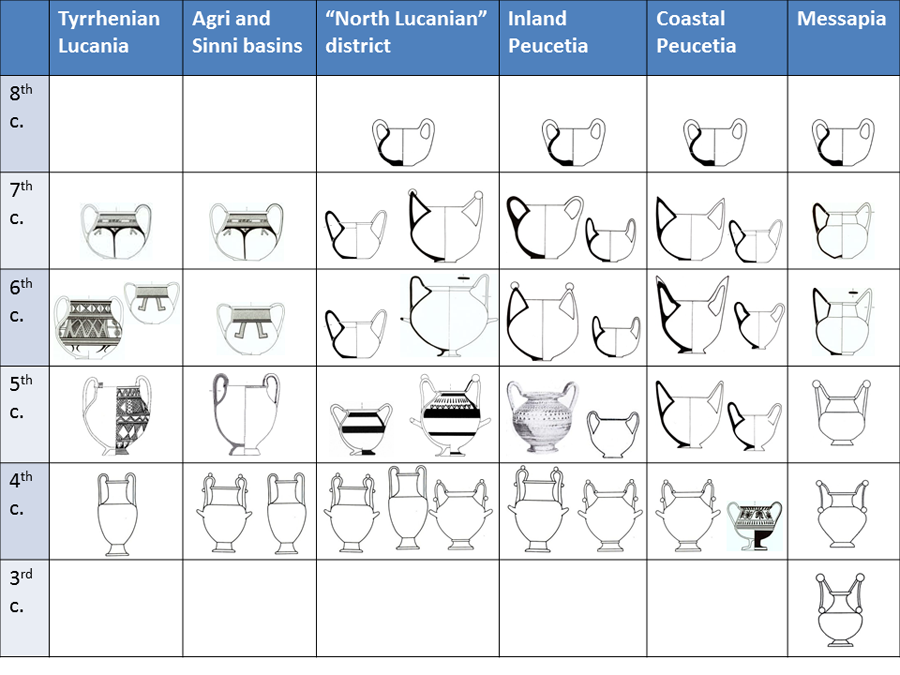
The image shows a collection of ancient pots in various shapes and sizes, with some appearing as whole vessels and others as fragmented pieces. The pots have different designs and textures on their surfaces, suggesting they are made from clay or ceramic materials. The key visual features include the curved forms, openings for handles or spouts, and intricate details that hint at artistic decoration common in historical pottery.

WF 126: Table of the development of the family of vases with two tall vertical handles in South Italy. (author)
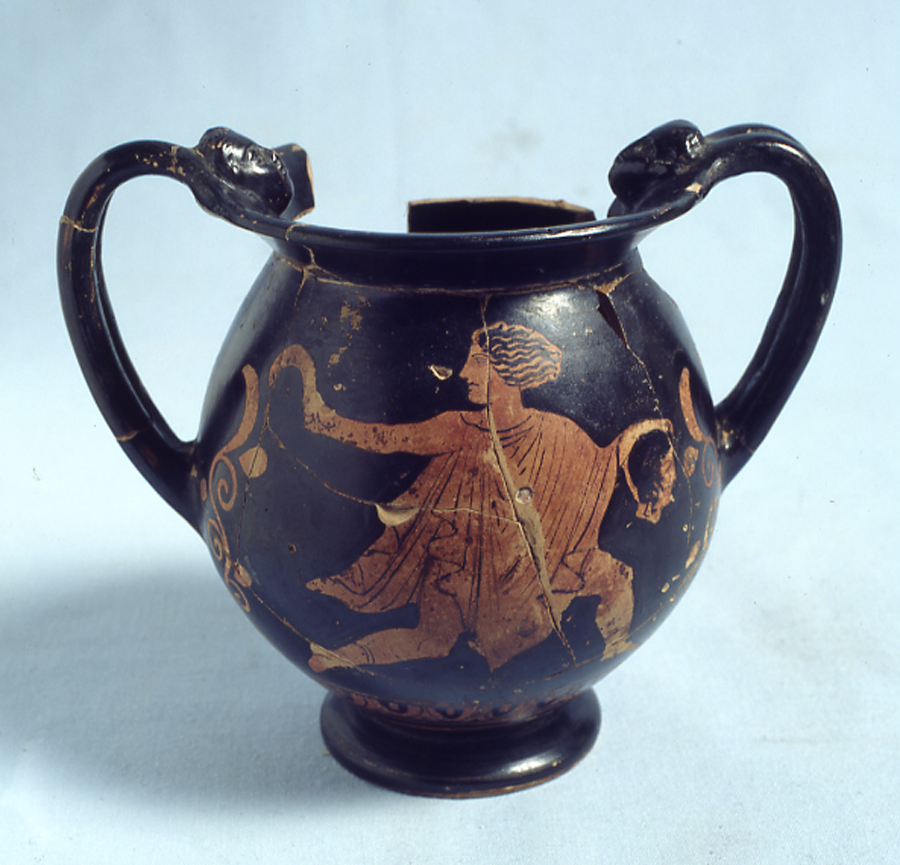
Ancient black Greek vase with a scene depicting a woman in a flowing garment, set against white background, showing two sides of the same artifact: one view from above and another from an angle that highlights the profile.

WF 127: Early Lucanian kantharoid. Taranto, Museo Nazionale inv. 8274. (permission of Ministero per I Beni e le Attività Culturali – Soprintendenza ai Beni Archeologici della Puglia)
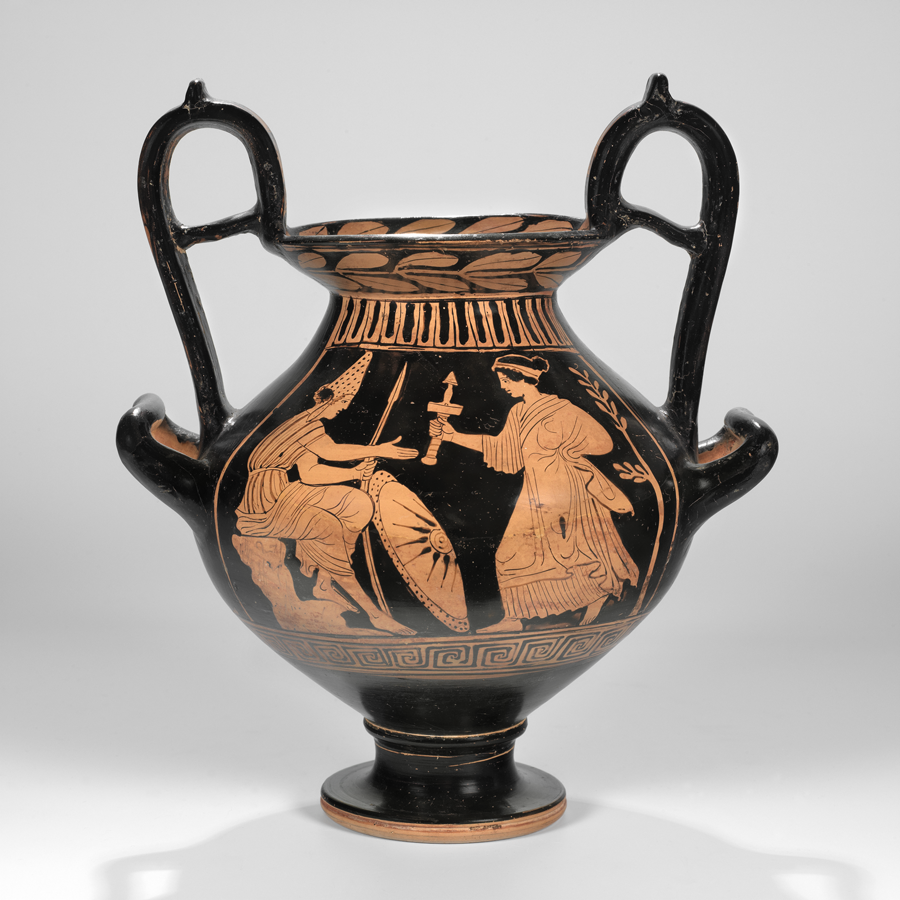
The image shows an ancient Greek vase with black-figure pottery technique, featuring human figures depicted in profile, and likely represents a mythological scene. The vase has handles on either side for carrying and rests on a flat base.

WF 128: Lucanian nestoris by the Amykos Painter. Potenza, Museo Archeologico Nazionale della Basilicata 'Dinu Adamesteau'. (permission of Ministero per I Beni e le Attività Culturali – Direzione Regionale per I Beni Culturali e Paesaggistici della Basilicata)

Ancient Greek vase made of terracotta with black-figure technique, featuring detailed human figures engaging in an activity and adorned with intricate geometric patterns.

WF 129: Lucanian nestoris by the Palermo Painter. Potenza, Museo Archeologico Nazionale della Basilicata 'Dinu Adamesteau'. (permission of Ministero per I Beni e le Attività Culturali – Direzione Regionale per I Beni Culturali e Paesaggistici della Basilicata)
Ancient Greek ceramic vase with a depiction of figures in classical attire, featuring black-figure technique. The vessel has handles and is displayed upright, showcasing its decorated body.

WF 130: Lucanian nestoris by the Brooklyn-Budapest painter. Budapest, Museum of Fine Arts. (Archivio Scala)
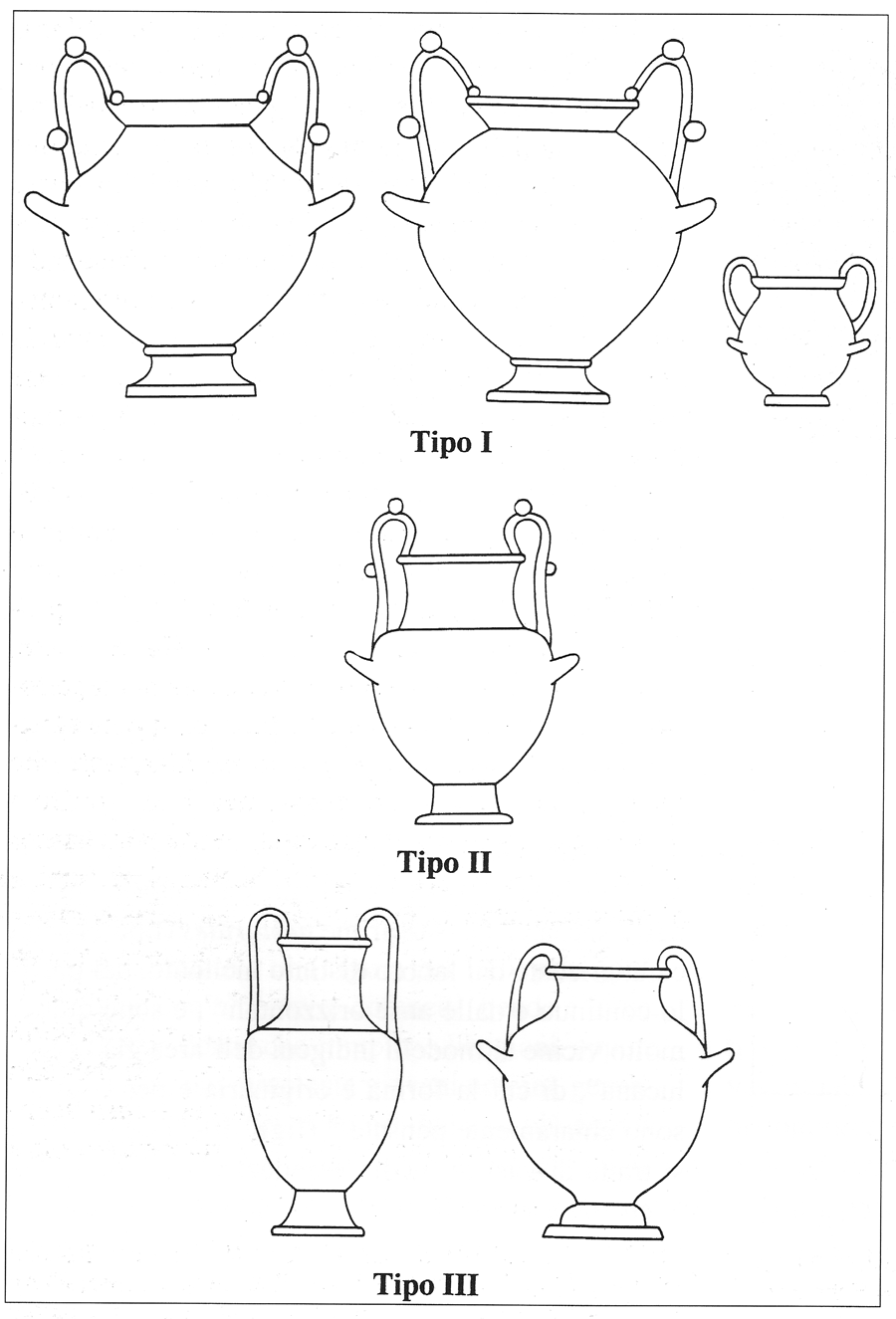
The image shows three types of Greek vases, each labeled with "Type I", "Type II", and "Type III". They are depicted in a simple line drawing style without color, focusing on the shapes and profiles of the vases. Each type varies slightly in design, indicating different styles or time periods.

WF 131: Typology of the red-figure nestorides. (from Colivicchi 2004)
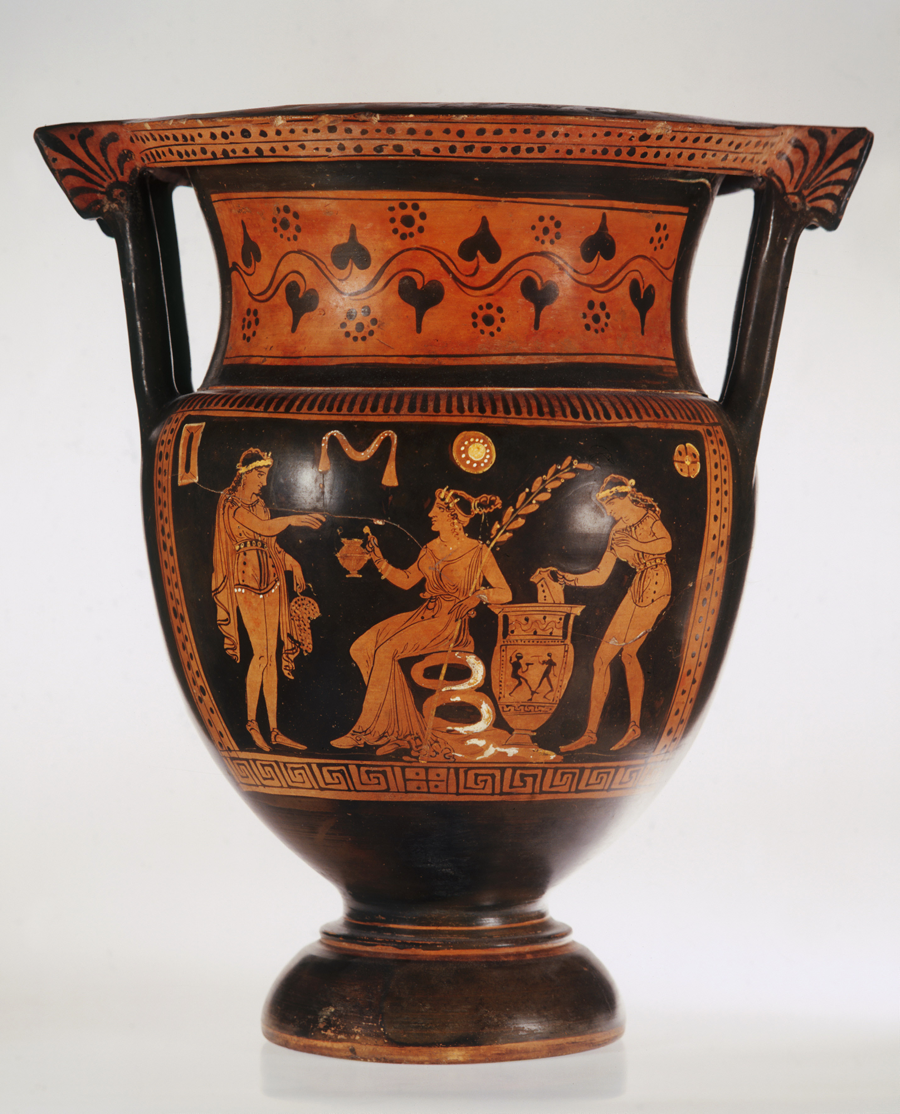
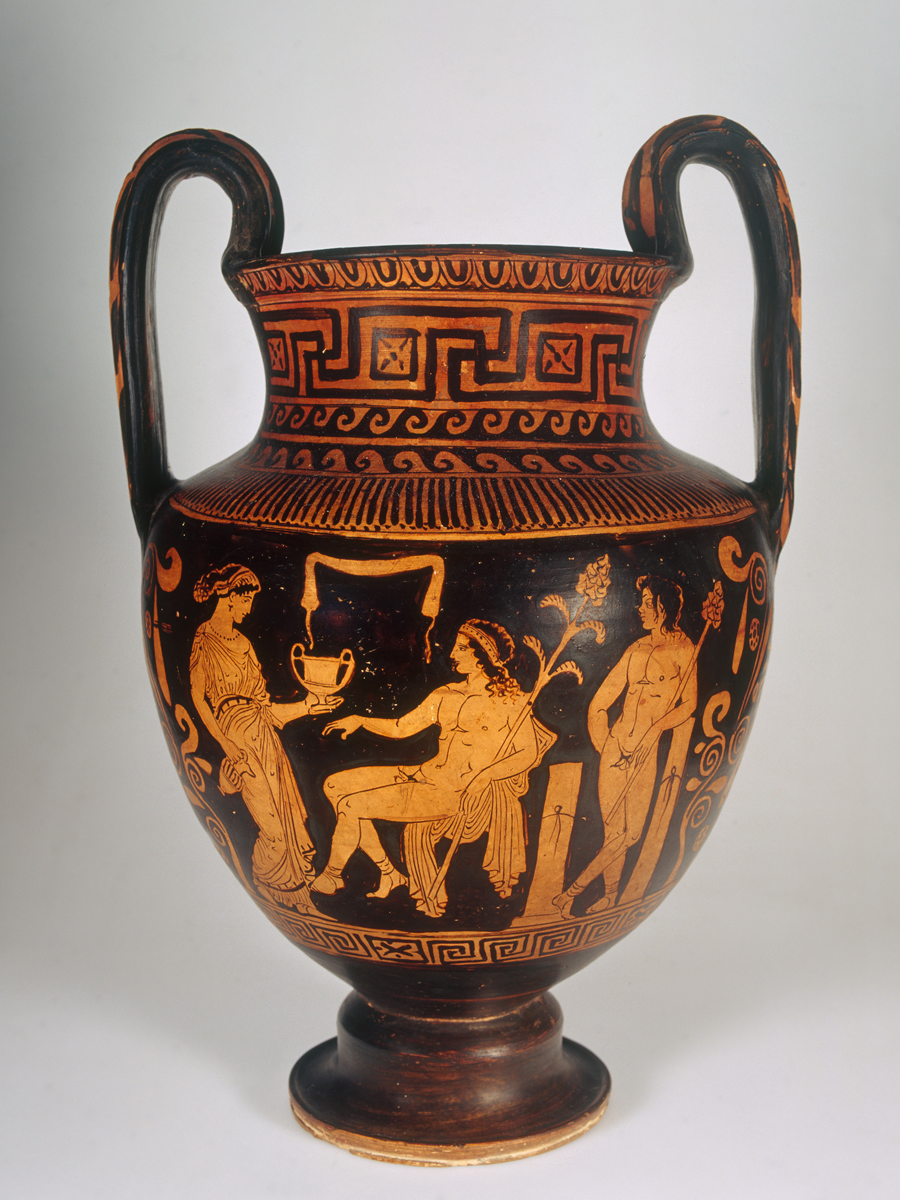
Ancient Greek black-figure vase featuring figures that appear to be engaged in an activity, decorated with intricate details and patterns on its body and handles.

WF 132: Apulian column krater. Budapest, Museum of Fine Arts. (Archivio Scala-
Soprintendenza per I Beni Archeologici della Puglia – Archivio fotografico)
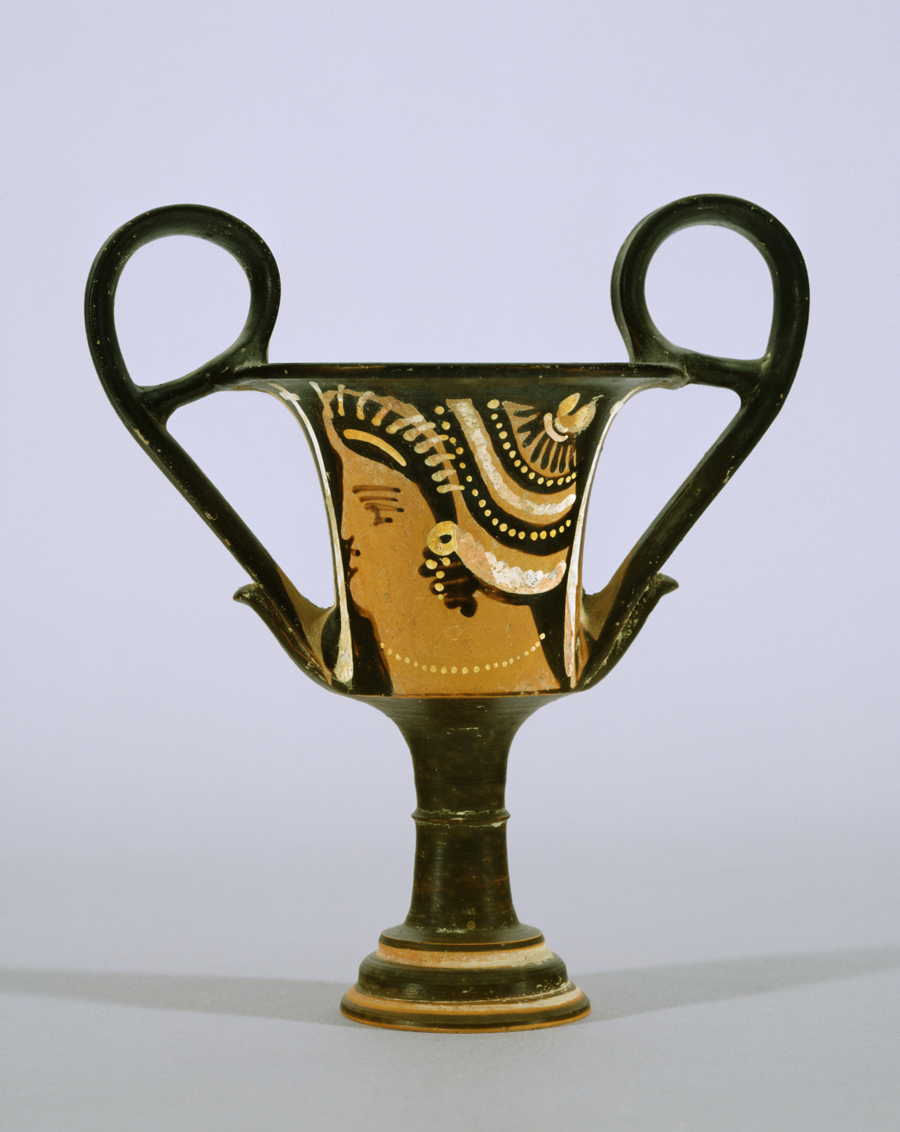
This is an image of a small ceramic cup with a handle at either end. The cup's body has a floral pattern, and it appears to have an aged or weathered surface indicative of its age.

WF 133: Apulian kantharos. Baltimore, Walters Art Museum 48.2764. (image of public domain – http://art.thewalters.org/detail/9627)