
This is an image depicting a historical artifact from Ancient Apulia. It appears to be a fragment of painted pottery with visible human figures on it, suggesting the representation of people in various positions or activities. The style and quality of the artwork indicate that it may have been part of a larger piece or a series. The artifact's material is not clearly identifiable from the image alone; however, based on its appearance, it could be ceramic or another type of pottery often used in ancient contexts for decoration or storage.

Chapter 13: Maria Emilia Masci, Apulian and Lucanian Red-Figure Pottery in 18th Century Collections
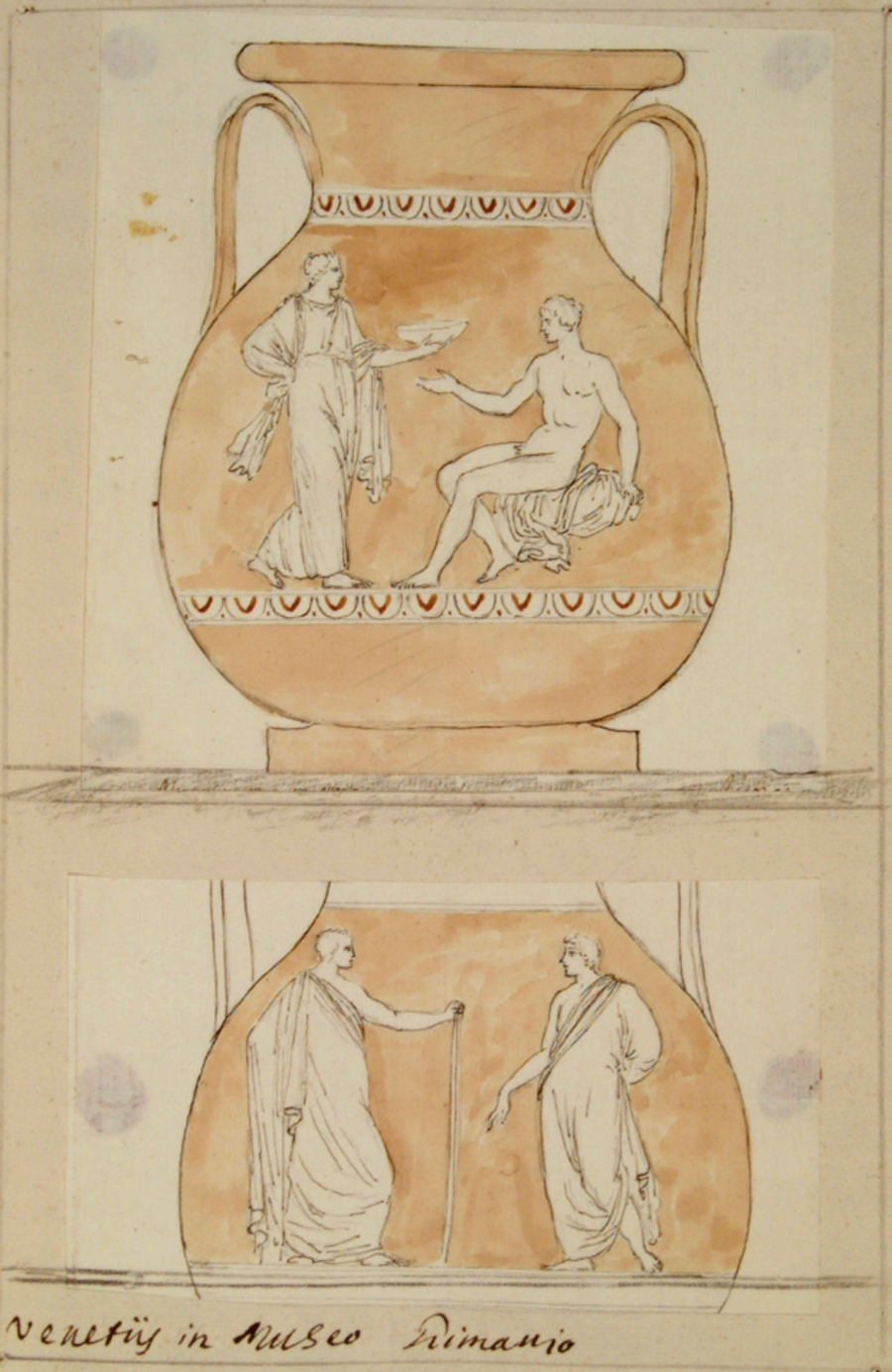
The image depicts a fragment of an ancient Greek vase with human figures. The visible part shows two individuals engaged in what appears to be a conversation or interaction, one standing and the other seated. The style is characteristic of classical Greek pottery art, where human forms are depicted using various postures and drapery styles.

WF 151: Pesaro, Biblioteca Oliveriana, MS 294, p. 325. Drawing: lead pencil, sepia ink, ochre watercolor. Karlsruhe, Badisches Landesmuseum B 126, Apulian pelike attributed to the McDaniel Painter. Once in Venice, Museum Grimani, then in Heidelberg in the collection of Gerog Frederich Kreuzer. Courtesy of the Biblioteca Oliveriana.
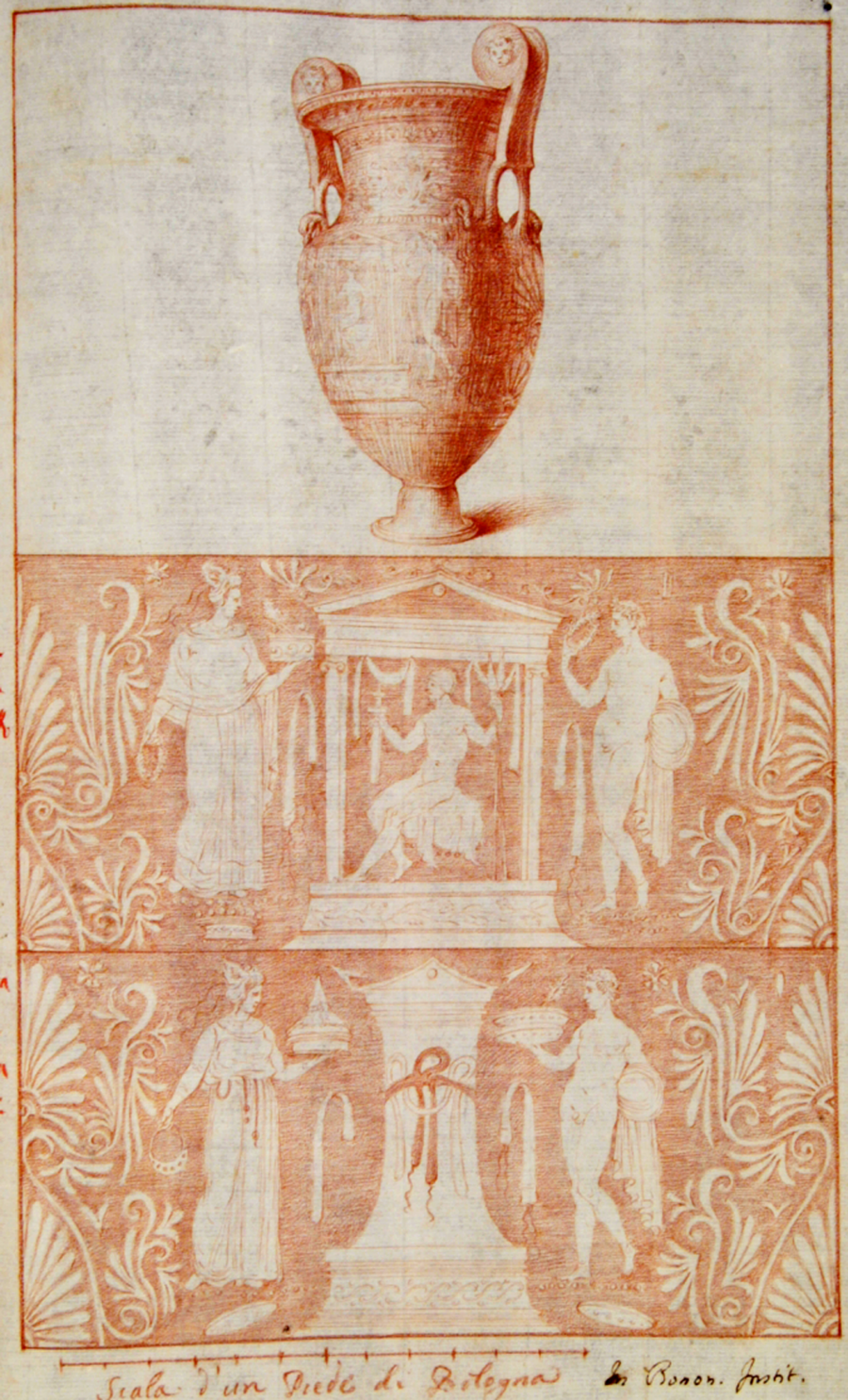
The image displays an ancient pot with a detailed painted scene at its base. The pot is depicted in profile view, showing a handle on one side and the rim curled over the edge. Below the pot, there are illustrated figures engaged in various activities, suggesting a narrative or theme associated with the artwork on the pottery.

WF 152: Pesaro, Biblioteca Oliveriana, MS 295, p. 443. Drawing by Carlo Pisarri: re pencil. Bologna, Museo Civico, PU 564, Apulian volute krater attributed to the Painter of Copenhagen 4223. Once in Bologna, in the collection of Luigi Ferdinando Marsili, donated to the Istituto delle Scienze e delle Arti of Bologna. Courtesy of the Biblioteca Oliveriana.

This is a page from an archaeological publication featuring a series of drawings or illustrations, possibly related to ancient vases or pottery items. The image shows sketches of classical figures with draped clothing and accessories such as a helmet and a laurel crown, which suggests that the designs could be from Greek or Roman antiquity.

WF 153: Pesaro, Biblioteca Oliveriana, MS 294, p. 340. Drawing: sepia ink. Apulian pelike now lost. Assigned to the circle of the Varrese Painter. Once in Pisa in the Gallery of the Botanic Garden (Giardino dei Semplici). Courtesy of the Biblioteca Oliveriana.
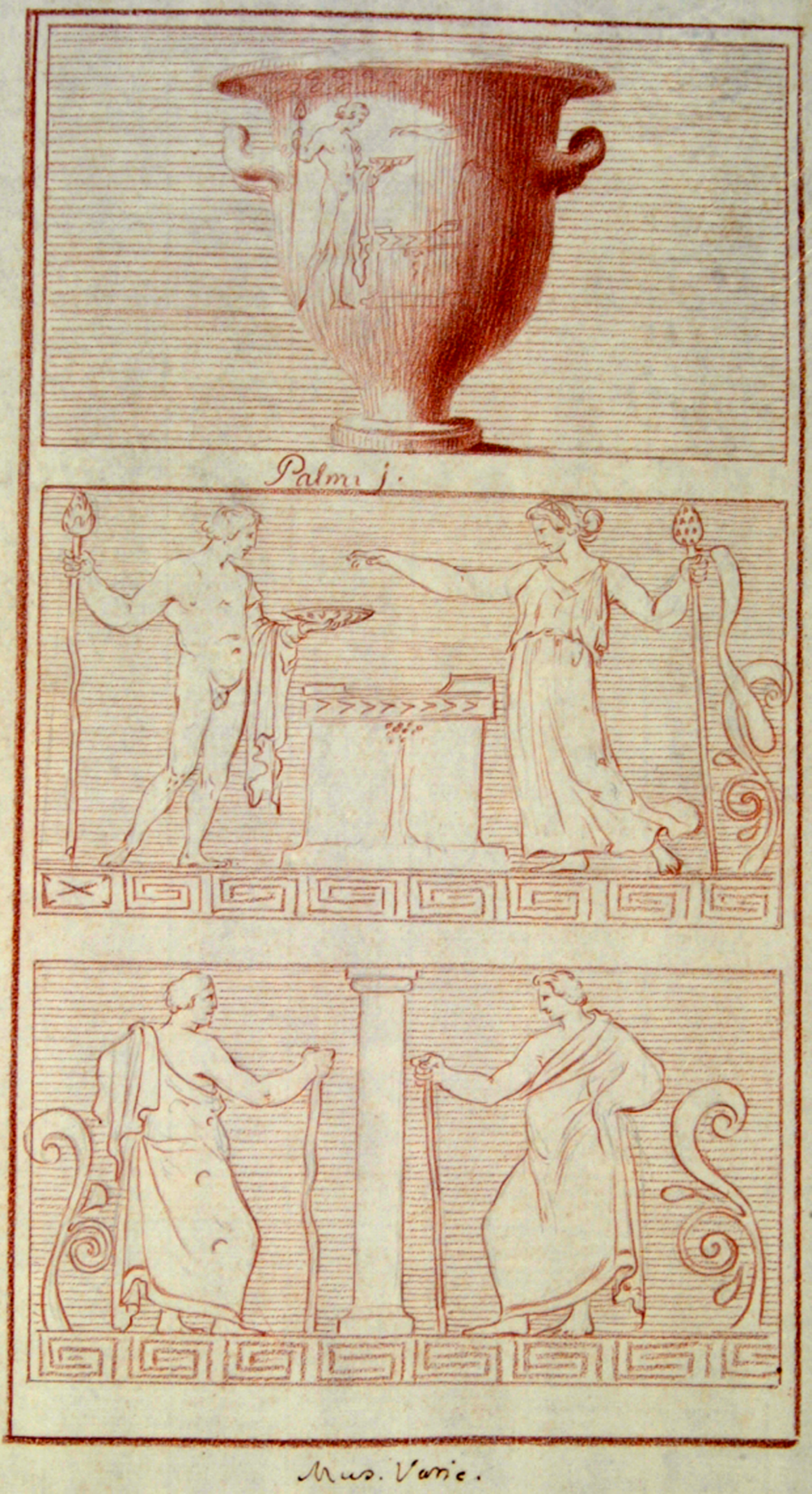
The image depicts a decorative scene painted on a vase, featuring figures in classical attire engaging with what appears to be an object, possibly a vessel. The style is reminiscent of ancient Greek or Roman art, characterized by its simplicity and elegance.

WF 154: Pesaro, Biblioteca Oliveriana, MS 294, p. 375. Drawing by Bartolomeo Poli: sanguine. Vatican, Museo Gregoriano, 17961, Apulian bell krater attributed to the Lecce Painter. From the first collection of the Vatican Library (Pope Clemens XII). Courtesy of the Biblioteca Oliveriana.
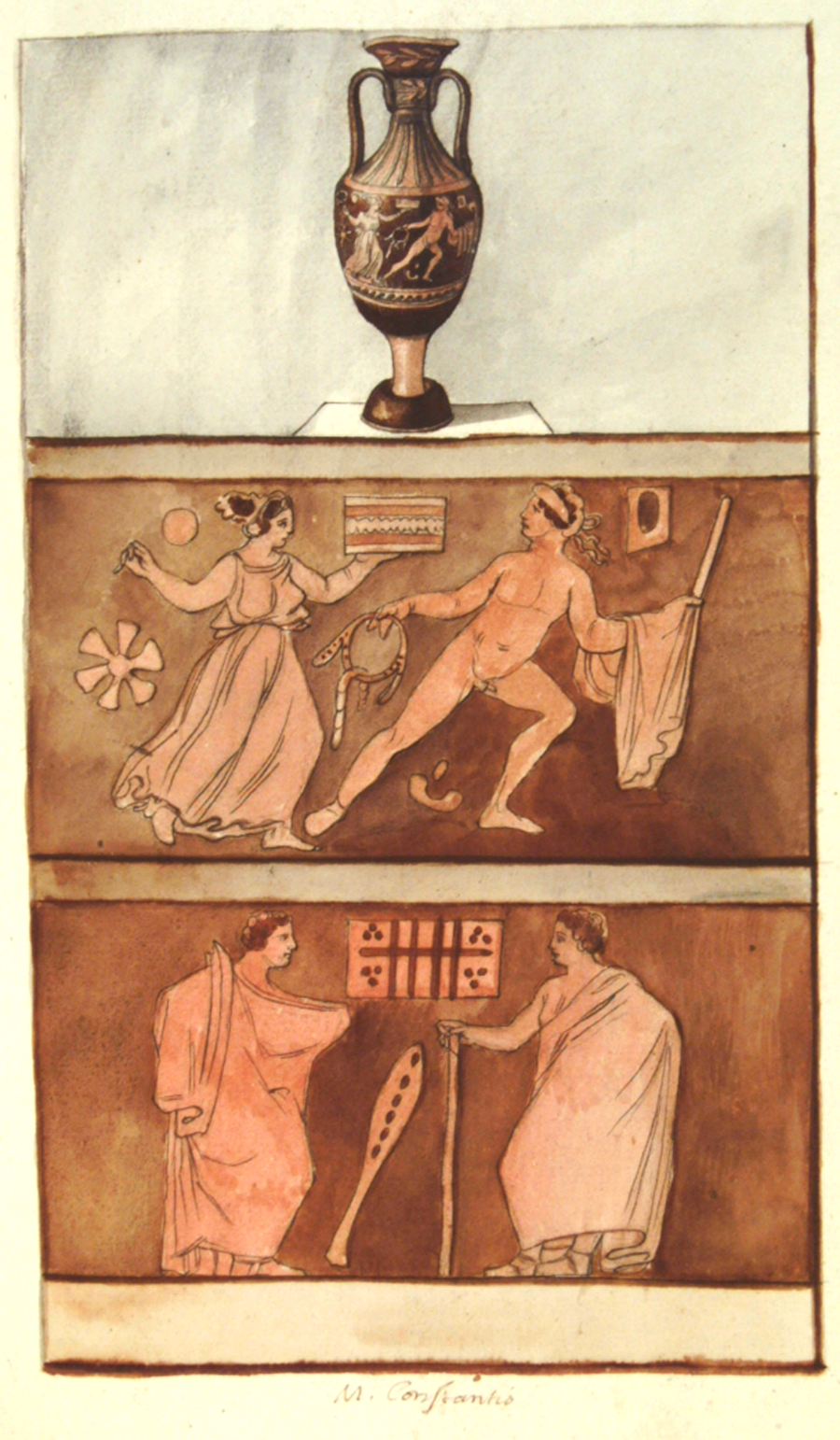
The image shows a fragment of an ancient vase with painted scenes in red on a cream background. The upper part features a handle and the beginning of a painted scene, while the lower section depicts figures engaged in what appears to be a playful or social interaction, possibly depicting mythological characters.

WF 155: Pesaro, Biblioteca Oliveriana, MS 294, p. 355. Drawing by Angelo Giudacci: sepia ink colored with red and black watercolor. Bologna, Museo Civico, PU 531, Apulian amphora attributed to the Group of Vatican Z 16. Once in Rome in the collection of Monsignor Ludovico di Costanzo, then in the old collection of the University of Bologna. Courtesy of the Biblioteca Oliveriana.
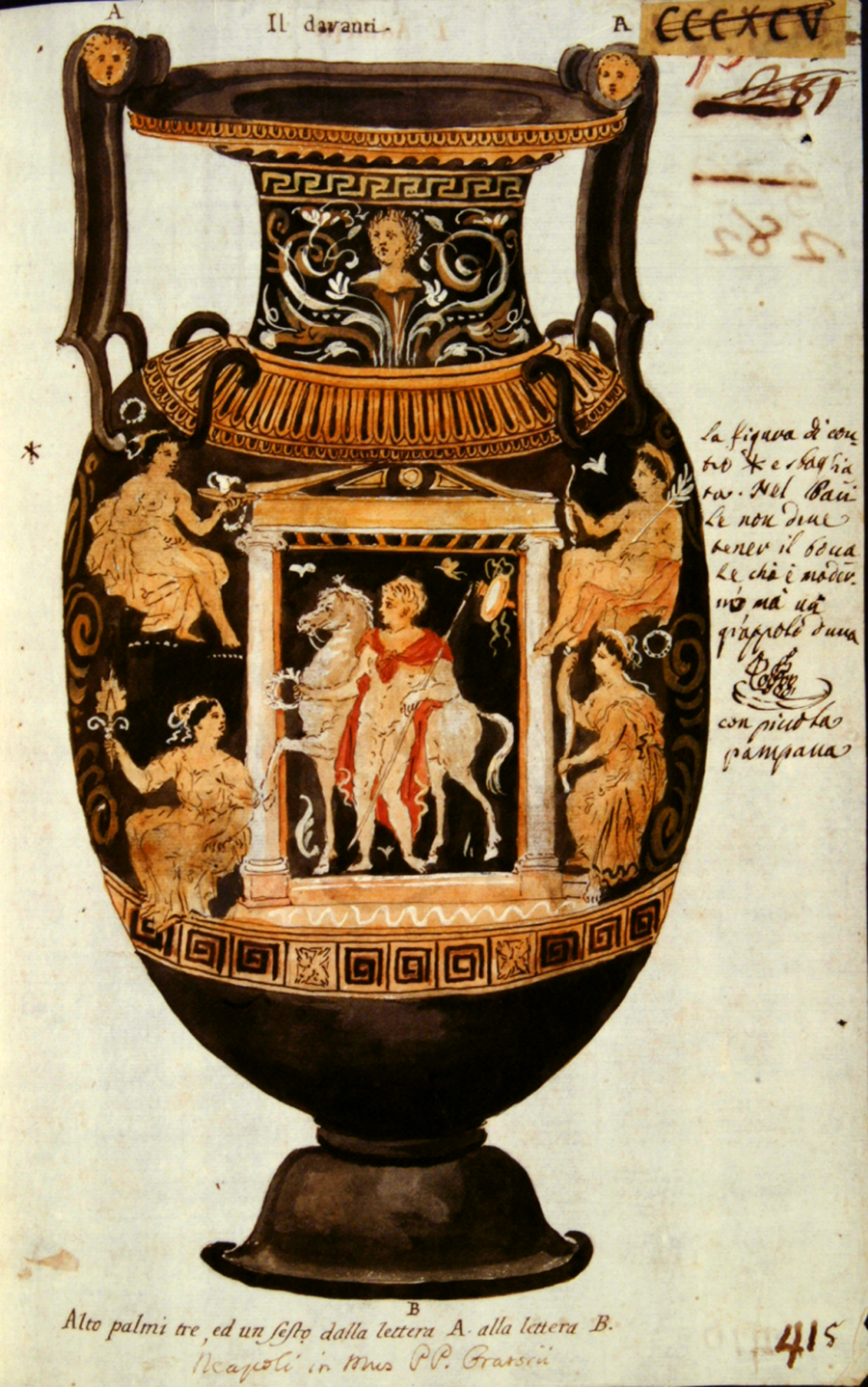
Ancient Greek vase with black glaze background and elaborate decoration featuring human figures in classical attire and mythological scenes.

WF 156: Pesaro, Biblioteca Oliveriana, MS 295, p. 415. Drawing by Francesco Vitale: red and black ink, white lead. Naples, Biblioteca dei Girolamini, 3. Apulian volute krater attributed to the Helmet Painter. Once in Naples in the collection of Giuseppe Valletta. Courtesy of the Biblioteca Oliveriana.
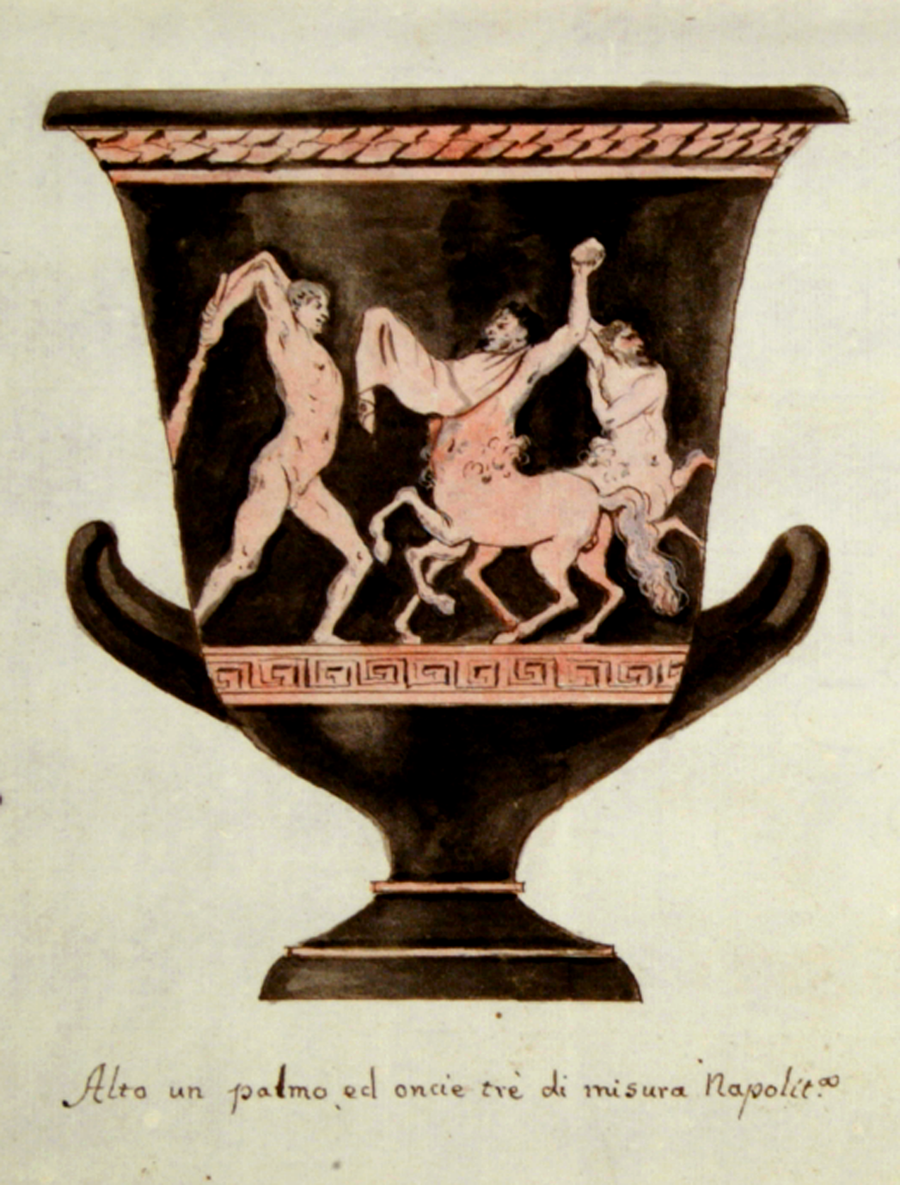
The image shows a historical ceramic cup with two figures depicted on its exterior: one figure appears to be in motion, possibly running, while the other figure seems to be sitting and holding an object. The style of the artwork suggests it may originate from ancient times, potentially Greek or Roman ceramics.

WF 157: Pesaro, Biblioteca Oliveriana, MS 295, p. 404. Drawing: red and black ink. Providence, Rhode Island School of Design 22.215, Apulian calyx krater attributed to the Painter of the Berlin Dancing Girl. Once in Brindisi in the collection of Pasquale Rossi, then in Naples, and later in London in the second collection of Sir William Hamilton, and then Deepdene in the collection of Sir Thomas Hope, and finally in the collection of Gustav Radeke. Courtesy of the Biblioteca Oliveriana.
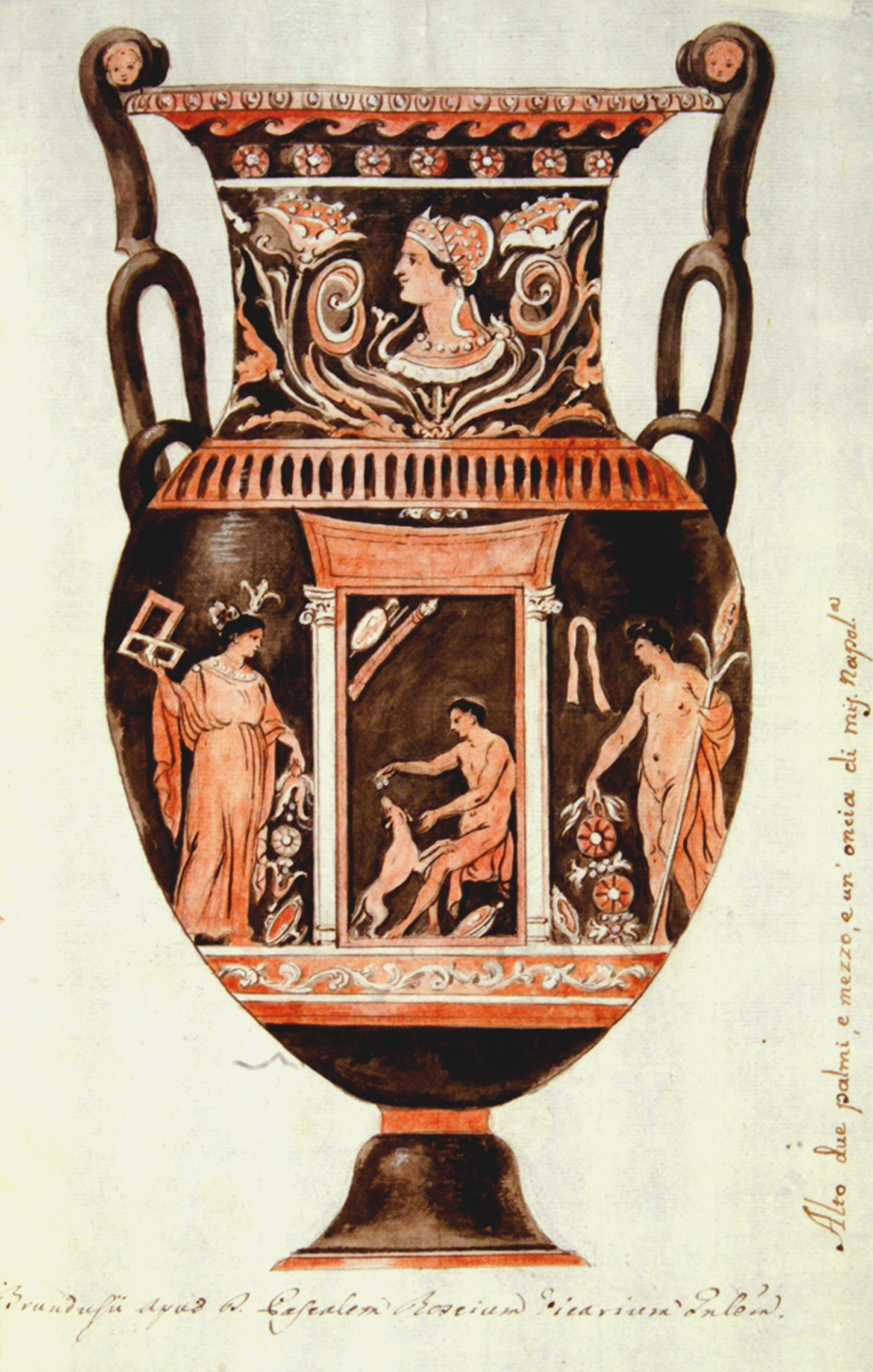
The image depicts a classical Greek or Roman vase with detailed scenes painted in red. The vase is cylindrical, has two handles for gripping, and features various figures engaged in activities, which is characteristic of ancient pottery used for storytelling or commemorating historical events.

WF 158: Pesaro, Biblioteca Oliveriana, MS 295, p. 413. Drawing: red and black ink. Paris, Louvre K 73, Apulian volute krater attributed to the Foggia Group. Once in Brindisi in the collection of Pasquale Rossi, then Paris, La Malmaison in the collection of the Empress Josephine, and later in the Durand collection. Courtesy of the Biblioteca Oliveriana.
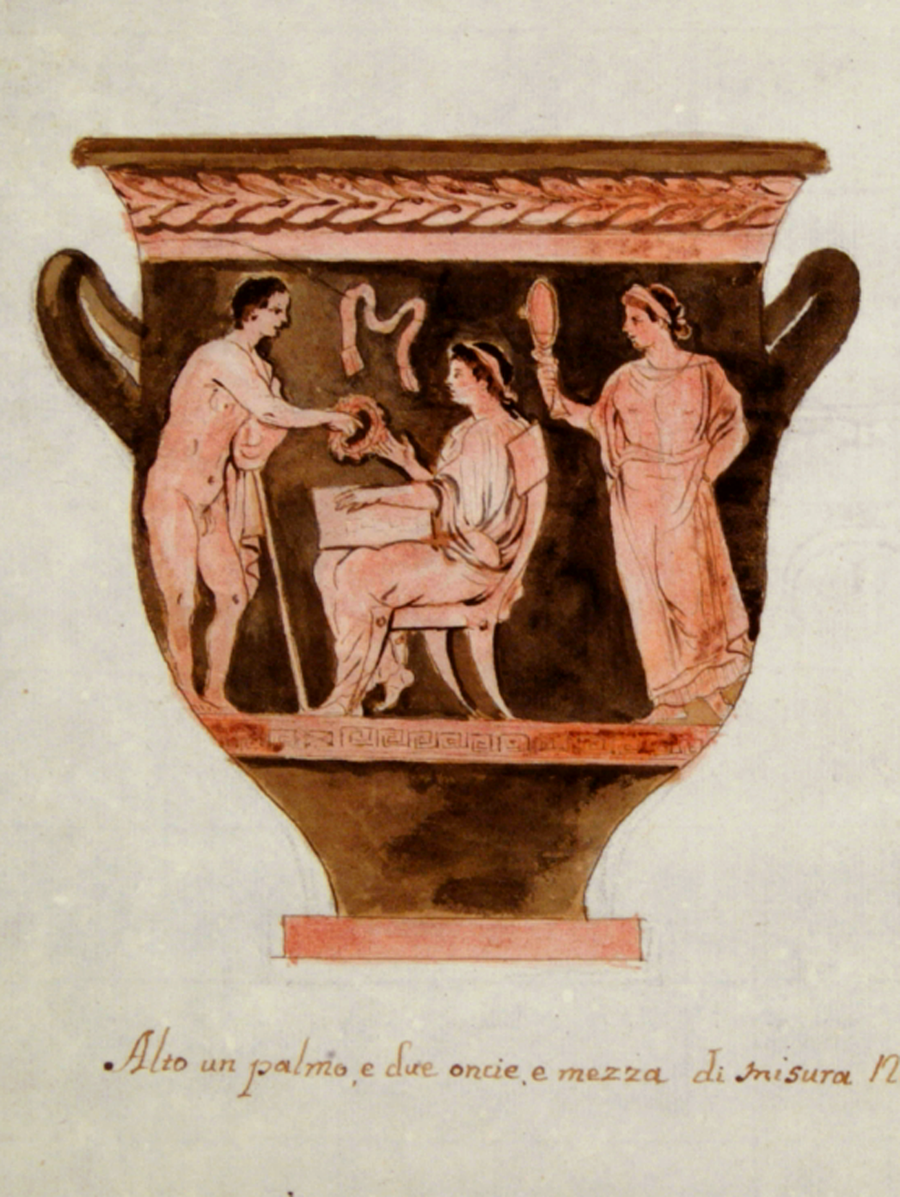
The image shows a classical style vase with a scene depicting two figures in what appears to be an ancient setting, possibly Greek mythology given the attire and poses. The scene is adorned with decorative patterns, typical of pottery from that era.

WF 159: Pesaro, Biblioteca Oliveriana, MS 295, p.408. Drawing: red and black ink. Lucanian bell krater now lost, assigned to the worship of the Creusa and Dolon Painters. Once in Brindisi in the collection of Pasquale Rossi. Courtesy of the Biblioteca Oliveriana.
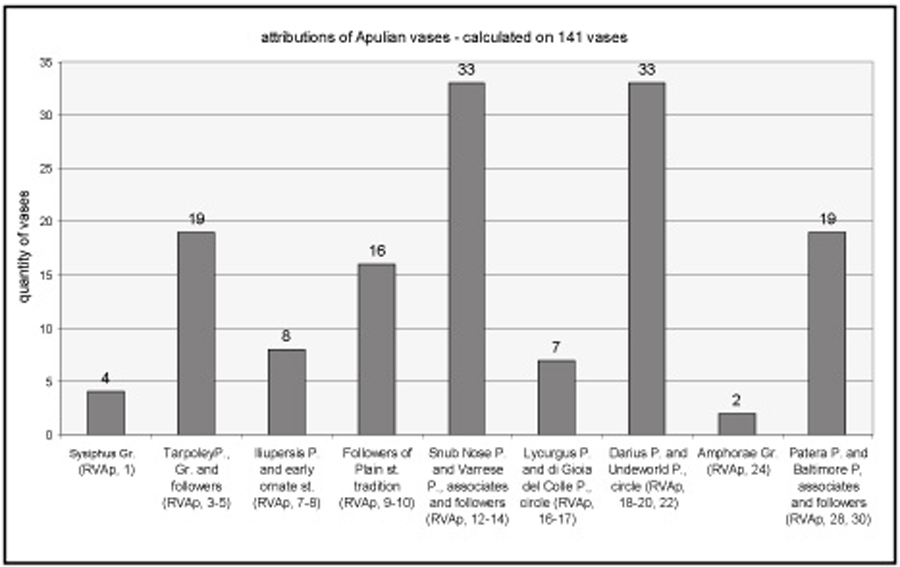
The image shows a bar graph with labeled data points representing the distribution of archaeological artifacts in a specific category or context, as indicated by the title and axis labels. The bars vary in height, suggesting different quantities or frequencies for each item on the x-axis. The text at the bottom provides names that correspond to each bar, possibly indicating the type or origin of the artifacts. The image is informational, with no visual cues about the material of the pottery, as it focuses on the statistical representation of the data rather than a physical depiction of the items themselves.

WF 160: Attributions of 141 vases belonging to 27 collections dated between 1680 and 1765.