
This is an image depicting a historical artifact from Ancient Apulia. It appears to be a fragment of painted pottery with visible human figures on it, suggesting the representation of people in various positions or activities. The style and quality of the artwork indicate that it may have been part of a larger piece or a series. The artifact's material is not clearly identifiable from the image alone; however, based on its appearance, it could be ceramic or another type of pottery often used in ancient contexts for decoration or storage.

Chapter 5: Martine Denoyelle, Hands at Work in Magna Graecia: The Amykos Painter and his Workshop

This is a large, ornate vase with intricate designs on its surface. The vase appears to be crafted from clay and features decorations that suggest classical themes or characters. It has a tall neck and handles on either side, typical of traditional pottery styles.

WF 58: Paris, Cabinet des Médailles 442. Hydria, Amykos Painter. (Courtesy of the Bibliothèque Nationale de France)

Ancient Greek vase with a scene depicting several figures in various poses; black-figure style; ceramic; visible details include drapery and human anatomy.

WF 59: Naples, Museo Nazionale Archeologico 81453. Bell krater, Amykos Painter. (Courtesy Laboratorio Fotografico della Soprintendenza archeological di Napoli e Caserta.)
The image shows an ancient Greek vase with a narrative scene painted on it. The vase is in black and white, which highlights the intricate details of the figures and the story being depicted.

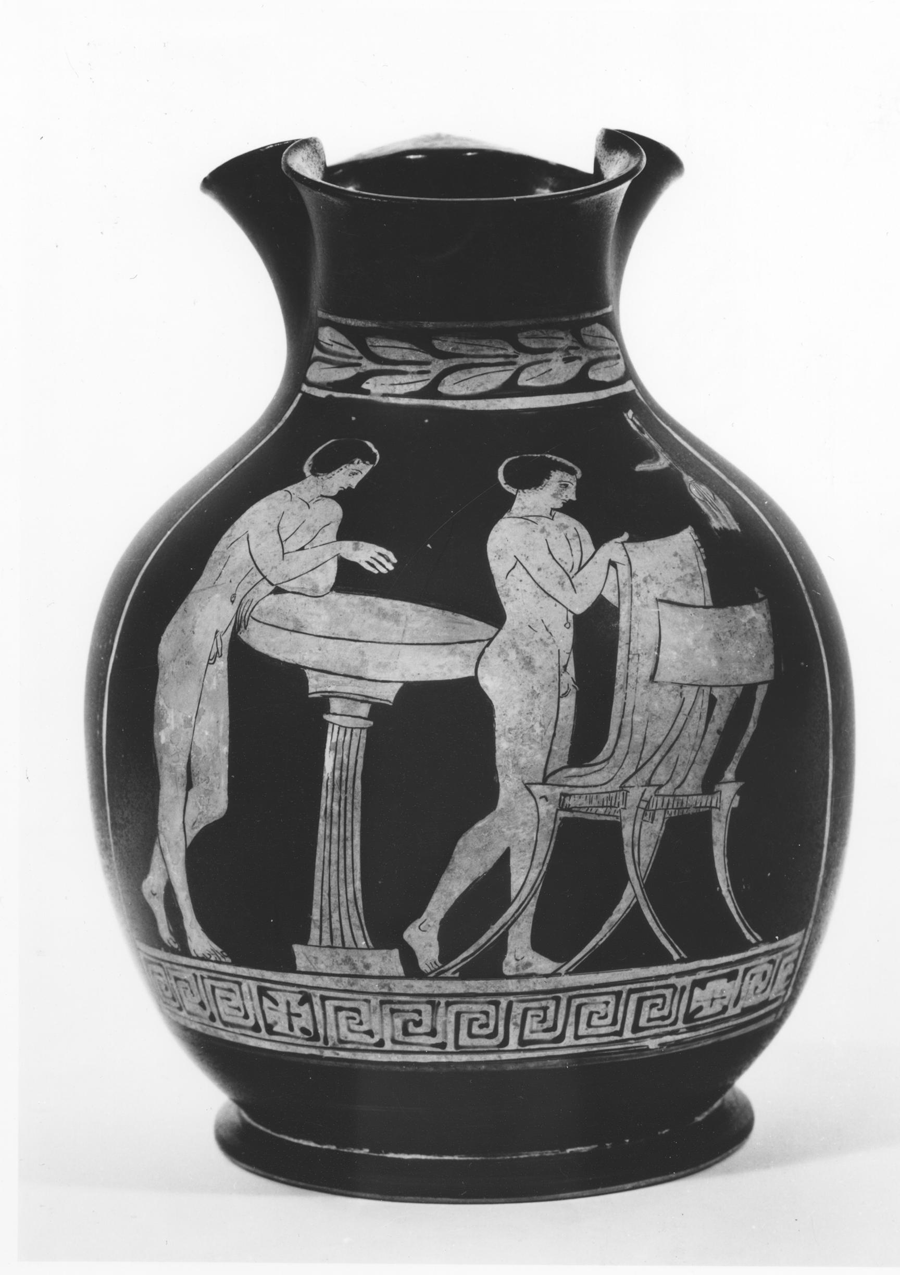
WF 60: Oxford, Ashmolean Museum 1965.136. Chous, Amykos Painter (Courtesy Ashmolean Museum, University of Oxford)
The image shows an antique vase with a classic design. The vase has a handle on each side, a narrow neck, and is decorated with intricate patterns and figures. It's made of ceramic material and appears to have been crafted by hand due to the uneven glazing.

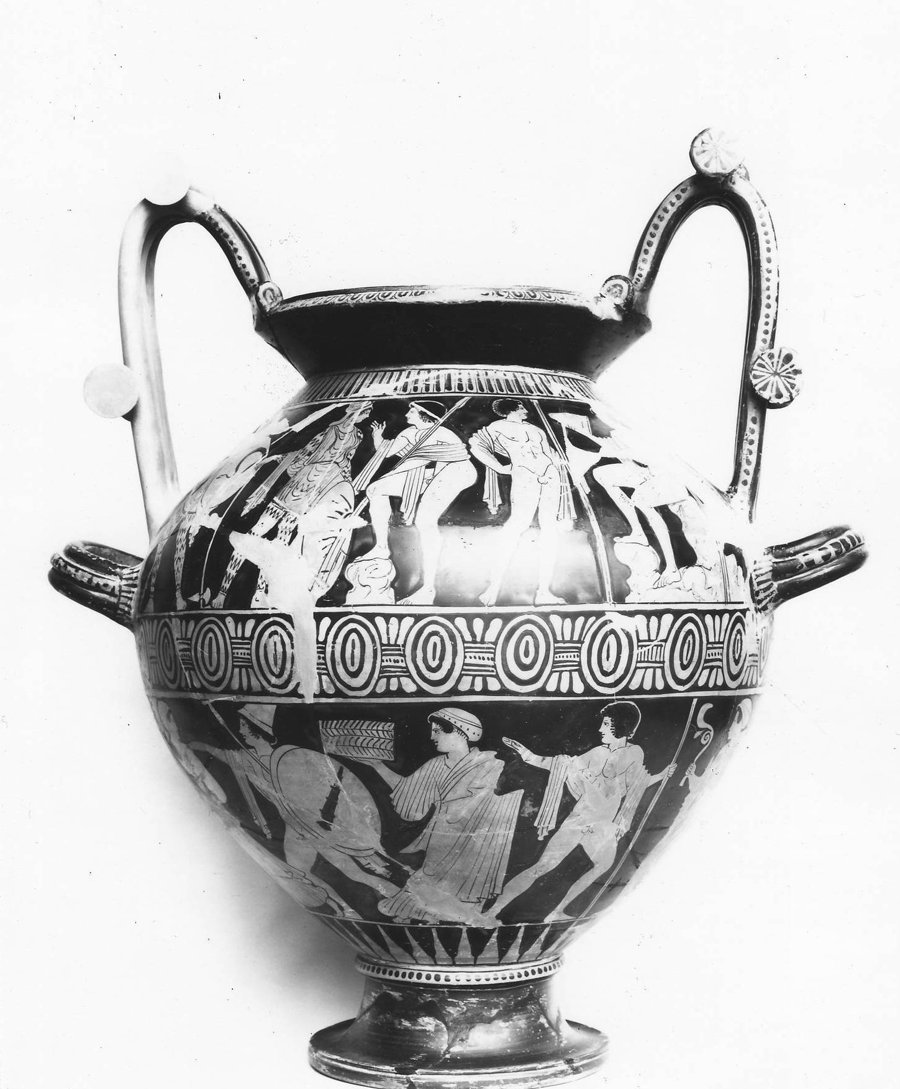
WF 61: London, British Museum F 177. Nestoris, Amykos Painter (© The Trustees of the British Museum).
The image shows a collection of black and white photographs featuring ancient Greek vases, some with visible scenes from mythology or daily life. The vases appear in various states of preservation, with the majority showing designs on their bodies and necks, showcasing a glimpse into the craftsmanship and storytelling of that era.

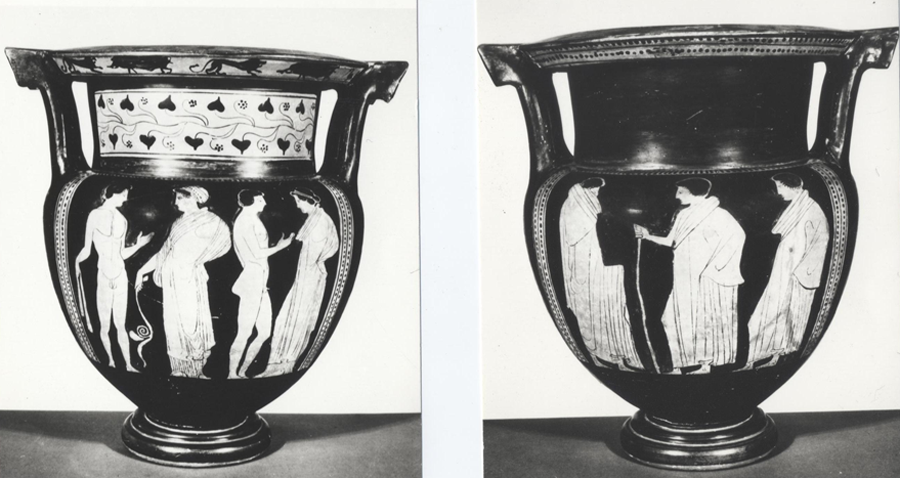
WF 62: Altenburg, Lindenau Museum 276. Column krater by the Amykos Painter (Staatliche Lindenau Museum)

The image shows an intact ancient Greek black-figure amphora. The pot is adorned with intricate scenes depicting human figures in a variety of poses, likely illustrating classical mythological narratives. It stands on a surface and features two handles attached at the top to allow for easy handling.

WF 63: Ruvo, Jatta Museum1095. Volute krater, Amykos Painter. (Courtesy Soprintendenza per I Beni Archeologici della Puglia)
The image shows an ancient Greek vase known as a hydria, which is typically used for pouring water. The vase features black-figure pottery with painted figures and scenes in gold details, showcasing the artistic style of ancient Greece. It has two handles and rests on a stand or base, indicating it was designed to be displayed upright.

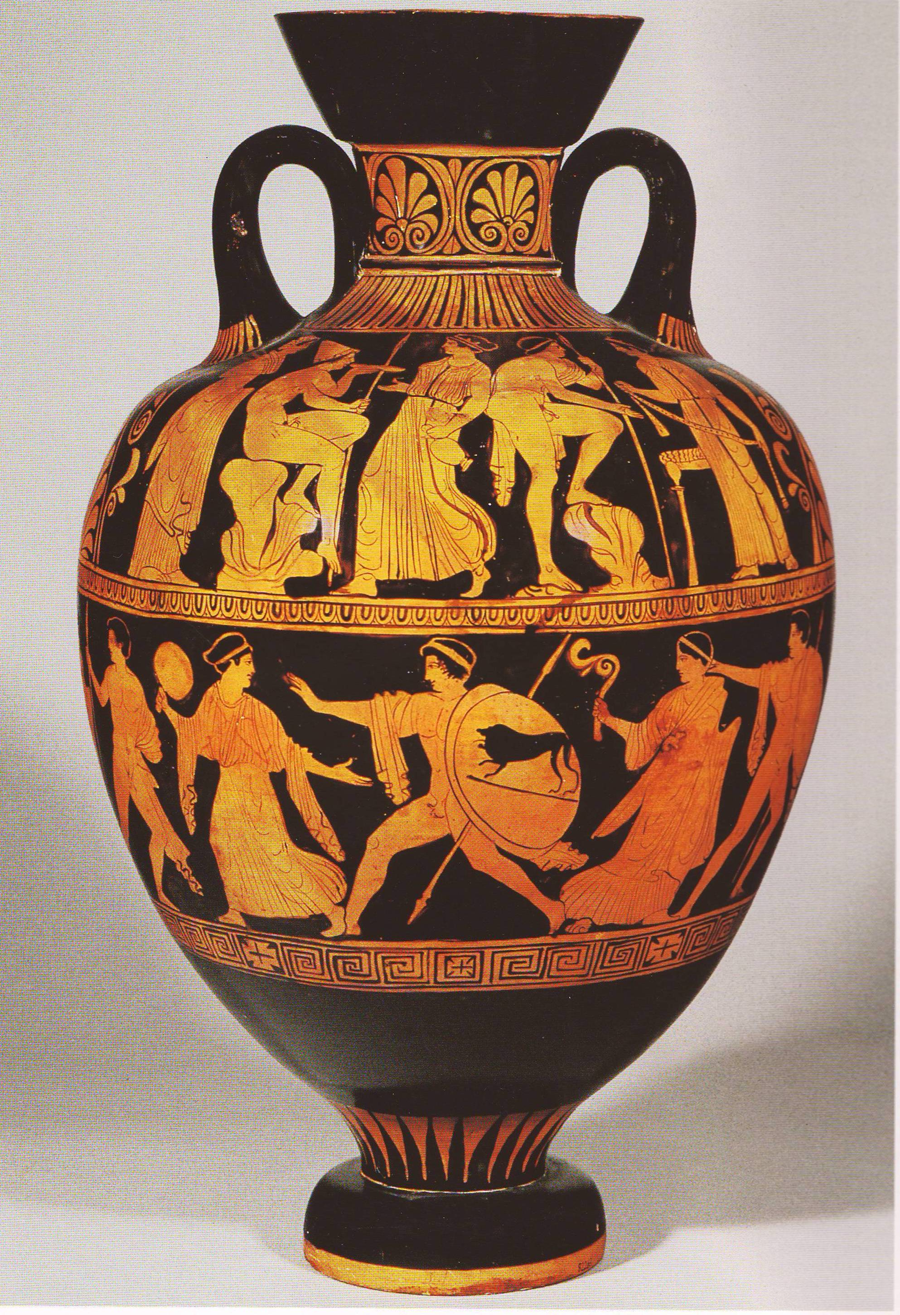
WF 64: Naples, Museo Nazionale Archeologico 82264. Pseudopanathenaic amphora, Amykos Painter (Courtesy of the Ministero per I Beni e le Attività Culturali – Soprintendenza Speciale per I beni archeologici de Napoli e Pompei)
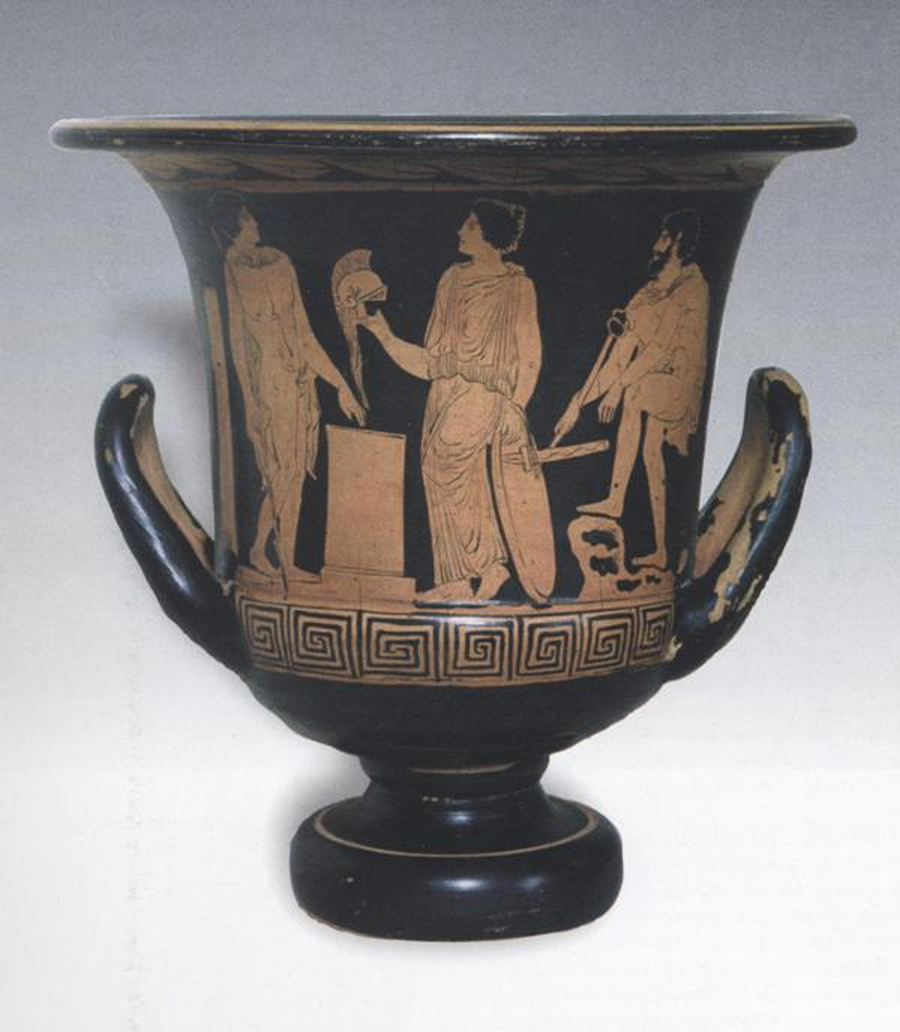
The image shows an antique vase with a depiction of figures on its exterior, likely representing scenes from Greek mythology or history. The style and craftsmanship suggest it's made of ceramic, with visible signs of age and use such as wear and slight imperfection in the glazing.

WF 65: Lipari, Museo Archeologico Eoliano, inv. 11839. Sicilian calyx krater by the Santapaola Painter. (After Bernabò Brea, Cavalier 1997, p.13, fig. 1)