
This is an image depicting a historical artifact from Ancient Apulia. It appears to be a fragment of painted pottery with visible human figures on it, suggesting the representation of people in various positions or activities. The style and quality of the artwork indicate that it may have been part of a larger piece or a series. The artifact's material is not clearly identifiable from the image alone; however, based on its appearance, it could be ceramic or another type of pottery often used in ancient contexts for decoration or storage.

Chapter 7: Angela Ciancio, The Diffusion of Middle and Late Apulian Vases in Peucetian Funerary Contexts: a Comparison of Several Necropoleis
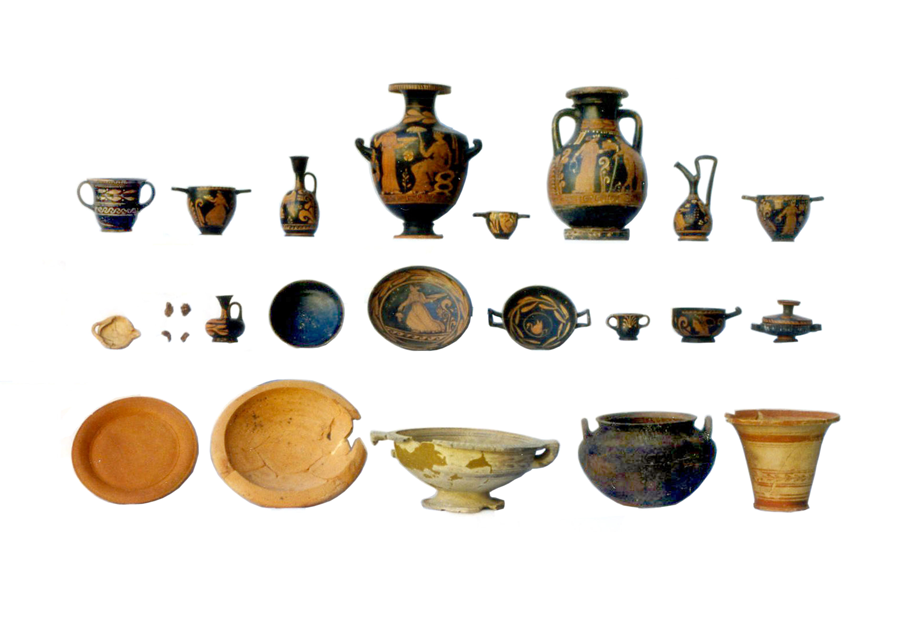
This image shows an array of antique pottery shards in various shapes, sizes, and colors, suggesting they are historical artifacts possibly from different cultures and time periods. The ceramics display a range of earthy tones and patterns, reflecting the craftsmanship and materials used during their respective eras.

WF 85: Conversano, Tomb 5-1992. Part of funerary assemblage (Soprintendenza per I Beni Archeologici della Puglia.)

This is an ancient Greek pottery vessel with a black-figure style decoration. The vase features human figures, likely representing gods or heroes in classical mythological scenes. The color scheme includes a dark background and lighter details on the figures, emphasizing their form and pose.

WF 86: Gioia del Colle (Bari) Museo Archeologico 2769. Bell krater from Conversano Tomb 5-1992. (Soprintendenza per I Beni Archeologici della Puglia)
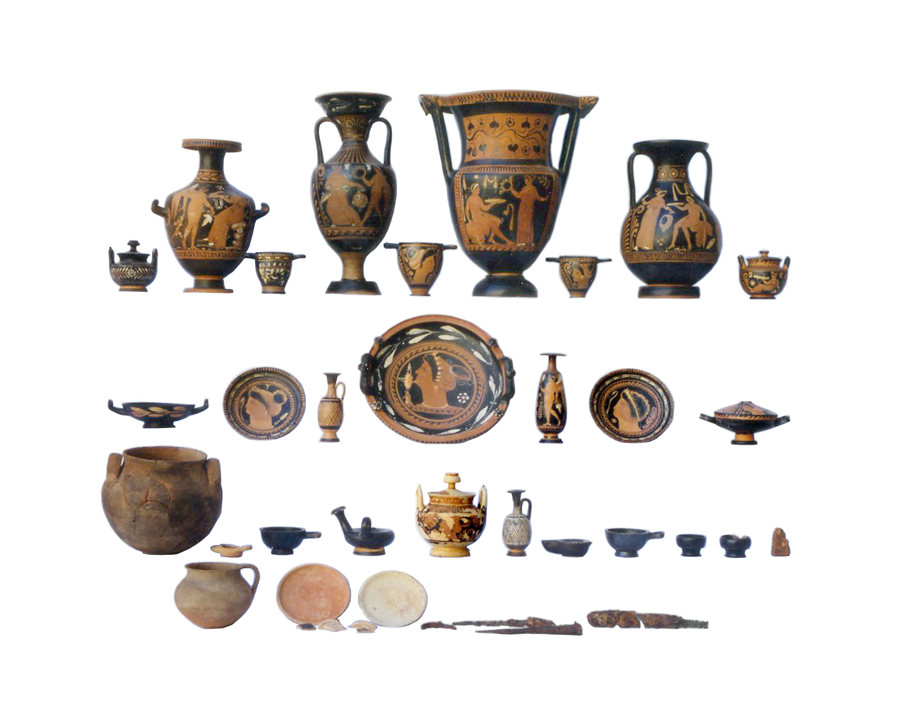
The image displays a collection of various antiquities from what appears to be ancient civilizations. These objects include vases, bowls, and possibly other decorative items, which seem to be made of materials such as clay or pottery, and may feature painted designs or patterns. The artifacts are displayed against a neutral background, emphasizing their historical significance and craftsmanship.

WF 87: Conversano, Tomb 9-1992, funerary assemblage. (Soprintendenza per I Beni Archeologici della Puglia)
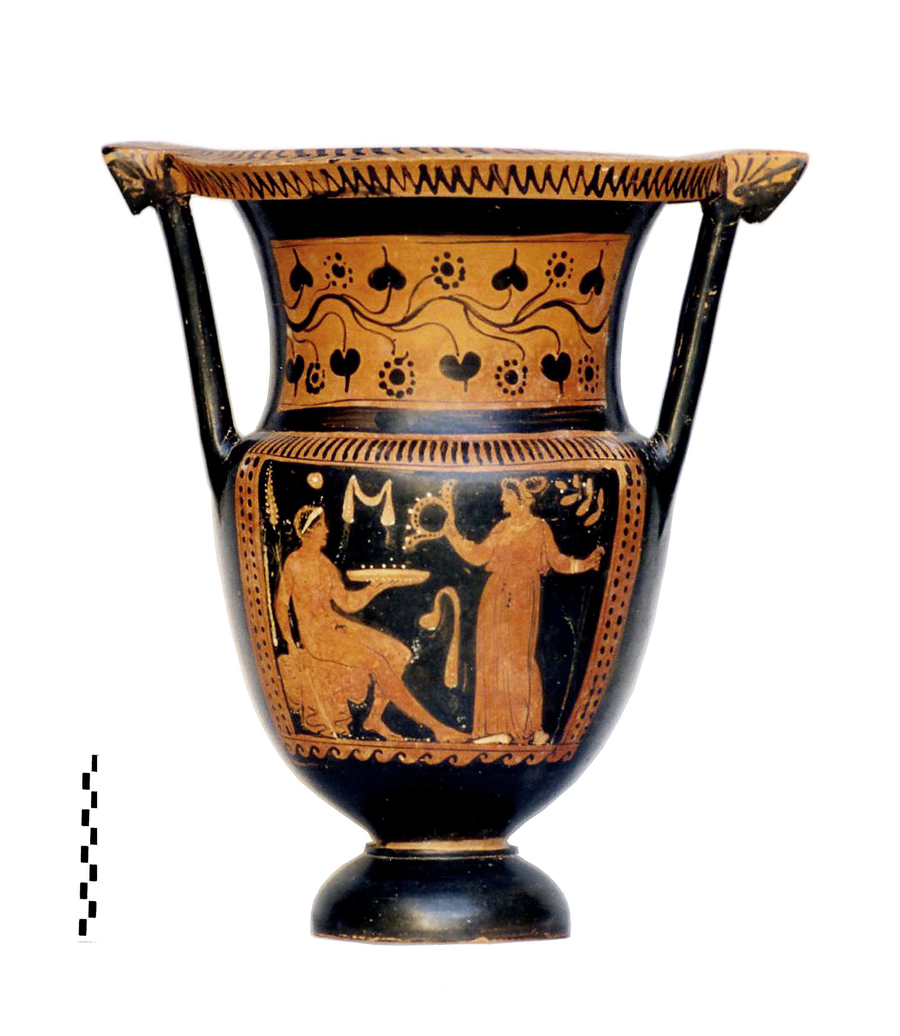
The image shows an antique vase, which appears to be made of clay. It is adorned with a detailed scene featuring figures engaged in some sort of activity, possibly mythological or historical in nature. The style suggests the vase may be from ancient Greek or Roman times, characterized by its narrative depiction and ornamental details.

WF 88: Gioia del Colle (Bari) Museo Archeologico 2948. Column krater from Conversano Tomb 9.1992 (Soprintendenza per I Beni Archeologici della Puglia)
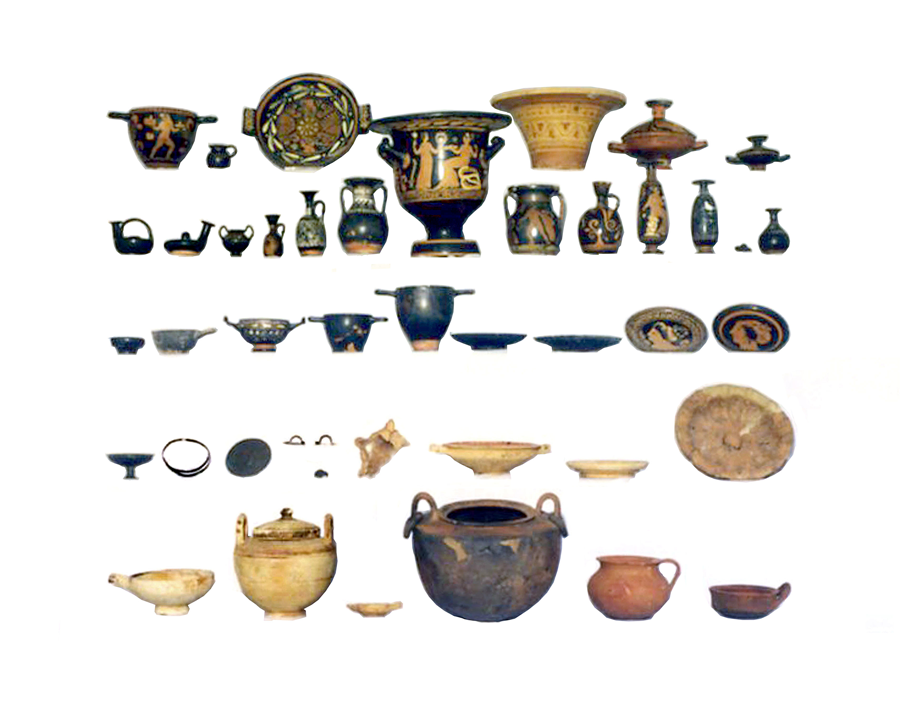
The image displays a collection of ancient Greek vases, including amphoras and lekythoi. They are crafted from terracotta and showcase various styles and decorative patterns indicative of their historical period. The items exhibit signs of wear, such as slight discoloration and abrasions, suggesting that they have been around for quite some time.

WF 89: Conversano, Tomb 1-1987, funerary assemblage. (Soprintendenza per I Beni Archeologici della Puglia)
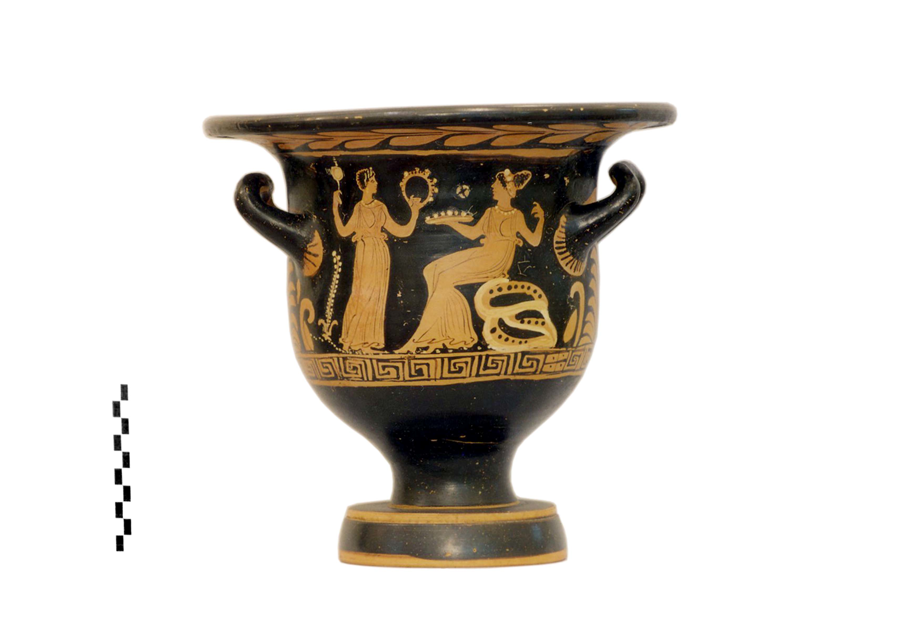
The image shows a dark-colored Greek vase with gold detailing, featuring figures in a standing pose at the bottom and various scenes depicted along its sides. The material appears to be clay, and the pot has handles on either side for lifting. The style of the artwork suggests it may be from the classical period, judging by the attire and poses of the figures, which are characteristic of Greek vase painting.

WF 90: Gioia del Colle (Bari) Museo Archeologico 1829. Bell krater from Conversano Tomb 1-1987. (Soprintendenza per I Beni Archeologici della Puglia)
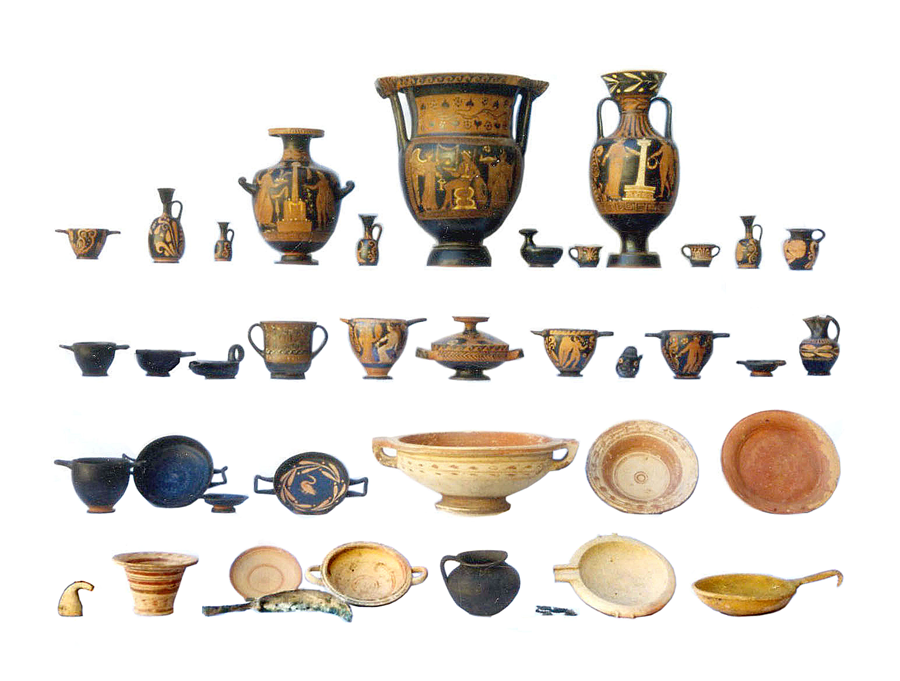
The image displays a collection of ancient Greek and Roman pottery, showcasing various shapes and styles of vases, bowls, and cups. These ceramic artifacts are characterized by their earthy tones with intricate patterns and decorative scenes. The pieces vary in size, suggesting they served different functional or ceremonial purposes during the respective time periods.

WF 91: Conversano, Tomb 7-1992, funerary assemblage (Soprintendenza per I Beni Archeologici della Puglia)
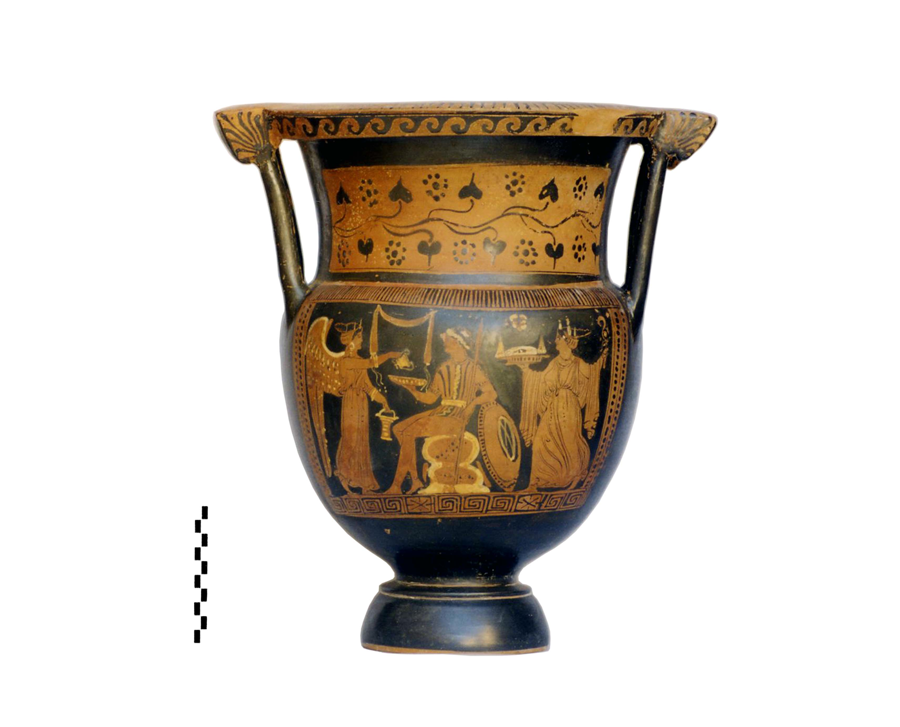
The image depicts an ancient Greek vase, specifically a black-figure amphora. It showcases intricate designs with figures in various poses, rendered in the traditional high-contrast silhouette style characteristic of the period. The surface is predominantly dark, which highlights the lighter details of the scene depicted.

WF 92: Bari, Museo Archeologico 3003. Column krater from Conversano, Tomb 7-1992 (Soprintendenza per I Beni Archeologici della Puglia)
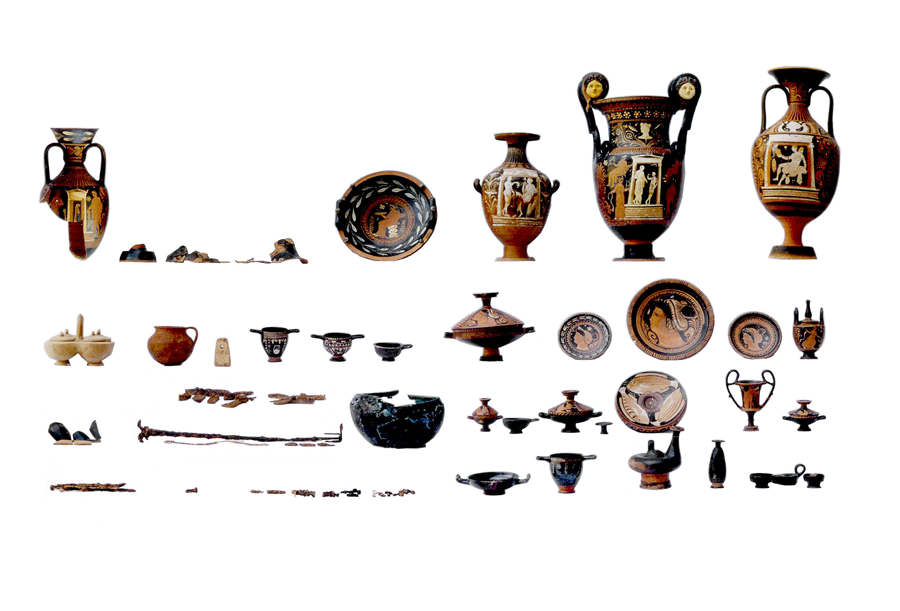
This is a collection of ancient Greek vases and pottery fragments. They are displayed in two rows against a light background. The items showcase varying shapes, colors, and artistic styles indicative of the era they originate from. Some pieces feature detailed patterns and figures painted on their surfaces.

WF 93: Conversano, Tomb 1-1991, funerary assemblage (Soprintendenza per I Beni Archeologici della Puglia)
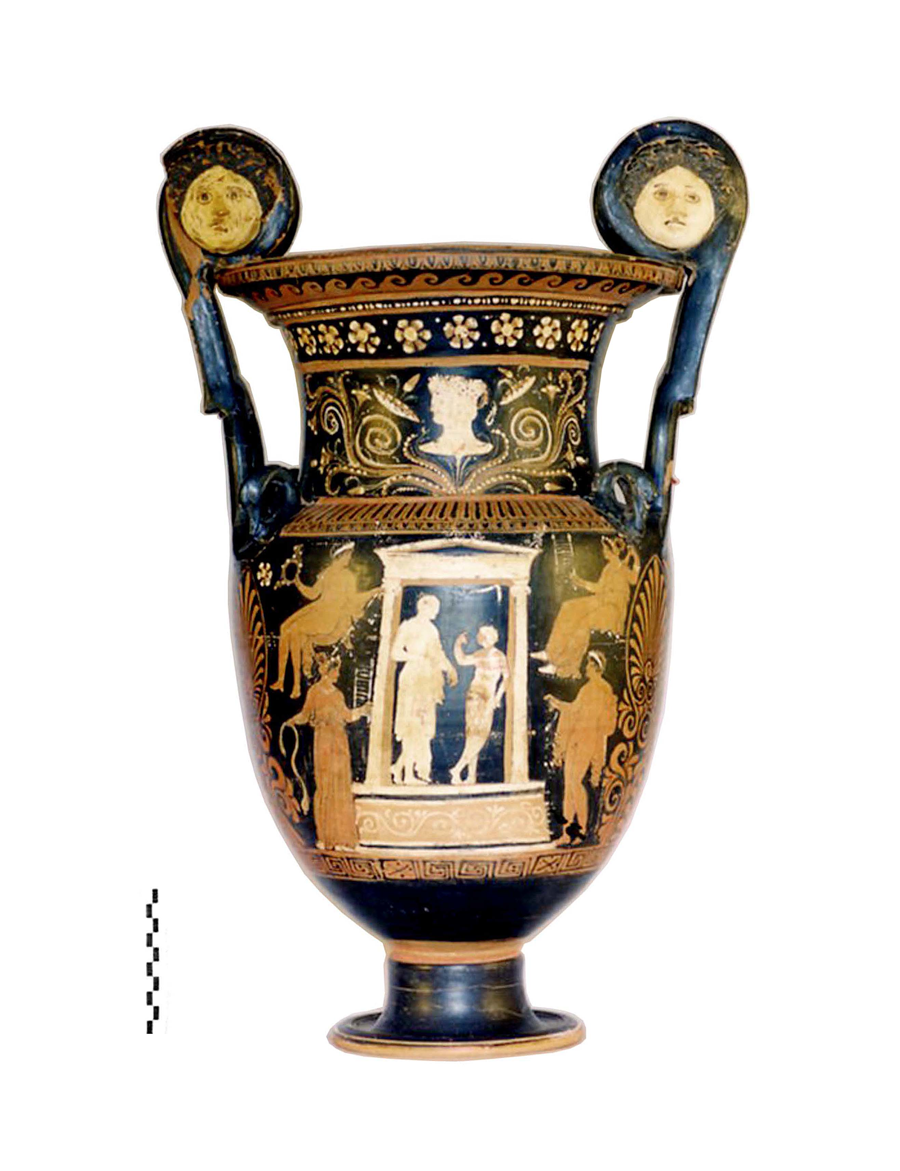
This is a Greek amphora, which is a ceramic container used for transporting wine or oil in ancient times. The key visual features include its two handles attached near the top, flaring opening on one side and narrowing toward the bottom, and decorative scenes with figures, suggesting it was painted with illustrations that were common in Greek pottery of certain periods.

WF 94: Gioia del Colle (Bari) Museo Archeologico 2642. Volute krater from Conversano, Tomb 1-1991 (Soprintendenza per I Beni Archeologici della Puglia)
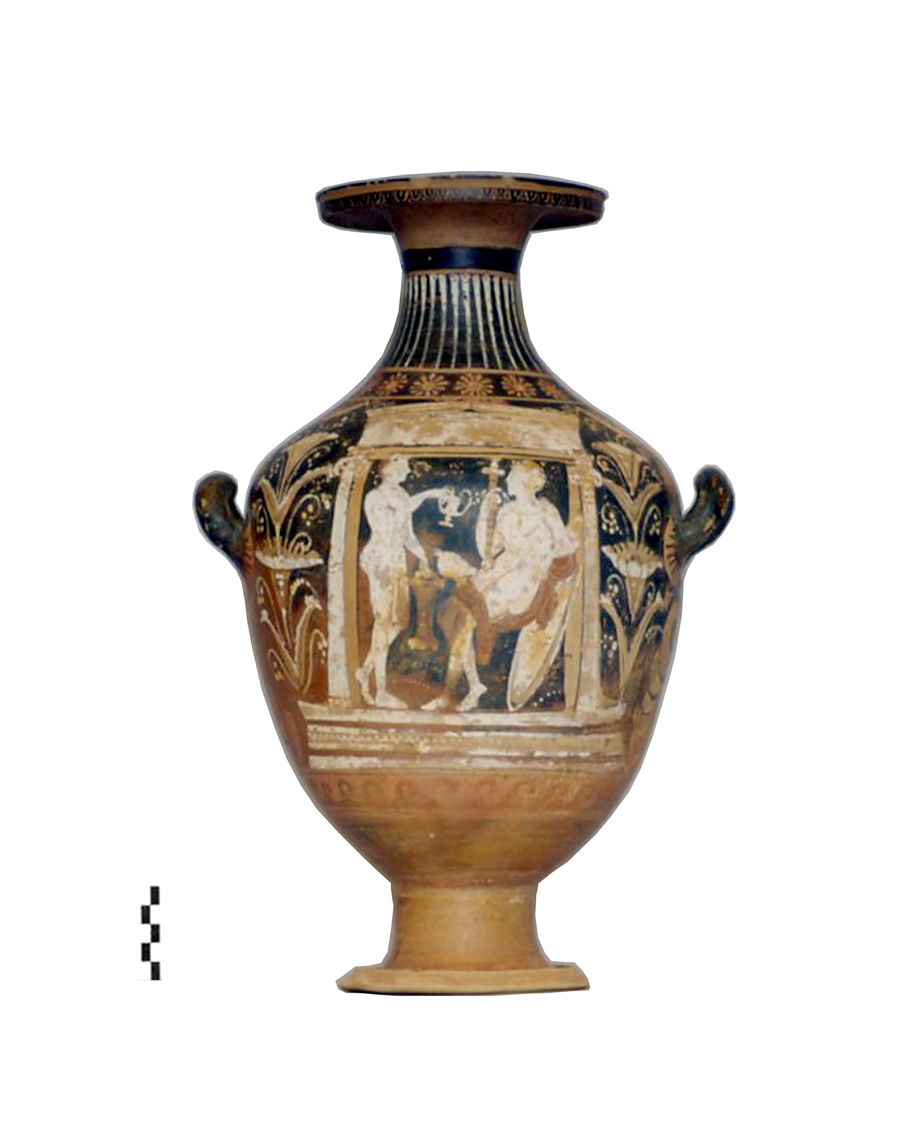
This is a photograph of an antique vase with a decorative design featuring human figures on its body. The vase appears to have two handles and a small neck, suggesting it could have been used for holding water or oil in ancient times. The material looks like clay, indicating that it may be an archaeological artifact from a historical period.

WF 95: Gioia del Colle (Bari) Museo Archeologico 2637. Hydria from Conversano, Tomb 1-1991 (Soprintendenza per I Beni Archeologici della Puglia)

The image displays a classical Greek vase known as a hydria. It is characterized by two horizontal handles on either side, which are typical for its type. The body of the vessel showcases intricate designs and patterns, which often depict scenes from mythology or daily life in ancient Greece. The material appears to be terracotta, indicating that it was made from fired clay.

WF 96: Volute krater from the funerary assemblage of Tomb S. Bartolomeo (Soprintendenza per I Beni Archeologici della Puglia)
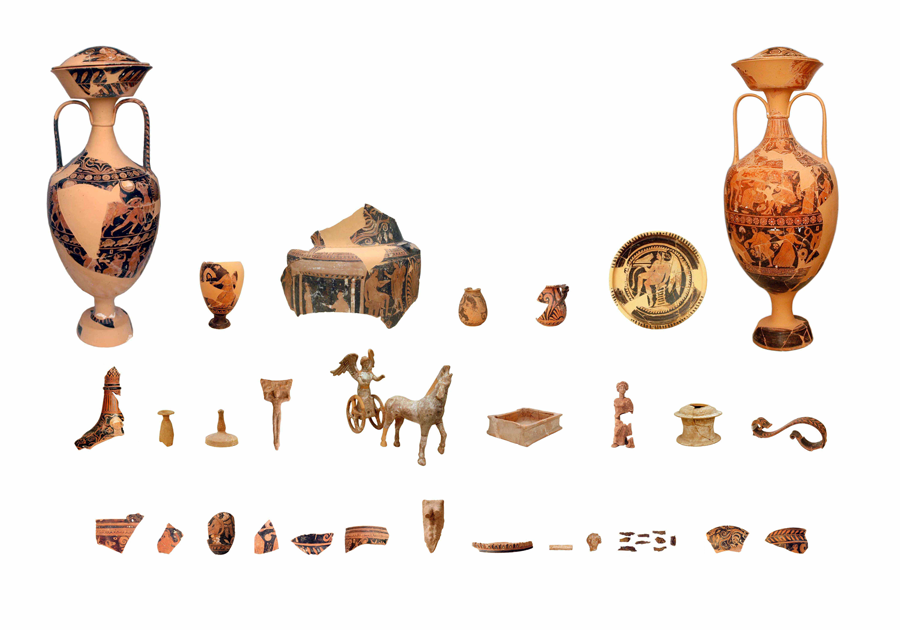
The image displays a collection of various pottery artifacts, including whole pots and fragments, with visible signs of wear and age. The objects appear to be made from earthenware, showcasing different shapes, sizes, and styles indicative of historical or cultural significance.

WF 97: Conversano, Tomb 10-1958, funerary assemblage (Soprintendenza per I Beni Archeologici della Puglia)
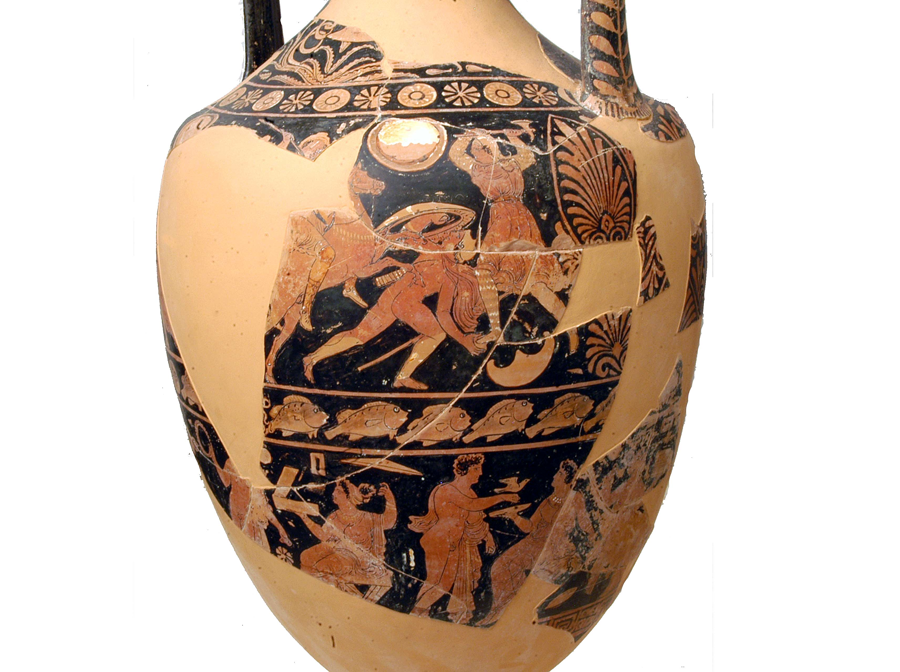
The image depicts a vase with ancient Greek pottery style, featuring intricate black-figure design on a lighter background. The central figure appears to depict a mythological scene involving warriors and possibly gods or heroes. The vase is cylindrical in shape with handles attached to the body for carrying.

WF 98a: Gioia del Colle (Bari) Museo Archeologico 20883. Amphora from Conversano Tomb 10-1958 (Soprintendenza per I Beni Archeologici della Puglia)
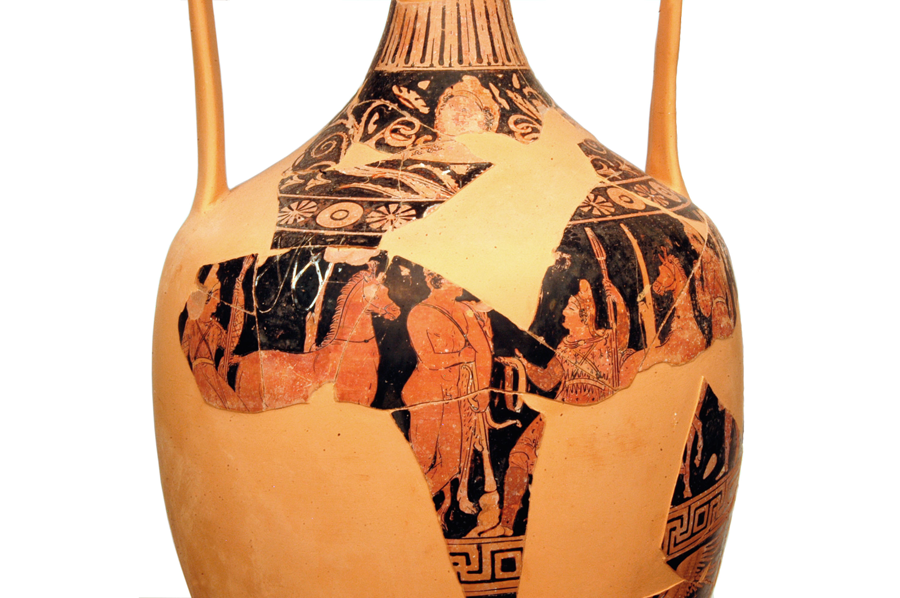
This is an image of a vase with visible damage on one side. The vase features black-figured decoration, suggesting it could be from the classical period of Greek pottery, characterized by scenes and figures painted in black against the natural color of the clay.

WF 98b: Gioia del Colle (Bari) Museo Archeologico 20883. Amphora from Conversano Tomb 10-1958 (Soprintendenza per I Beni Archeologici della Puglia)